/137/1/16203046156093e2e7ba3a1_romans-international-logo-black-23.05.png)
/137/1/162513748360dda14b60068_romans-international-logo-whiteout.png)
7 Things You Might Not Know About the BMW Alpina Roadster V8
The Bond Car BMW Didn't Want You to Know About - If You Don't Know, Now You Know
Almost everyone in the car world knows the BMW Z8. It's one of the most achingly beautiful roadsters ever produced, it appeared in a Bond film, and it has been appreciating in value ever since. It is, in the truest sense, a modern classic.
What far fewer people know is that the Z8's story didn't end with the last car off the Munich production line. In fact, it continued in a subtler, more refined, and arguably more interesting form, with the BMW Alpina Roadster V8.
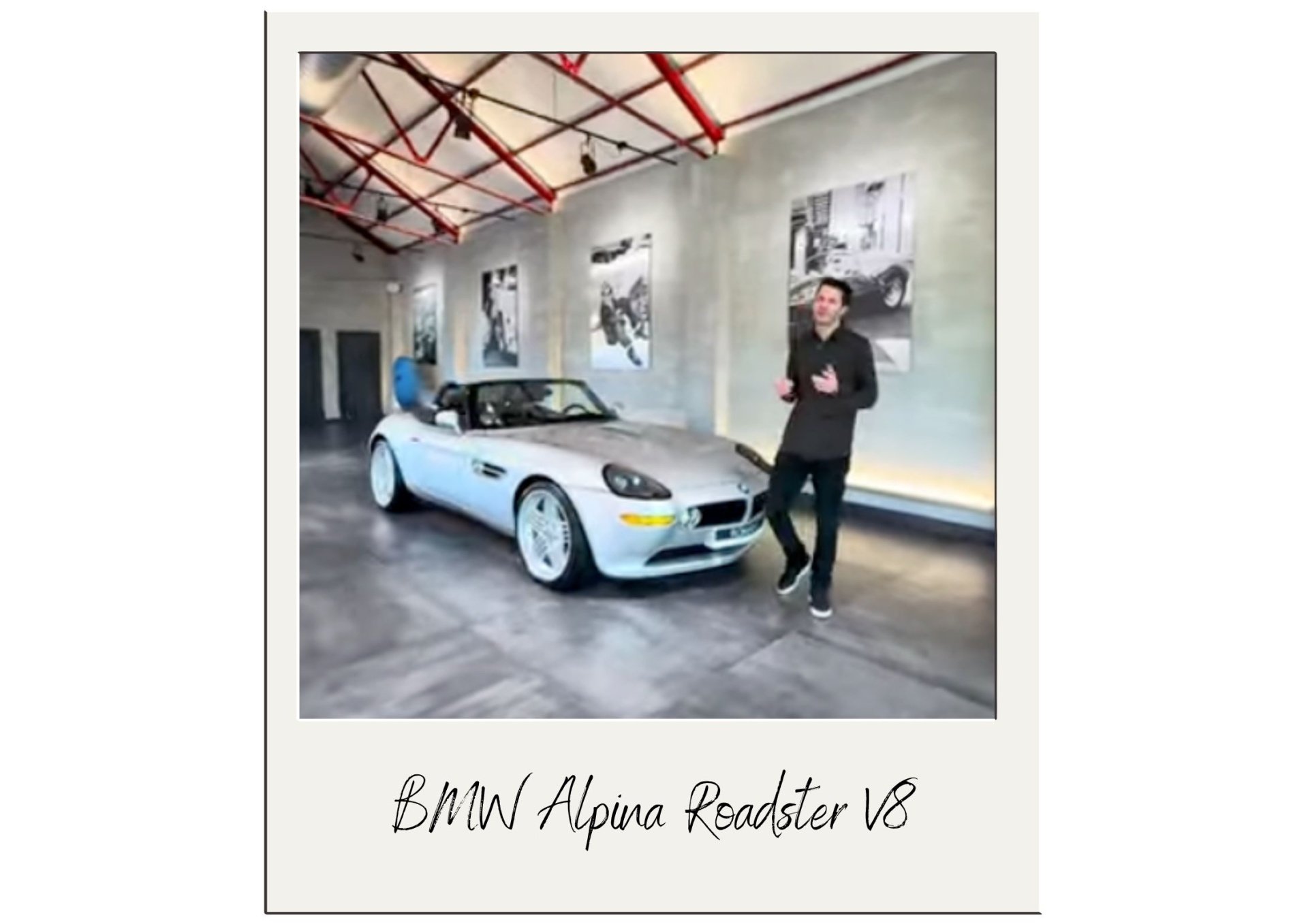
Here at Romans International, we take you on a journey through the must-know facts about this very special roadster. Inspired by our "If You Don't Know" video series with Tom Jaconelli, we're sharing the lesser-known details about one of the most overlooked gems to ever carry the Alpina badge...
Fact 1: It Continued Where the Z8 Left Off - Over Two Decades Ago
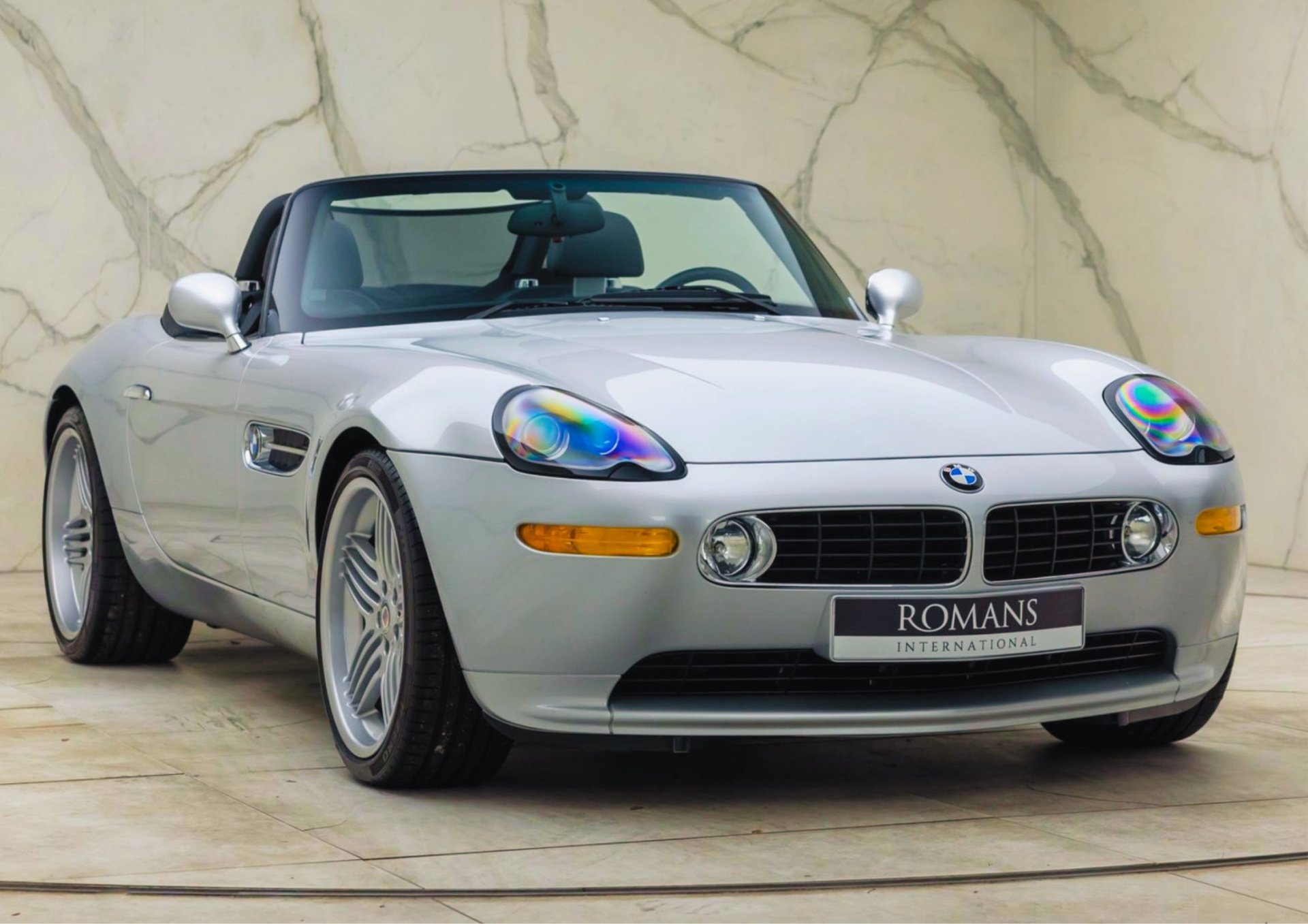
The BMW Z8 launched in 2000 as one of the most visually arresting cars the company had ever produced. Styled by Henrik Fisker as a modern homage to the legendary 1956 BMW 507, it combined an all-aluminium spaceframe chassis with the 4.9-litre V8 from the E39 M5 and a six-speed manual gearbox. It is a driver's car in the purest sense.
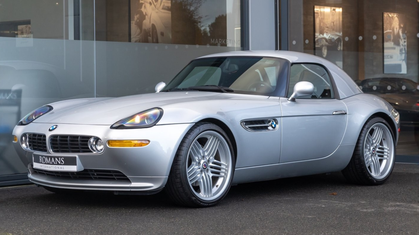
Production of the Z8 ended in November 2002. But rather than simply closing the chapter, BMW handed the baton directly to Alpina, who continued building cars based on the same platform through to October 2003. The result was the Alpina Roadster V8. It’s a car that, whilst visually near-identical to the Z8, was entirely different in character and purpose.
Fact 2: It Was Bond's BMW - Literally!
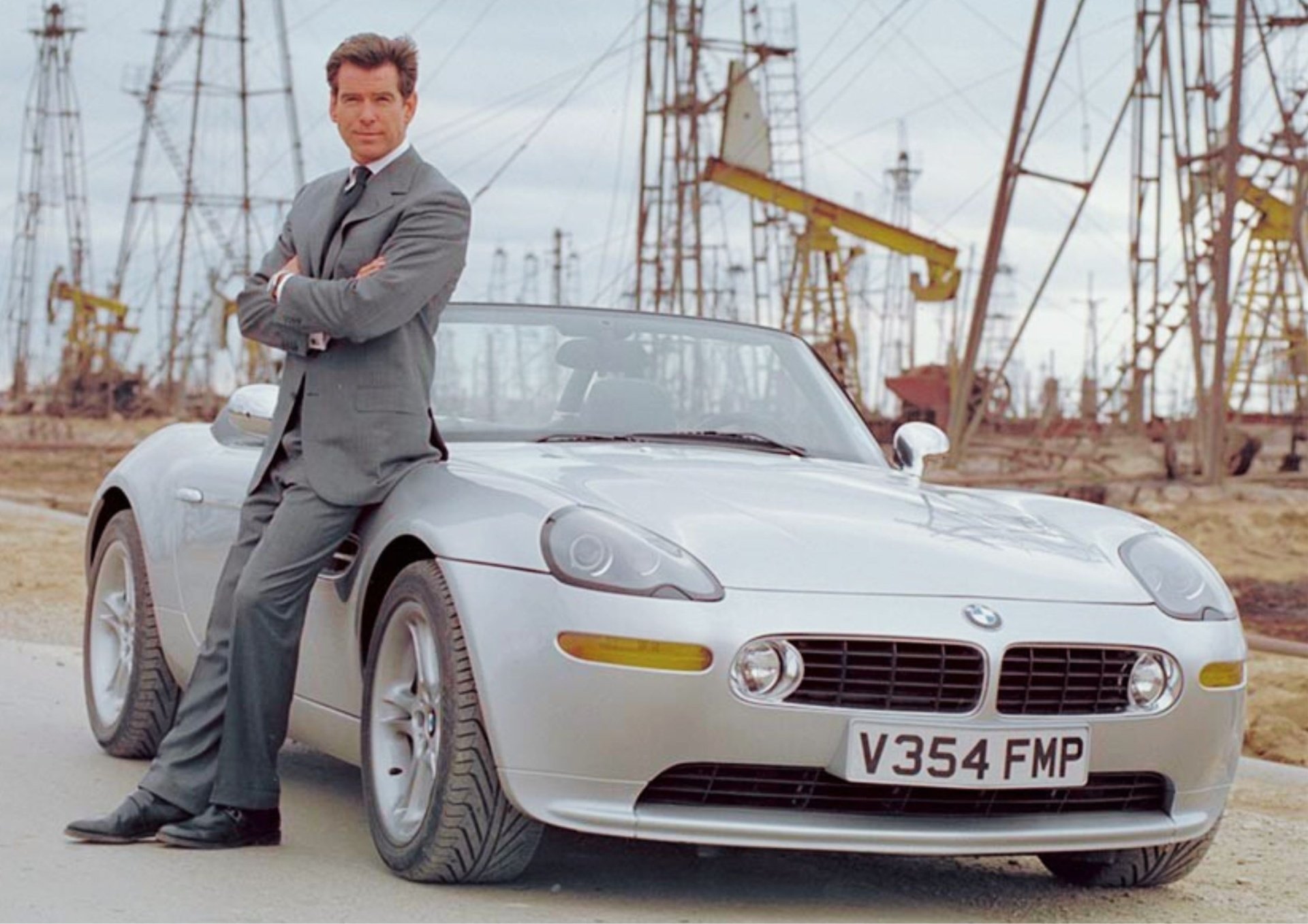
The BMW Z8 famously appeared in The World Is Not Enough in 1999, a year before the car even went on sale, driven by Pierce Brosnan's James Bond. It is, to put it diplomatically, one of the more unfortunate ends for a Bond car in the franchise's history. If you’re a Bond fan, you’ll remember it was sliced in half by a helicopter-mounted saw within the first act! However, we won't dwell on that.
What makes the Alpina connection even more satisfying is that you're effectively acquiring the spiritual successor to one of cinema's most iconic cars, in a version that is rarer, more refined, and finished to a higher standard than the Z8 from which it was derived. In our opinion, the Z8 made the headlines, but the Alpina Roadster V8 quietly became the better car.
And with just eight right-hand-drive examples among the 555 produced globally, if you happen to be looking at one in the UK, then you are looking at something extraordinarily rare.
Fact 3: Alpina Replaced the Manual Gearbox (But Kept You in Control)
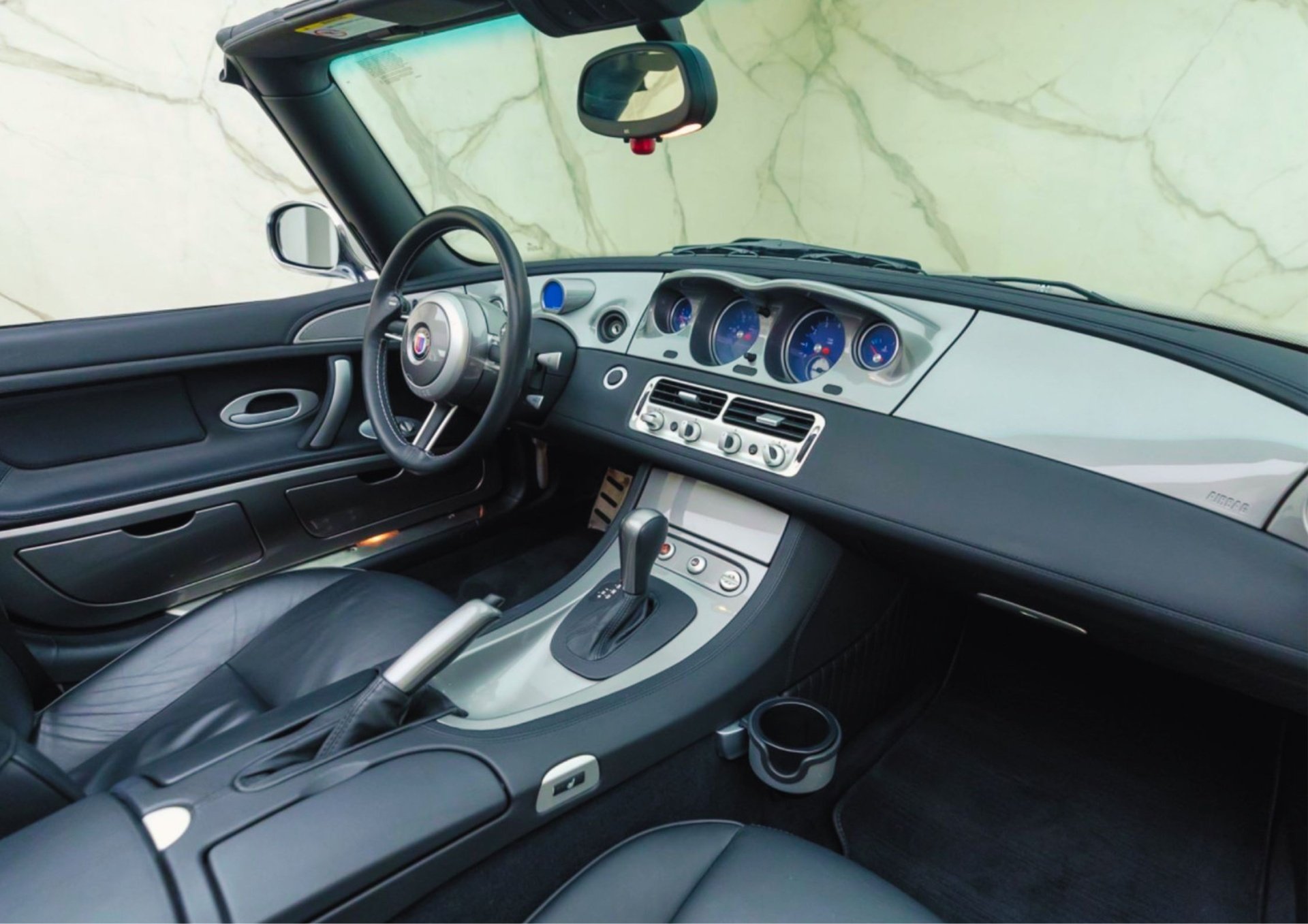
One of the most significant changes Alpina made was the deletion of the Z8's six-speed manual gearbox in favour of a five-speed automatic. To reassure you, this was a deliberate philosophical shift. Because the Z8 was designed as a driver's car in the traditional sense, the Alpina Roadster V8 was conceived as a grand tourer: a car to cover long distances in supreme comfort with the roof down and the V8 breathing freely.
However, Alpina didn't entirely remove engagement from the equation. The transmission features Switchtronic functionality (visible as the plus and minus buttons mounted behind the steering wheel), which allows the driver to manually select gears at will. It is not a paddle-shift system in the modern sense, but it is a considered and usable middle ground between full automation and the involvement of a manual.
Fact 4: The Engine Swap Was Counterintuitive (and Brilliant)
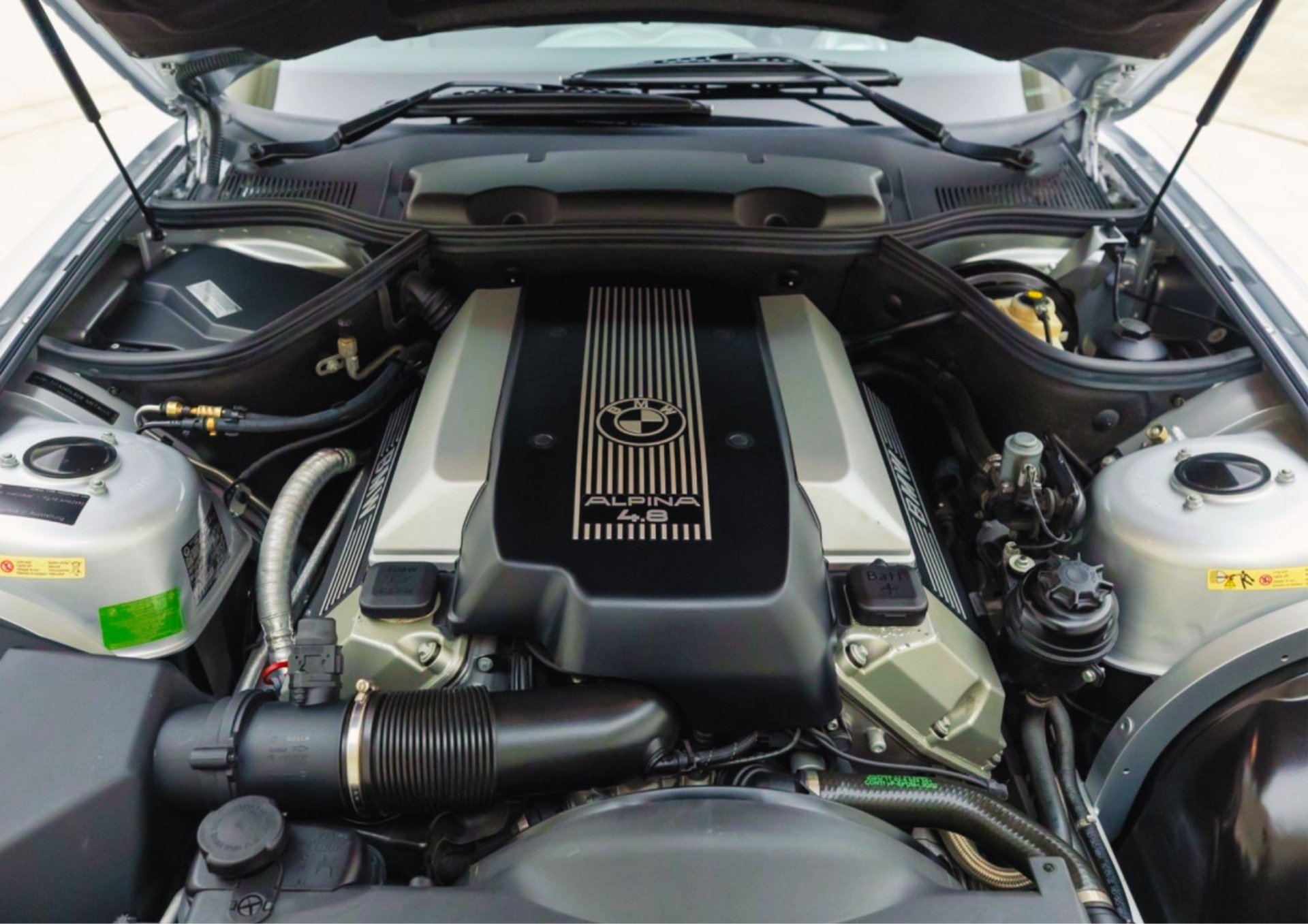
Here is the detail that consistently surprises people who know the Z8 well. Alpina actually removed the 4.9-litre S62 V8 (yes, the engine shared with the E39 M5, one of the most celebrated performance engines of its era) and replaced it with their own 4.8-litre M62-based unit from the Alpina B10 V8 S saloon. On paper, this looked like a step backwards: 375hp compared to the Z8's 395hp.
In practice, it was anything but. Alpina's tuning philosophy has always centered on torque rather than headline power figures, and the 4.8-litre unit delivers 520Nm of torque (meaningfully more than the Z8's 500Nm) available at a significantly lower point in the rev range. This made the Alpina a considerably more relaxed and satisfying car to drive at normal road speeds, where torque matters far more than peak power.
Fact 5: The Interior Is Where Alpina Made Its Presence Most Felt
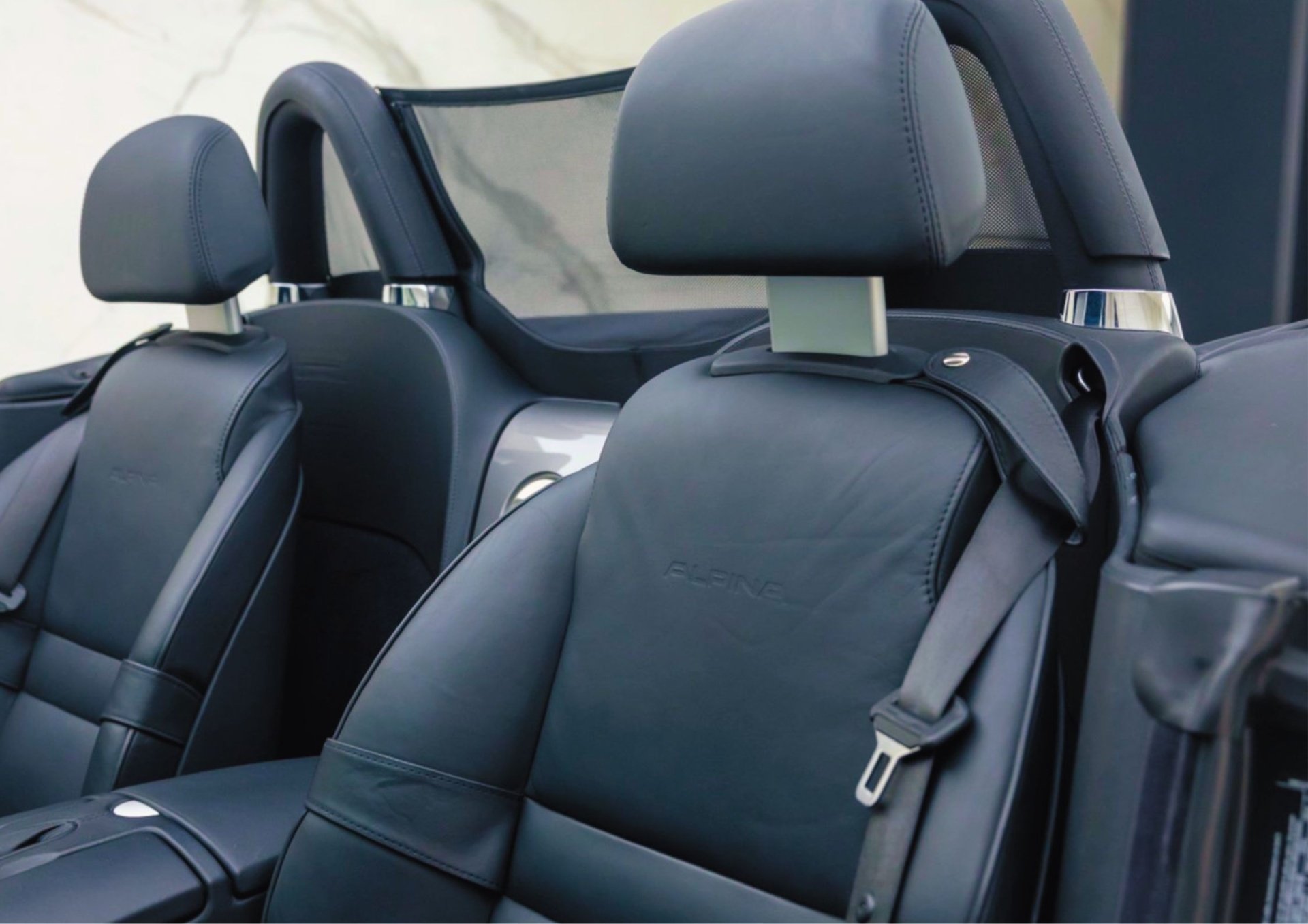
Step inside the Alpina Roadster V8 and the differences from the standard Z8 announce themselves immediately. Alpina fitted a softer grade of Nappa leather throughout the cabin, making it considerably more luxurious to the touch. The Alpina roundel appears in the seat embroidery, on the steering wheel, and across the instrument dials, which were redesigned specifically for this car.
One of the more delightful details is the full model name (that’s the BMW Alpina Roadster V8) embossed on the door seals. It's a small touch, but it speaks to the level of thoroughness Alpina brought to the project.
Fact 6: The Wheels, the Tyres, and the Road Presence Are Transformative
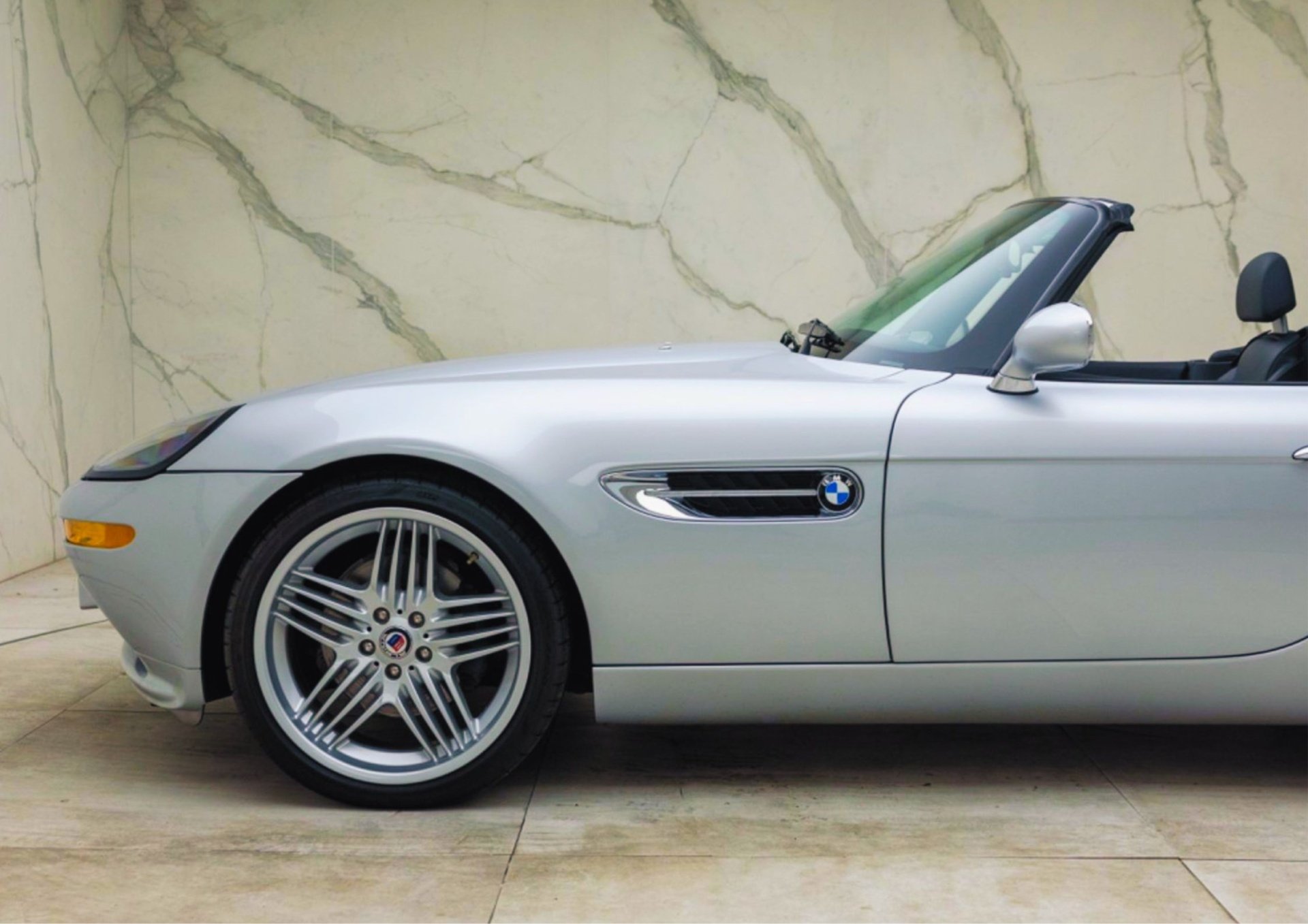
Where the Z8 rode on 18-inch wheels with run-flat tyres, Alpina replaced the entire setup with their signature 20-inch Alpina alloys and conventional Pirelli P Zero tyres with a proper sidewall. The visual effect alone is significant: the Alpina sits with a sense of occasion and road presence that the standard car simply cannot match.
The practical effect is equally notable. Run-flat tyres, by their nature, are stiffer than conventional rubber and transmit more road texture into the cabin. The combination of Alpina's softer suspension tune and the Pirelli P Zeros transforms the ride quality into something genuinely grand touring in character. Comfortable, composed, and refined at the speeds where you'll spend the majority of your time.
Fact 7: Just 555 Were Built - and This One Comes With Its Number on the Key
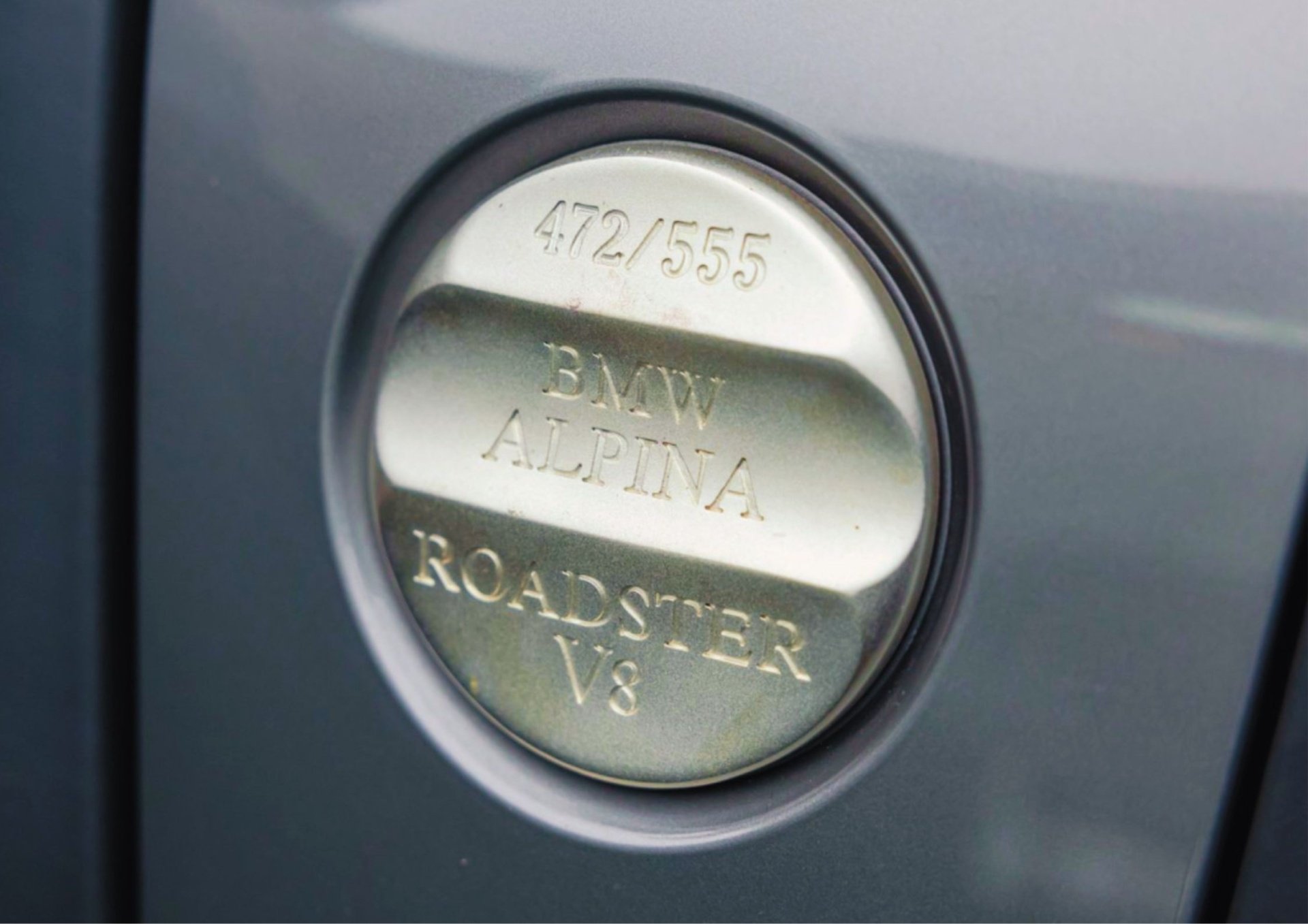
Production of the Alpina Roadster V8 amounted to exactly 555 units built between June 2002 and October 2003. Of those, 450 were exported to the United States - making it the first model the company ever sold through BMW's retail network in America.
Each car also carries a numbered build plaque within the cabin, identifying its individual position in the production run. The example featured in the video is number 472, but what makes this detail particularly special is that the number is also recorded on the key. We think it’s a nice little touch.
One More Thing: Two Roofs Are Better Than One
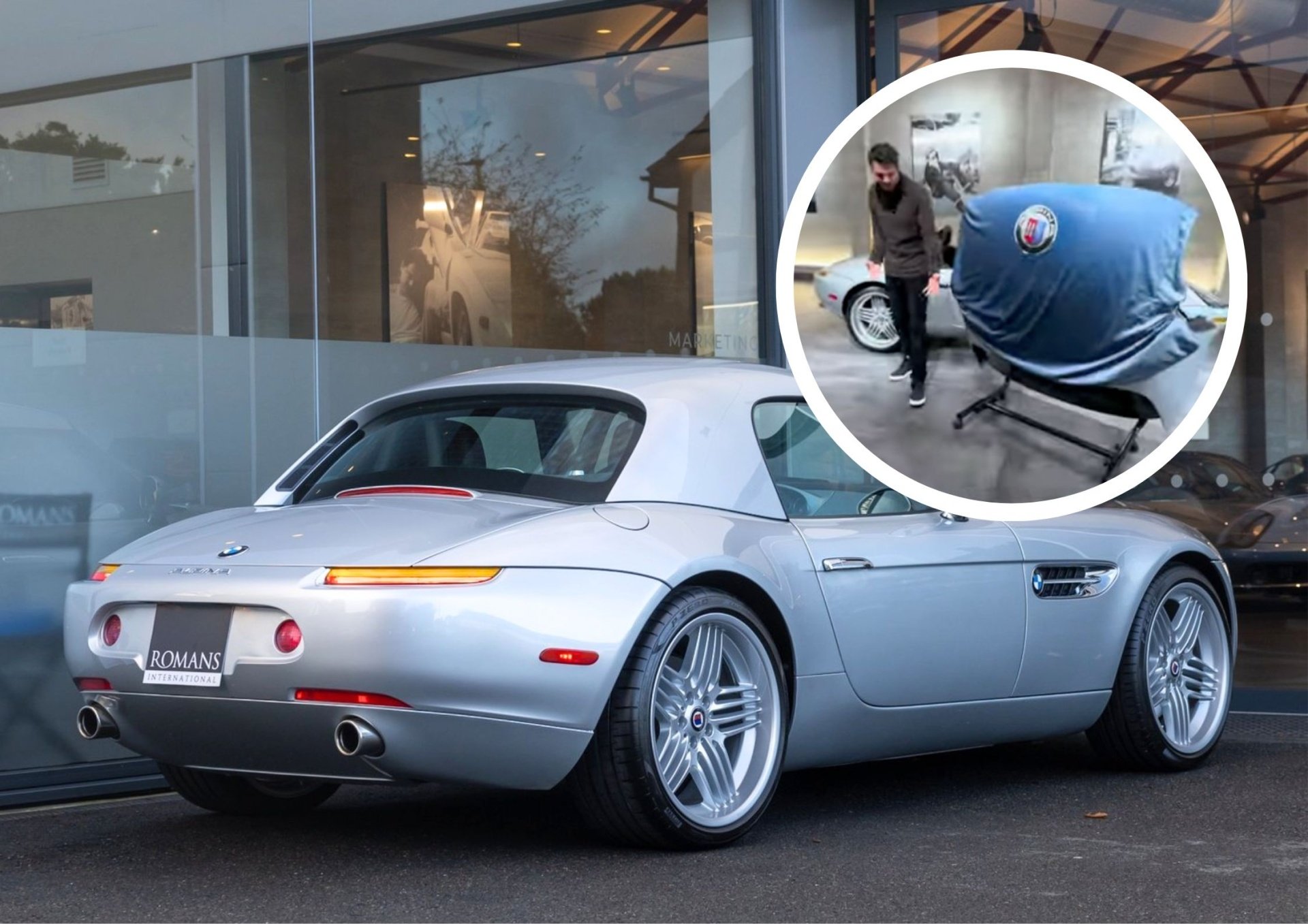
The Alpina Roadster V8 was delivered with not one roof, but two. The standard electrically operated soft-top folds neatly away beneath a leather casing in body colour - it’s simple, elegant, and perfectly suited to an impromptu open-air drive. But there is also a colour-matched metal hardtop that transforms the car entirely, converting the Alpina into something that looks and behaves more like a grand touring coupé.
The hardtop is supplied with its own portable stand and an Alpina-branded protective cover. As you’d imagine, this is presented with the same attention to detail as the rest of the car. It is a feature that rewards owners across all seasons and all conditions, giving the Alpina Roadster V8 a versatility that most open-top cars of the era simply couldn't offer.
If You Don’t Know, Now You Know!
And that, in many ways, is the BMW Alpina Roadster V8. It is so much more of a car than it first appears, is more considered than its competition, and even more rewarding the more time you spend with it. If you don't know, now you know!
For more insights from Tom and the team, follow our "If You Don't Know" series on YouTube Shorts, where we explore the details that make each supercar special.