/137/1/16203046156093e2e7ba3a1_romans-international-logo-black-23.05.png)
/137/1/162513748360dda14b60068_romans-international-logo-whiteout.png)
The 10 Greatest Automotive Masterminds of All Time
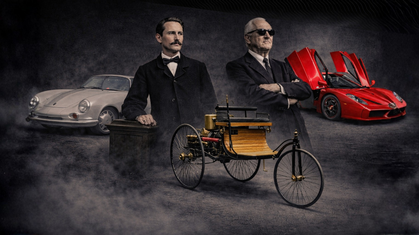
We Pay Tribute to the Visionaries Who Shaped Supercar History
The cars we cherish today exist because of extraordinary individuals who dared to push the boundaries of what’s possible in automotive design. These dream-makers were artists, obsessives, and revolutionaries who transformed metal and machinery into the objects of pure desire we cherish today.
Here at Romans International, we pay tribute through our curated list of the ten greatest automotive masterminds whose legacies continue to inspire every supercar that graces our showroom floor. Without further ado, join us on our countdown from 10 to 1…
10. Frank Stephenson
“The Modern Master”
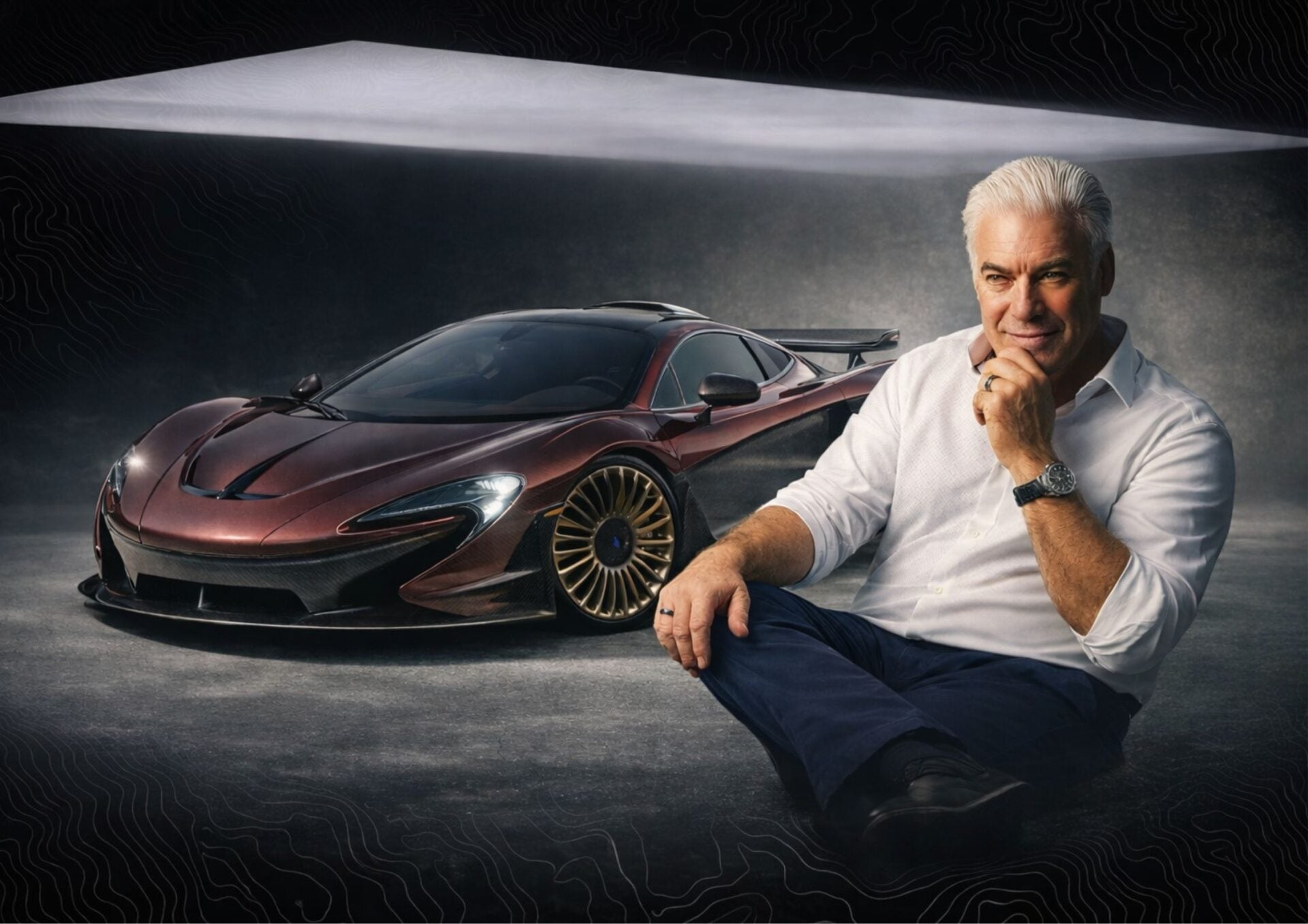
The man who breathed new life into two of the world's most beloved brands deserves his place on any list of automotive greats. Frank Stephenson's redesign of the Mini for BMW in 2001 proved that retro-modern design could work brilliantly, whilst his reimagining of the Fiat 500 repeated that success with Italian flair.
But for supercar enthusiasts, it's his work at McLaren that truly resonates. The P1 hypercar, with its dramatic silhouette and purposeful aerodynamics, is the pinnacle of his career. He also penned the stunning Maserati MC12, creating a car that looked every bit as special as its racing pedigree demanded.
Did You Know?
Stephenson's Ferrari F430 design was his final project at the Prancing Horse brand before moving to McLaren, where he would create the P1. This is, of course, a car that many consider to be the ultimate expression of hypercar design in the 21st century.
9. Horacio Pagani
“The Carbon Fibre Visionary”
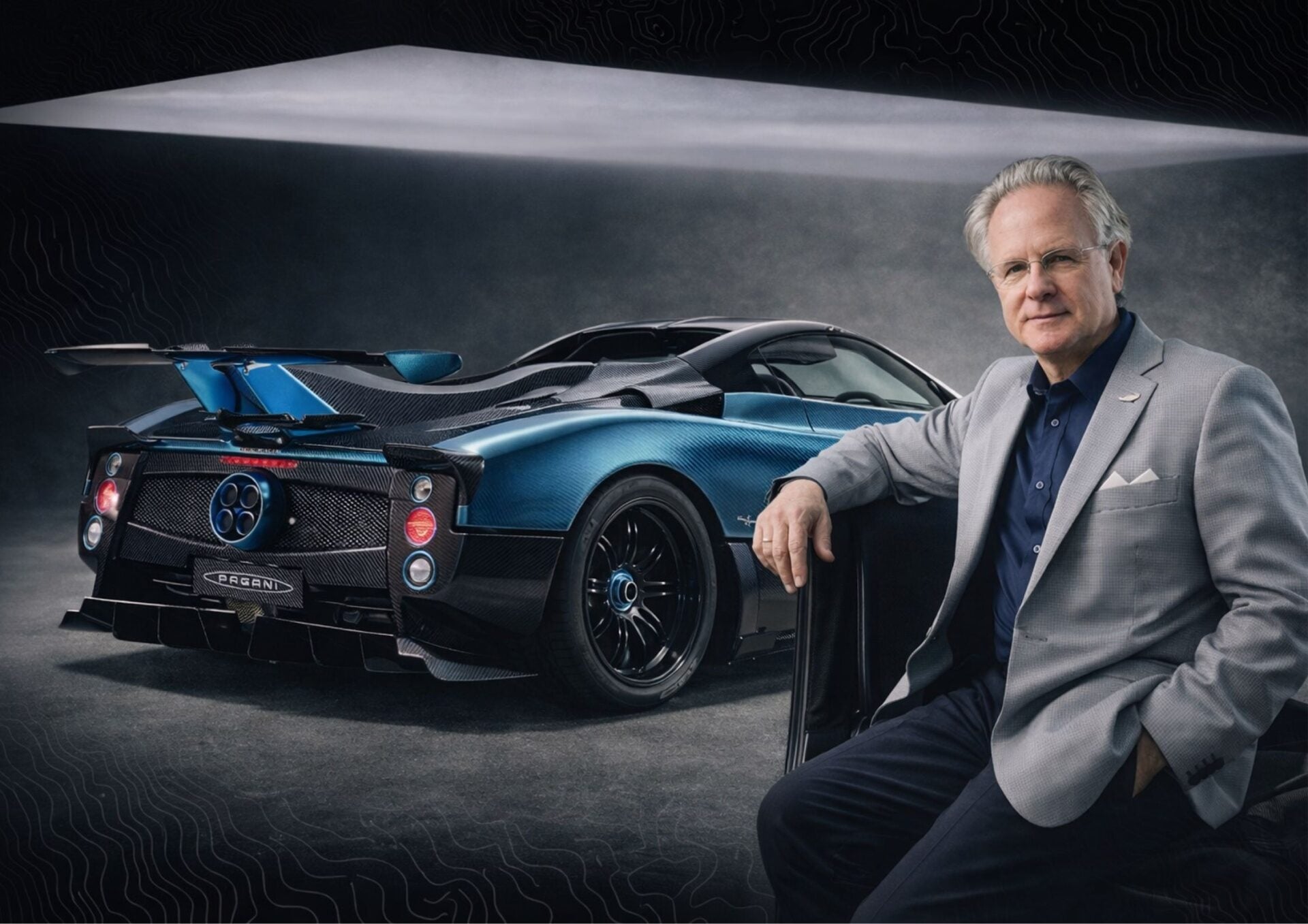
From humble beginnings in Argentina to creating some of the world's most exquisite hypercars, Horacio Pagani's journey is one of pure passion. Starting his career at Lamborghini, where he pioneered the use of carbon fibre composites, Pagani saw potential that others couldn't yet grasp.
The Zonda, launched in 1999, showcased his obsessive attention to detail and artistic approach to car design. But it's the Huayra that truly demonstrates his mastery, with every component treated as if it were a piece of fine jewellery. From bespoke titanium exhaust systems to hand-crafted leather interiors, no detail is too small for Pagani's scrutiny.
Did You Know?
Pagani's cars take their names from winds. For example, Zonda was named after an Argentine wind, and Huayra after the Incan god of wind. Each car embodies Pagani's philosophy that supercars should be as much about emotion and beauty as raw performance - and as quick as the wind.
8. Marcello Gandini
“The Architect of Supercar Design”
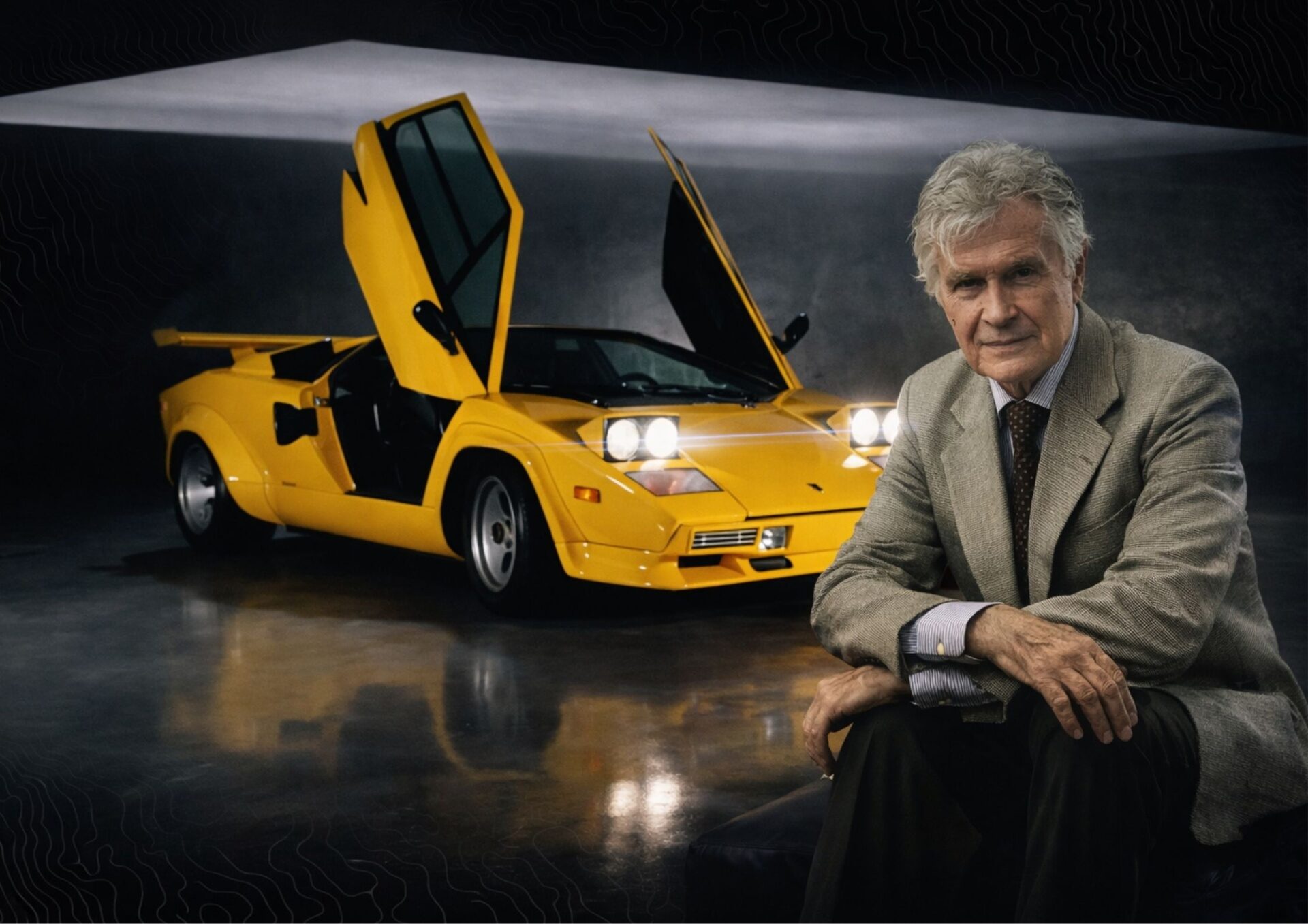
If there's one man responsible for defining what a supercar should look like, it's Marcello Gandini. Working at Bertone car design house, this Italian maestro created some of the most influential automotive shapes of all time. In fact, these are designs that still dictate how we expect a supercar to look today.
For example, his 1966 Lamborghini Miura established the mid-engined supercar blueprint whilst looking absolutely stunning from every angle. Then came the Countach - and with it, the dramatic wedge-shaped silhouette that would define an entire era. Those scissor doors, that razor-sharp profile, that poster-worthy presence - the Countach wasn't just a car, it was a statement. Even today, its influence is visible in every modern Lamborghini.
Did You Know?
Gandini's Countach design was so radical that when it debuted at the 1971 Geneva Motor Show, the crowd's reaction was initially one of stunned silence. The angular, aggressive design was unlike anything the world had seen before.
7. Gordon Murray
“The Purist's Engineer”
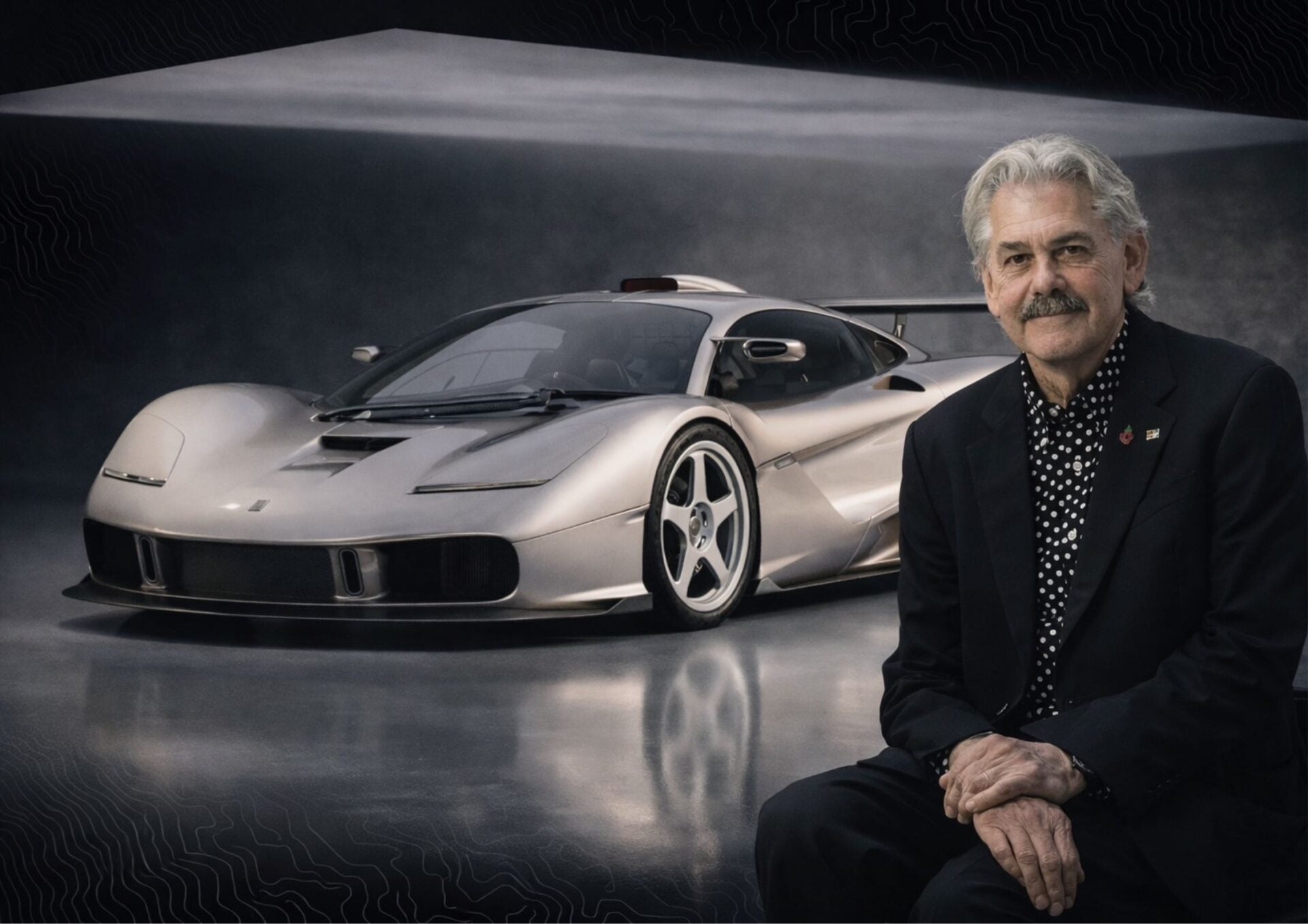
To Gordon Murray, every extra kilogram is a challenge to be tackled. This South African-born engineer's obsession with weight reduction and driver engagement has produced some of the most revered sports cars ever created.
His crowning achievement remains the McLaren F1, which is still considered by many as the greatest supercar ever made. With its central driving position, it was a masterclass in engineering purity. The fact that it held the production car speed record for over a decade wasn't the goal; it was simply a byproduct of perfect design.
Refusing to compromise his principles for modern trends, Murray established Gordon Murray Automotive (GMA) in 2017. Here, he created The T.50, which has been hailed as the ultimate driver’s car. It is without a doubt a spiritual successor to the F1 that proved his philosophy remains as relevant as ever.
Did You Know?
The McLaren F1's revolutionary carbon fibre monocoque was so strong and well-engineered that the road car version needed no structural changes to become a Le Mans winner. Murray's F1 GTR dominated the 1995 24 Hours of Le Mans.
6. Carroll Shelby
“The American Racer Who Conquered Europe”
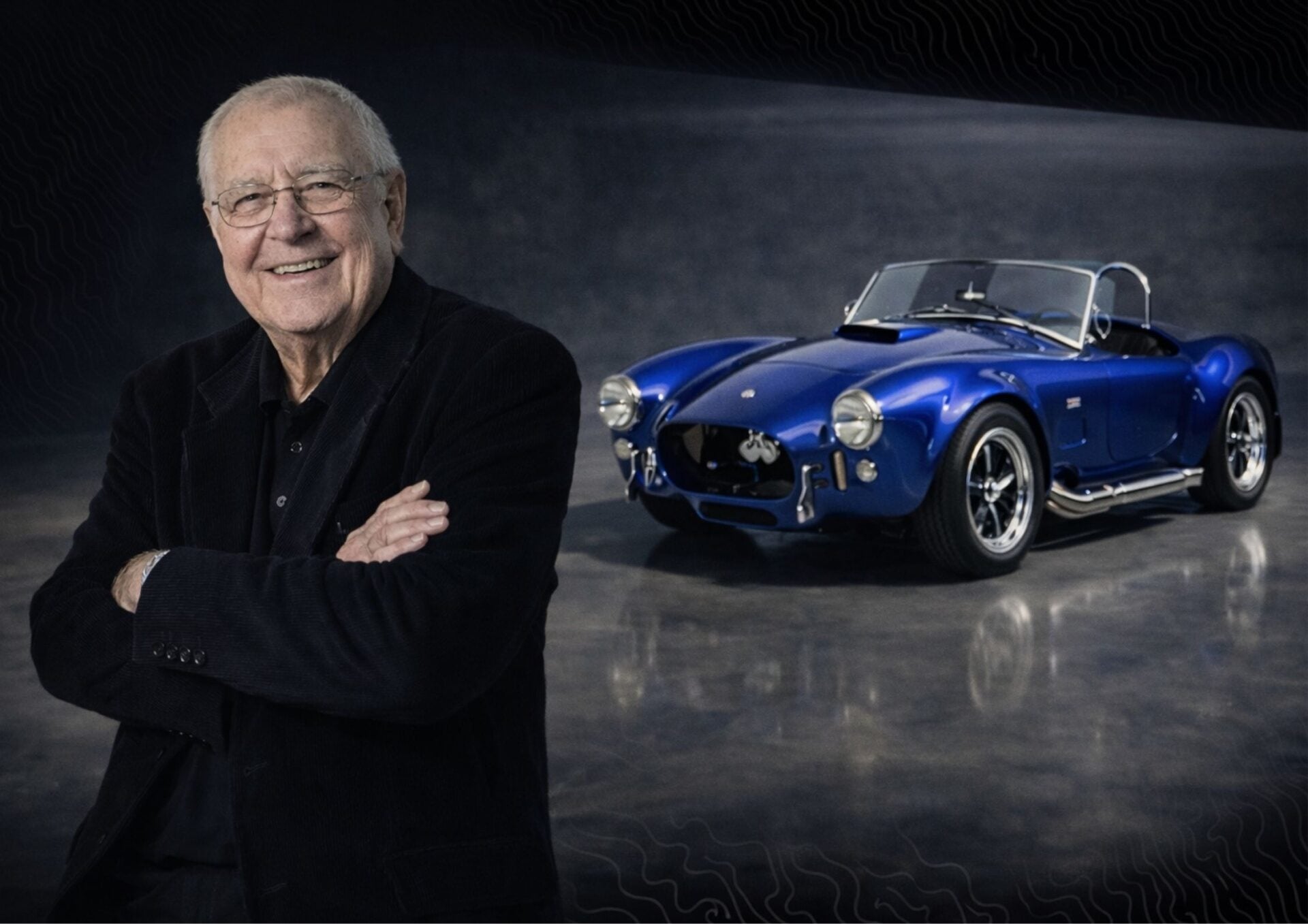
Carroll Shelby proved that American muscle could match European sophistication. This Texas chicken farmer, turned racing driver, turned automotive legend, created two of the most iconic performance cars in history.
The Shelby Cobra, born from shoehorning a Ford V8 into an AC Ace roadster, became an instant classic - brutally fast yet surprisingly refined. But it was the Ford GT40 programme that truly showcased his genius. Under Shelby's guidance, Ford achieved what many thought impossible: beating Ferrari at Le Mans.
Did You Know?
Shelby's heart condition forced him to retire from racing at the peak of his career, but this setback led to his greatest achievements as a car builder. After a heart transplant in 1990, he famously said he could "feel the difference" when driving, attributing his renewed sensitivity to the new heart.
5. Colin Chapman
“The Lightweight Revolutionary”
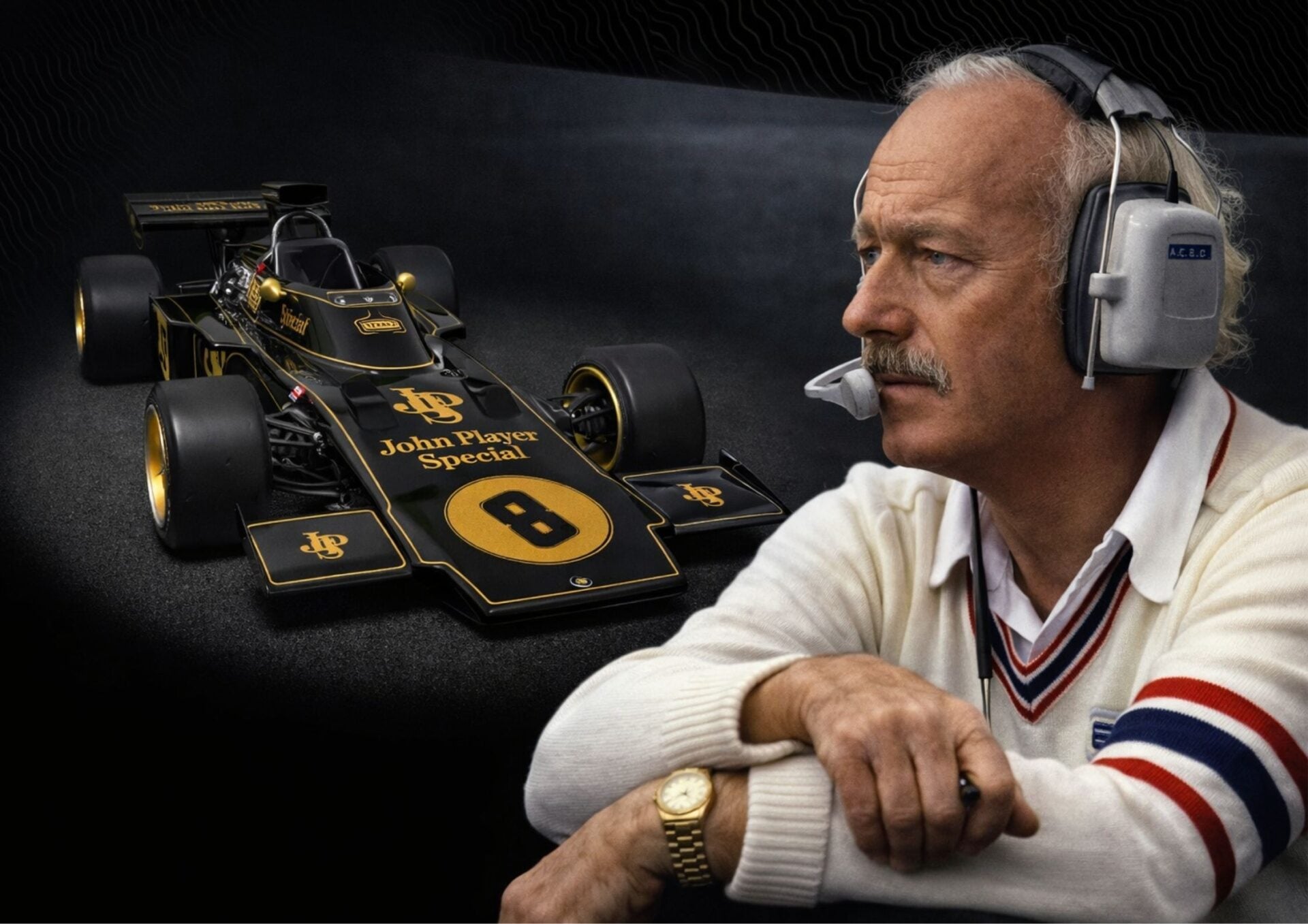
"Adding power makes you faster on the straights; subtracting weight makes you faster everywhere." This philosophy defined Colin Chapman's entire career at Lotus, where he revolutionised both Formula 1 and road car design.
Chapman's innovations read like a textbook on modern racing. His Lotus 72 dominated F1 in the early 1970s, whilst the legendary Lotus 79 was so advanced it was effectively banned through regulation changes.
Did You Know?
Chapman's innovations were so revolutionary that Formula 1 teams still use his ground effect aerodynamic principles today.
4. Ettore Bugatti
“The Artist Engineer”
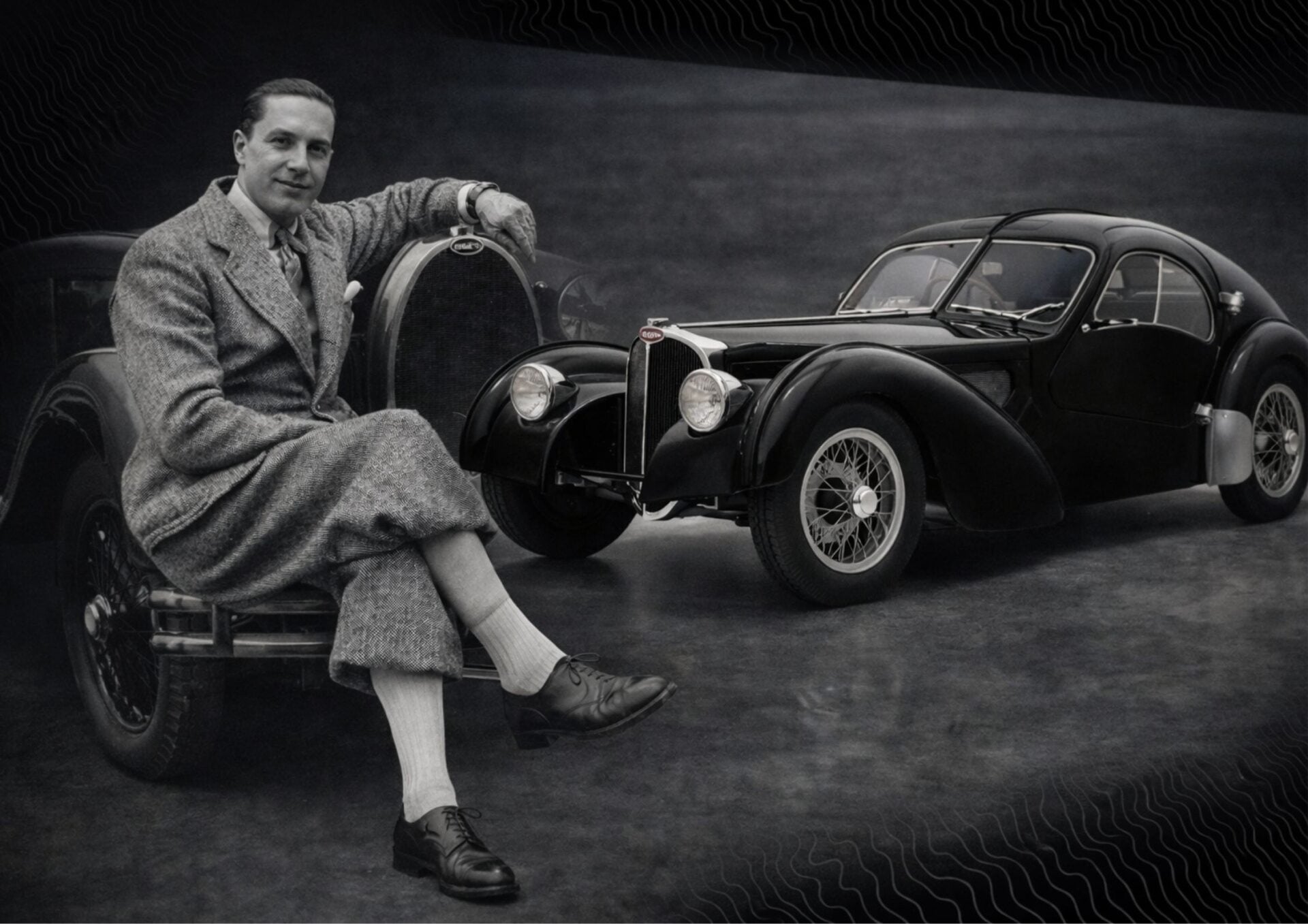
Ettore Bugatti has built a career on creating automotive art. This Italian-born, French-based genius treated each vehicle as a sculpture, obsessing over every curve, every detail, every proportion. Bugatti famously declared, "If it's comparable, it's no longer Bugatti."
His Type 35 dominated Grand Prix racing in the 1920s, winning over 1,000 races - a record that stands to this day. But it was cars like the Type 41 Royale and Type 57 Atlantic that showcased his true genius: combining breathtaking beauty with engineering excellence.
Did You Know?
Bugatti's Type 57SC Atlantic is considered one of the most beautiful cars ever created. Only four were built, and one was sold in 2010 for an estimated £30 million.
3. Ferdinand Porsche
“The Engineering Genius Who Built an Empire”
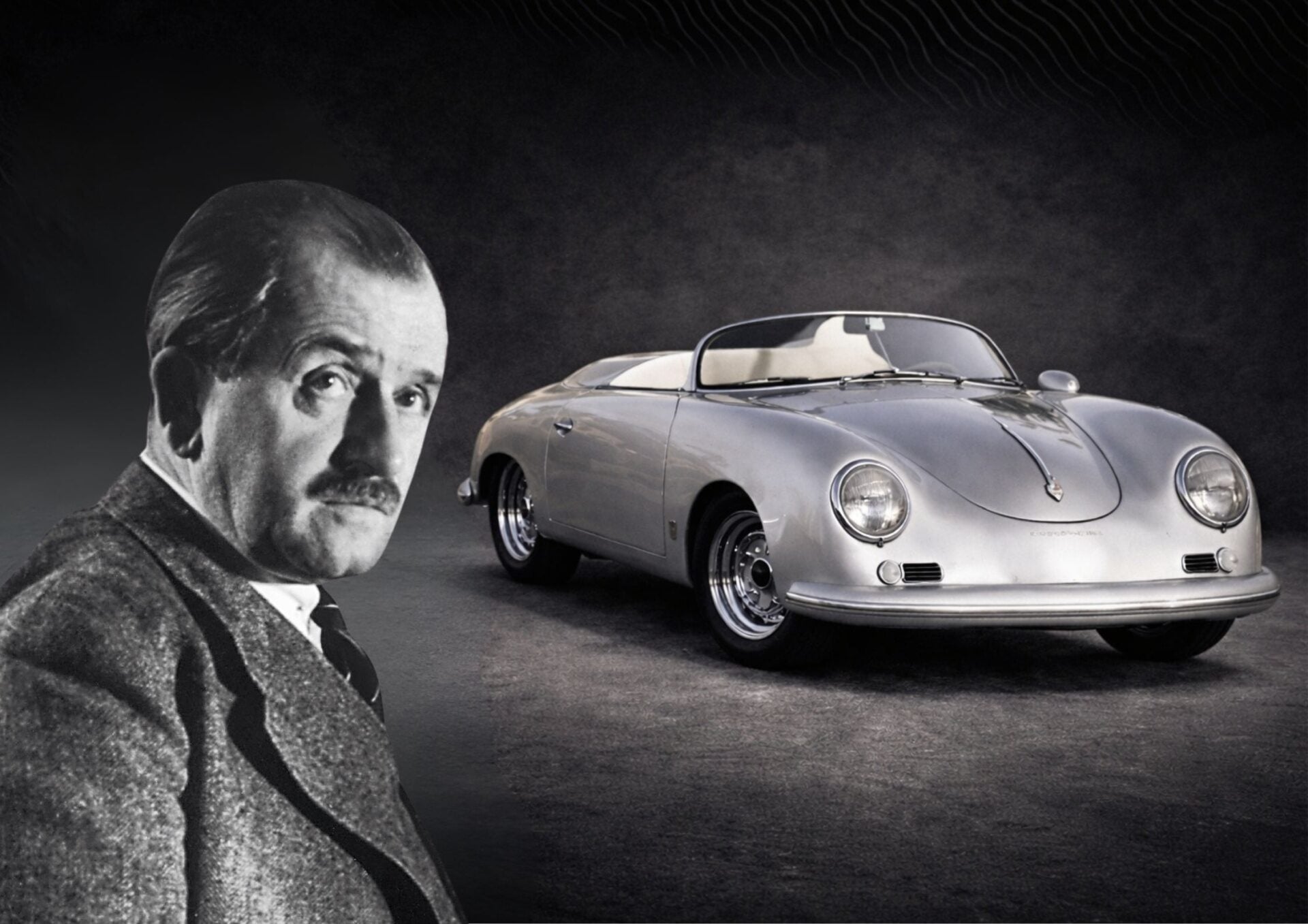
Before there was the 911, before there was the company that bears his name, Ferdinand Porsche was already revolutionising automotive engineering. His innovative work included creating the world's first hybrid vehicle (the Lohner-Porsche), designing Mercedes' dominant Grand Prix cars, and establishing the principles that would define sports car engineering.
His crowning commercial achievement (the Volkswagen Beetle) became the world's best-selling car, bringing affordable motoring to millions. But for enthusiasts, it's the Porsche 356 that matters most. Built in a small Austrian sawmill in 1948, it established the rear-engine, air-cooled philosophy that would evolve into the legendary 911.
Did You Know?
Ferdinand Porsche was just 25 when he developed the world's first functioning hybrid-electric vehicle - 115 years before hybrid technology became mainstream. His Lohner-Porsche Elektromobil used electric motors in the wheel hubs, a concept so advanced that it wouldn't be widely adopted until the 21st century.
2. Enzo Ferrari
“Il Commendatore (The Commander)”
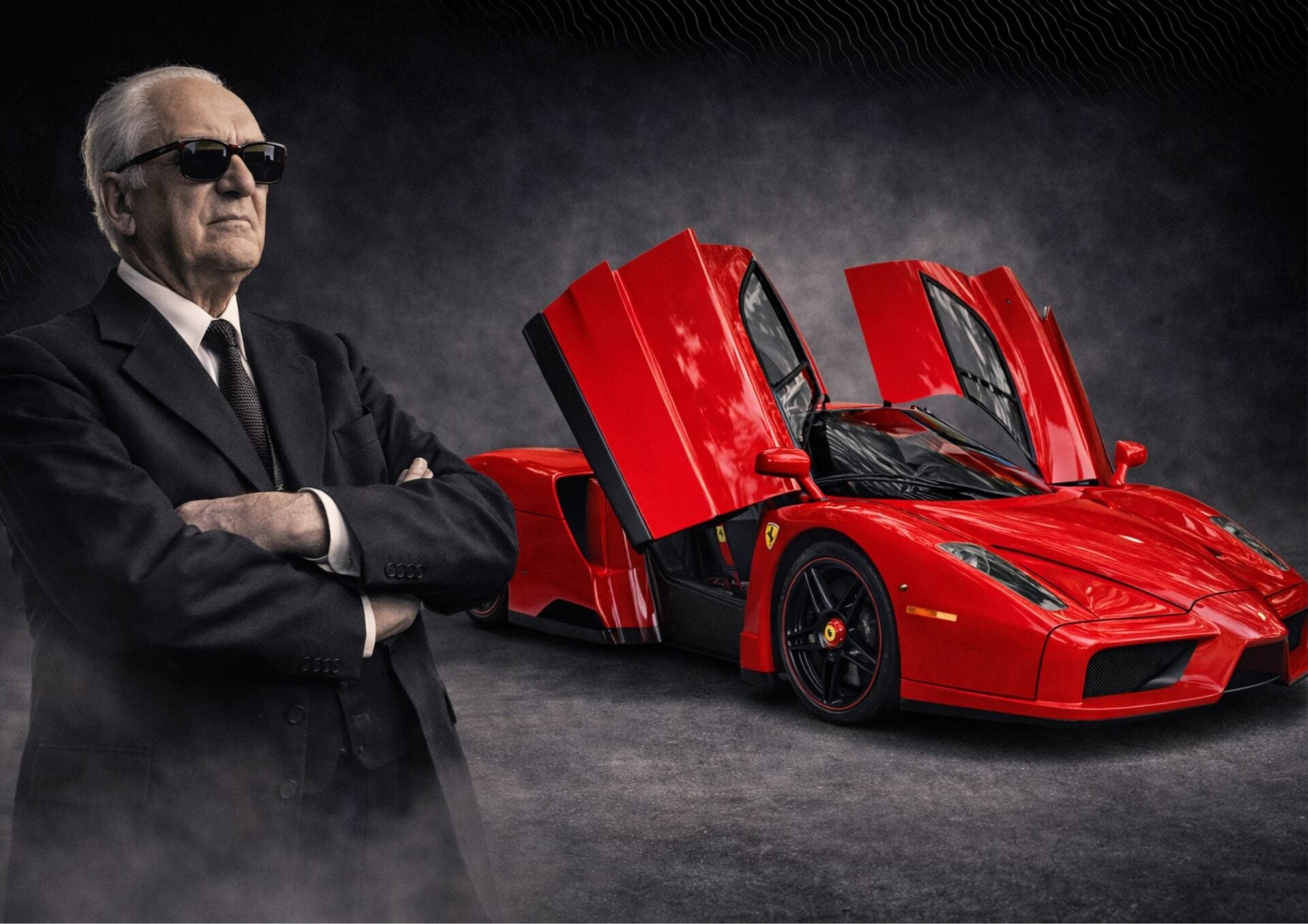
Few names in automotive history carry the weight of Enzo Ferrari. This passionate, demanding, sometimes difficult man created not just a car company, but a religion for enthusiasts worldwide.
Ferrari's genius lay not in engineering (he readily admitted he wasn't a technical expert) but in his ability to attract brilliant minds and push them to create greatness. From Formula 1 dominance to road cars that set benchmarks for decades, Ferrari understood that racing success translated directly to road car desirability.
Did You Know?
Enzo Ferrari famously wore his trademark dark glasses year-round, not as a fashion statement but because he suffered from weak eyes after serving in World War I.
1. Carl Benz
“The Man Who Started It All”
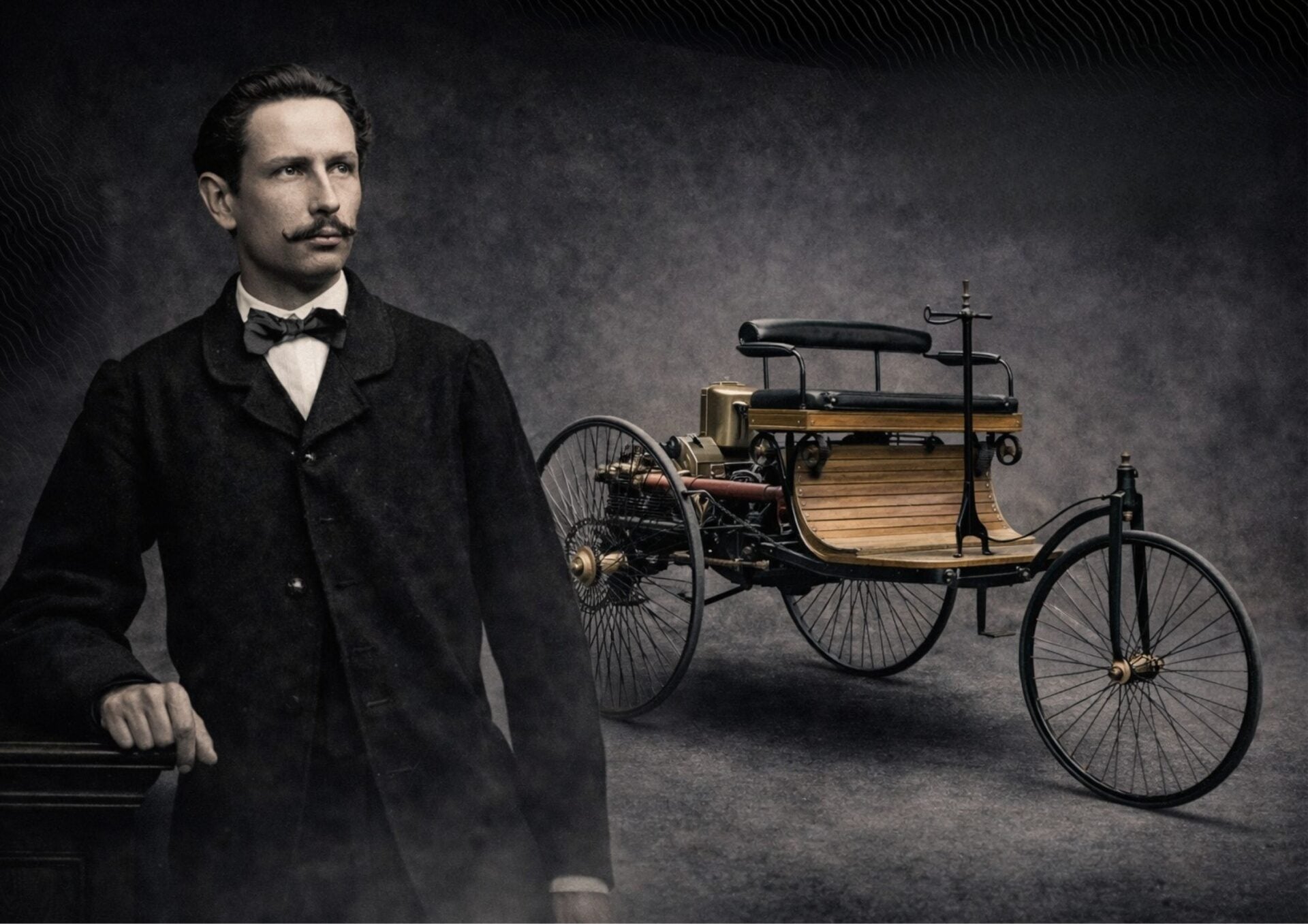
Without Carl Benz (who changed the spelling of his name from Karl), none of the other automotive masterminds on our list would exist. In 1886, this German engineer patented the Motorwagen - widely recognised as the first true automobile.
Benz's invention was revolutionary, but it was his wife Bertha who truly proved its potential. In 1888, she undertook the first long-distance automobile journey. Her trip demonstrated the car's reliability and brought it major publicity.
Did You Know?
Bertha Benz's famous journey wasn't a planned publicity stunt, but a genuine test that ended up revealing practical improvements. She invented brake pads when the wooden brake blocks wore out (getting a cobbler to nail leather onto them), and cleared a fuel line with her hat pin. Her insightful feedback led directly to improvements in the second-generation Motorwagen.
The Legacy Lives On at Romans International
From Carl Benz's first tentative journey to today's 200mph+ hypercars, these ten visionaries transformed our relationship with automobiles. They proved that cars could be more than mere transportation - they could be the stuff of dreams.
And, their influence extends far beyond their own creations. Every time Porsche develops a new 911 GT3, Ferdinand's engineering principles guide the process. When McLaren launches a new Ultimate Series hypercar, Gordon Murray's lightweight philosophy echoes through every carbon fibre panel. And when Ferrari unveils its latest V12, Enzo's spirit of uncompromising performance lives on.
At Romans International, we're privileged to handle the cars these masters inspired. The supercars we love today exist because these ten individuals refused to accept that "good enough" was ever good enough. And, do you know what? That’s more than good enough for us.