/137/1/16203046156093e2e7ba3a1_romans-international-logo-black-23.05.png)
/137/1/162513748360dda14b60068_romans-international-logo-whiteout.png)
The Porsche 992 Turbo S Buying Guide
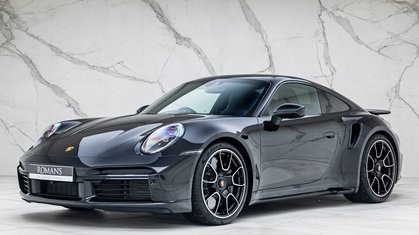
The 992 Turbo S represents something increasingly rare in today's supercar landscape – genuine everyday usability wrapped in hypercar performance. It's the automotive equivalent of having your cake, eating it, then going back for seconds. Whether you're considering one as a daily weapon, weekend toy, or shrewd investment play, understanding the specification minefield is crucial. Some options genuinely transform the car's character and value. Others are expensive distractions.
This comprehensive guide breaks down everything you need to know: the critical options for desirability, the expensive mistakes to avoid, ownership costs, and the eternal Coupé versus Cabriolet debate. We'll also tackle whether the standard Turbo makes sense, or if you really need that S badge on the back.
If you're also considering the more track-focused GT variants, our GT3 vs GT3 RS comparison explores those sharper-edged alternatives.
Understanding the 992.1 Generation
The 992.1 Turbo S arrived in late 2020 and concluded production in 2024, a four-year run that saw minimal mechanical evolution. Porsche didn't tinker with the formula because, frankly, they'd nailed it first time. A few software updates materialised, some additional options became available, but fundamentally, a 2021 model is mechanically identical to a 2024 model.
The 992.2 generation with hybrid assistance is now arriving, priced well north of £200,000, which should provide solid support for 992.1 values.
In the secondhand market, a properly spec'd 2021 car will always trump a basic 2024 example. The options we're about to detail have far more influence on desirability and value than production date.
Exterior Options
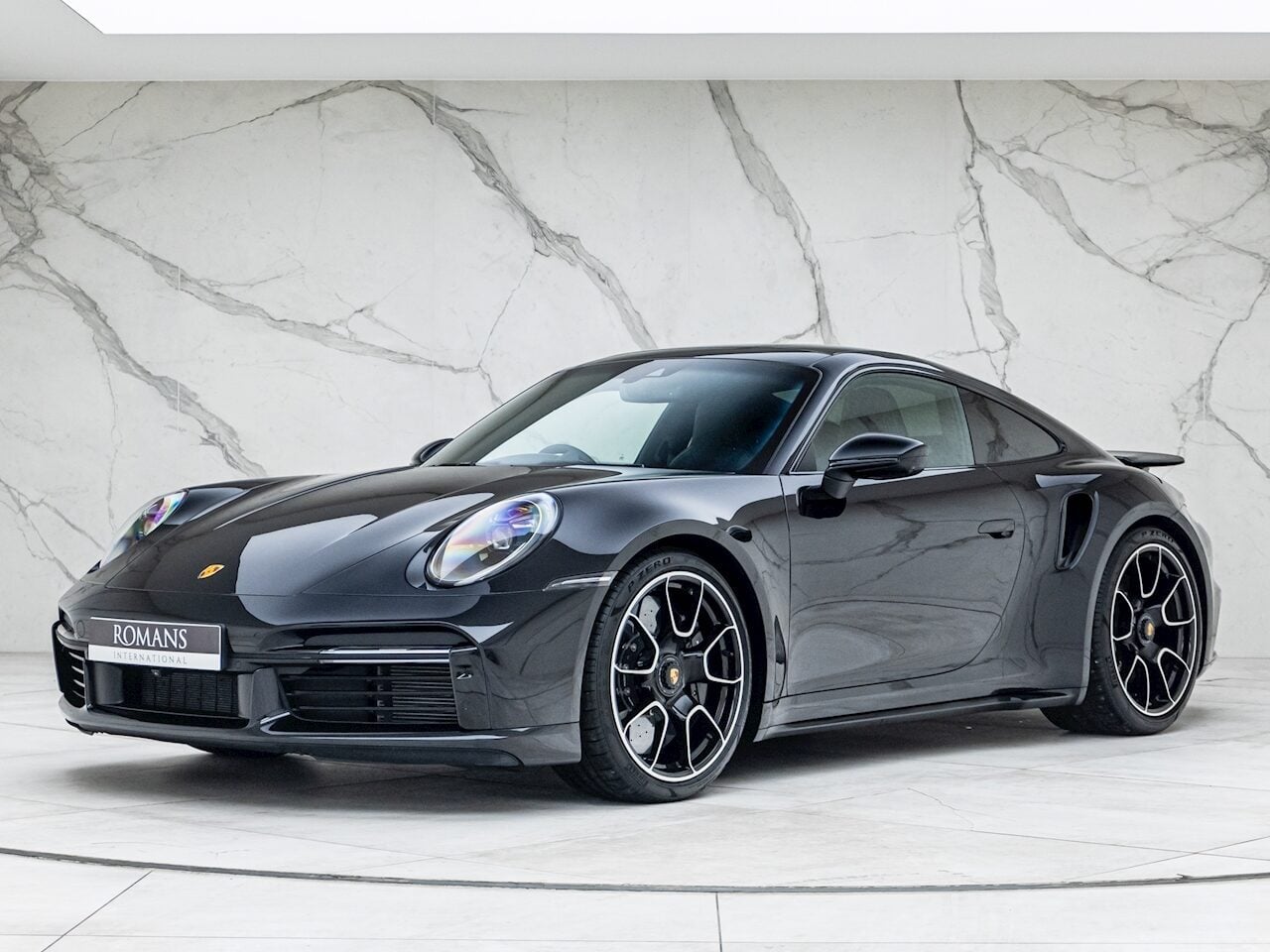
Let's cut through the extensive options list and focus on specifications that genuinely affect value and visual impact.
911 Turbo Sport Design Package (£4,000)
This is the headline act, transforming the Turbo S properly menacing. At over four grand from new, it's not cheap, but the impact justifies the investment.
Extended Rear Wing: The standard deployable spoiler adopts a conservative, almost apologetic profile. The Sport Design package delivers substantial additional sections either side, complete with aggressive winglets that look like they mean business. Spec it in high-gloss black and the entire deployable element comes finished to match, creating a far more cohesive, dramatic aesthetic.
High-Gloss Black Bodywork: The rear apron gets properly painted rather than left in matte plastic, as do the side skirts. It elevates the entire rear three-quarter view from "expensive Porsche" to something genuinely intimidating.
Redesigned Front Splitter: A completely different front-end design featuring dramatic side fins and a high-gloss black central section.
This package is pure visual drama, and it works spectacularly. We consistently see customers specifically hunting for Sport Design-equipped cars, and they command sizeable premiums on the used market. If you're choosing between two otherwise identical examples, the one with this package will sell faster and for more money. In our view, it's non-negotiable.
Exterior Package Painted (£1,500-£2,000)
The Sport Design package's more conservative sibling. Exterior Package Painted takes care of additional trim pieces, including the front grille slat, rear side air intakes, side skirts, rear apron, and small rear bumper elements. It’s available in body colour or high-gloss black.
It's a nice-to-have rather than essential. Most Turbo S buyers aren't losing sleep over a few matte plastic sections. The one practical advantage is that the side skirts occupy vulnerable real estate, and keeping them in plastic means avoiding body-coloured panel resprays when they inevitably collect battle scars.
Sports Exhaust System (£2,000)
This is the hill we're prepared to die on. The sports exhaust is absolutely essential, and cars without it demonstrably struggle in the used market.
Standard Turbo S models receive quad tailpipes with twin pipes either side. They look perfectly acceptable. The problem is they're utterly lifeless, and about as emotionally engaging as a tax return. For a car this fast, that's criminal.
The sports exhaust delivers singular oval tips either side (cleaner, more purposeful) plus an interior button that opens the valves. Suddenly, you've got theatre; pops, crackles, a properly angry bark on downshifts. No, it's not a naturally-aspirated GT3 wail, but it adds a crucial layer of engagement the standard system completely lacks.
The market speaks volumes: non-sports exhaust cars sit longer and sell for less. At £2,180, it's a bargain for what it delivers. Between two otherwise identical cars, the sports exhaust example wins every single time.
Roof Options
Electric Glass Sunroof (£1,500)
Far and away the most popular specification, and deservedly so. Beyond the tilt-and-slide functionality, it floods the cabin with light whether open or closed. Without it, the interior can feel a bit claustrophobic, like sitting in a very fast cave. The glass roof transforms the sense of space.
You get a negligible weight penalty, and what some purists consider a slight visual compromise from the tinted glass with black strips either side. For anyone actually driving the car rather than displaying it, the glass roof is the correct choice.
Metal Sunroof (£1,100+)
Tilt-and-slide functionality, body colour finish for uninterrupted lines, but no light ingress when closed. Appeals to aesthetic purists.
Carbon Fibre Roof (£2,900+)
Looks fantastic, shaves a few kilograms, costs nearly three grand. For a daily-driven grand tourer, it's solving a problem that doesn't exist. Save the carbon diet for GT3 RS builds.
Wheel Options: Standard vs Exclusive Design
The Turbo S ships with centre-lock wheels as standard with polished faces with gloss black inserts. Elegant, classy, but identical to GTS wheels. Which rather dilutes the special feeling when you've just invested north of £160,000.
The upgraded Turbo S Exclusive Design wheels (£2,450) solve this identity crisis. Also centre-lock, available in grey with polished edges or (our strong preference) high-gloss black throughout. They provide the visual punch befitting the S badge.
You'll occasionally encounter regular Turbo wheels – the multi-spoke or five-spoke designs – but for resale value, one of the Turbo S-specific options is the way forward.
Brake Calipers
Standard PCCB means traditional yellow calipers. However, Porsche finally introduced high-gloss black calipers on the 992 generation – a detail that transforms the wheel aesthetic into something far more sinister and cohesive. For understated specifications, it's brilliant.
Paint Colours
Colour remains deeply personal, but understanding market dynamics helps inform decisions. As the ultimate daily driver supercar, understated colours move fastest, such as blacks, greys, silvers. They're the smart money. Special colours like Python Green or Shark Blue deliver more drama for weekend use but expect a smaller buyer pool upon resale.
Solid Colours (No Cost)
Black, White, Guards Red
Metallic (£700+)
Gentian Blue (genuinely gorgeous), Agate Grey, GT Silver, Jet Black Metallic (perennially popular)
Special Colours (£1,900+)
Python Green, Shark Blue, Crayon, Arctic Grey, Carmine Red – command modest premiums and work brilliantly for weekend event cars.
Paint to Sample (£8,000+)
Exceptionally rare on Turbo S models, absolutely show-stopping when executed properly.
Lights & Finishing Touches
Headlights
LED Matrix units come standard (top specification), with optional tinting for a sinister aesthetic.
Exclusive Design Tail Lights (£950)
Transforms the rear light bar from red to clear, with additional lateral elements that illuminate when indicating. Proper jewellery for the rear end, absolutely worth having. You also get the Design fuel filler cap for an extra carbon fibre flourish, carbon mirrors, and privacy glass.
Interior Specification
Seats
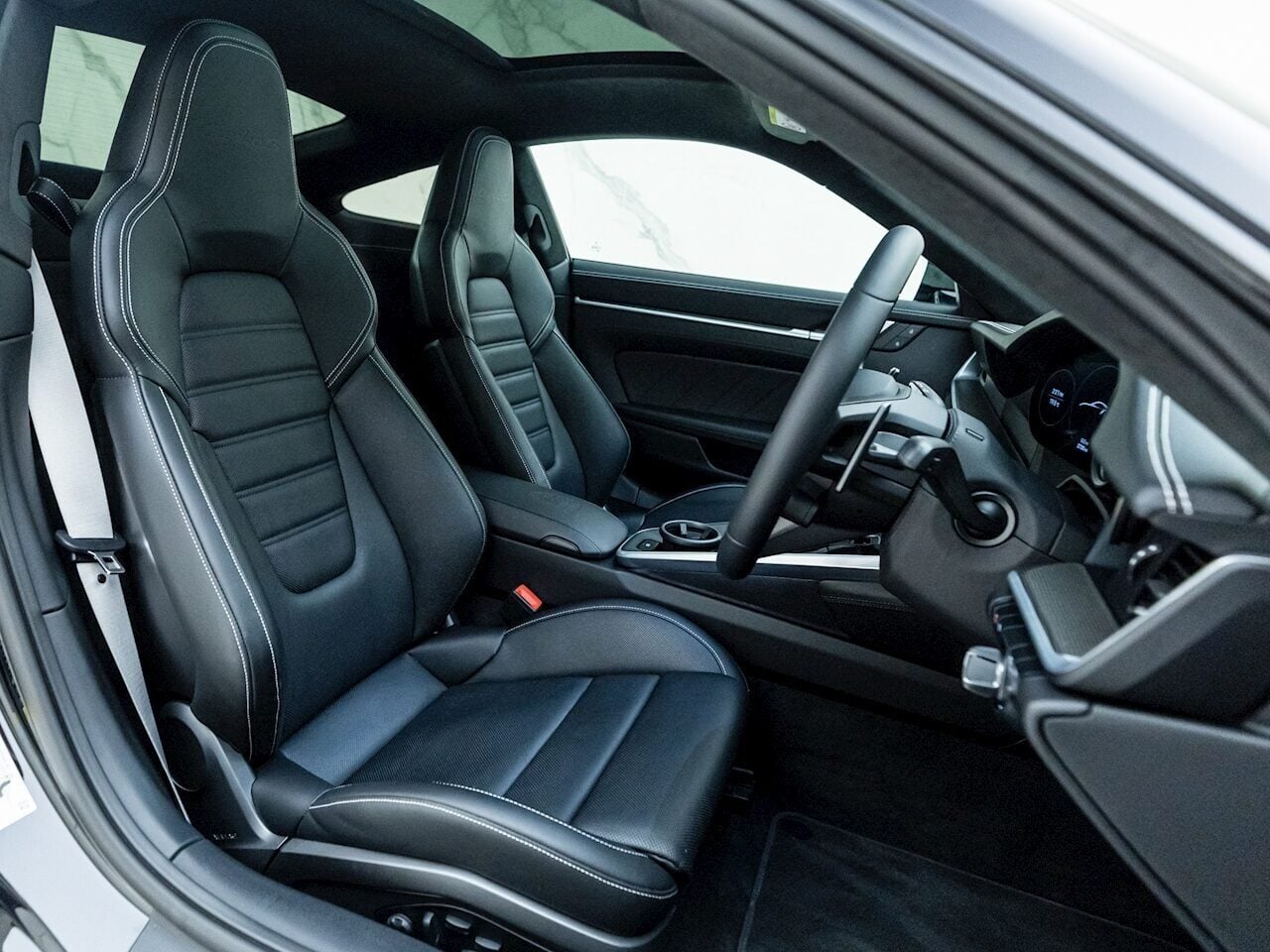
18-Way Adaptive Sports Seats Plus (Standard)
The Goldilocks option for most buyers – just right. Full electric adjustment, memory function, excellent support, crucially, at no cost. For a car destined for regular use, they're the intelligent choice.
Heated seats come as standard, and you can get ventilated seats as an optional upgrade, which can be worth having for the summer months
14-Way Comfort Seats
More forgiving for larger frames, preferred by some for long-distance touring.
4-Way Sport Seats
Most basic specification, favoured by a minority who find them more comfortable.
Full Carbon Bucket Seats (Lightweight Package, £5,000+)
This is specialist territory. Part of the Lightweight Package that strips 36kg and gets rid of the rear seats entirely. Full carbon buckets look absolutely spectacular and feel genuinely race-special.
However, they fundamentally alter the car's character. The Turbo S excels as the car that does everything brilliantly. Remove the practicality and you've created a confused identity. Beautiful to behold, but these cars typically struggle more on the used market. We'd recommend the Adaptive Sports Seats for the vast majority of buyers.
Interior Trim
Most Turbo S models deploy in black leather or dark slate grey – safe, timeless, and works with everything. Lighter interiors (like beige) also sell strongly, as well as red for sportier themes. But you can add a lot of personality to the interior with some of these options:
Deviated Stitching (£2,000)
The single best interior upgrade available. Contrasting stitching throughout the seats, dashboard, and doors. It lifts a black interior from "nice" to "special." Popular choices include Guards Red, Crayon, yellow, or green to complement exterior themes.
Coloured Seat Belts (£330)
The seatbelts can be colour-matched to the stitching for a coordinated effect. It’s a small detail, but it has a significant visual impact.
Race-Tex/Alcantara Elements (£1,500+)
The steering wheel ships in leather as standard, but the Race-Tex GT Sports Steering Wheel upgrade (£1,500) delivers a grippier, more tactile feel. You can also spec Alcantara on select surfaces (centre tunnel, roof liner) for additional cost – when bundled together, these options typically run £2,000-£2,500. It provides textural contrast without overdoing the fuzzy treatment, though be aware that Alcantara steering wheels can show wear after a few years of daily use.
Dashboard Trim
Matte carbon fibre comes standard on the Turbo S and looks spot-on. Wood and silver trim options exist, but carbon is the correct choice. The illuminated carbon door sill guards (£540+) merit inclusion – lovely detail that can be colour-matched to stitching themes.
Heritage Design Packages
Porsche introduced Heritage Design schemes on later 992.1 models (production ceased in June 2022, making them relatively rare), offering distinct retro-inspired themes that extend beyond just interior upholstery.
Classic Theme (£6,000+)
Cognac leather bolsters with Pepita houndstooth centre sections – lifted directly from the Sport Classic playbook. The package includes Heritage Design floor mats, special badging, and extended leather features throughout the cabin. Nostalgia without the cheesiness it's become quite sought-after.
Pure Package (£6000+)
Corduroy in beige (black-atacama beige two-tone) – proper old-school Porsche reminiscent of early 911 interiors. Features extended leather trim package and Heritage Design-specific details. Divisive but genuinely distinctive. Not for everyone, but those who appreciate it really appreciate it.
Club Leather (£4,000+)
Everything is finished in truffle brown leather. Very 1970s, very Porsche. Acquired taste that works brilliantly on the right exterior colour.
These packages add modest value and genuine differentiation. The limited production window (they were discontinued relatively early in the 992.1 run) means Heritage Design Turbo S models are rarer than standard specifications. For buyers wanting something beyond standard black leather formulas, they merit serious consideration – particularly the Classic theme, which has developed a small but dedicated following.
Technology
Audio Systems
Bose Surround Sound comes as standard, and it’s perfectly adequate for most buyers. You get ten speakers delivering quality sound without additional cost.
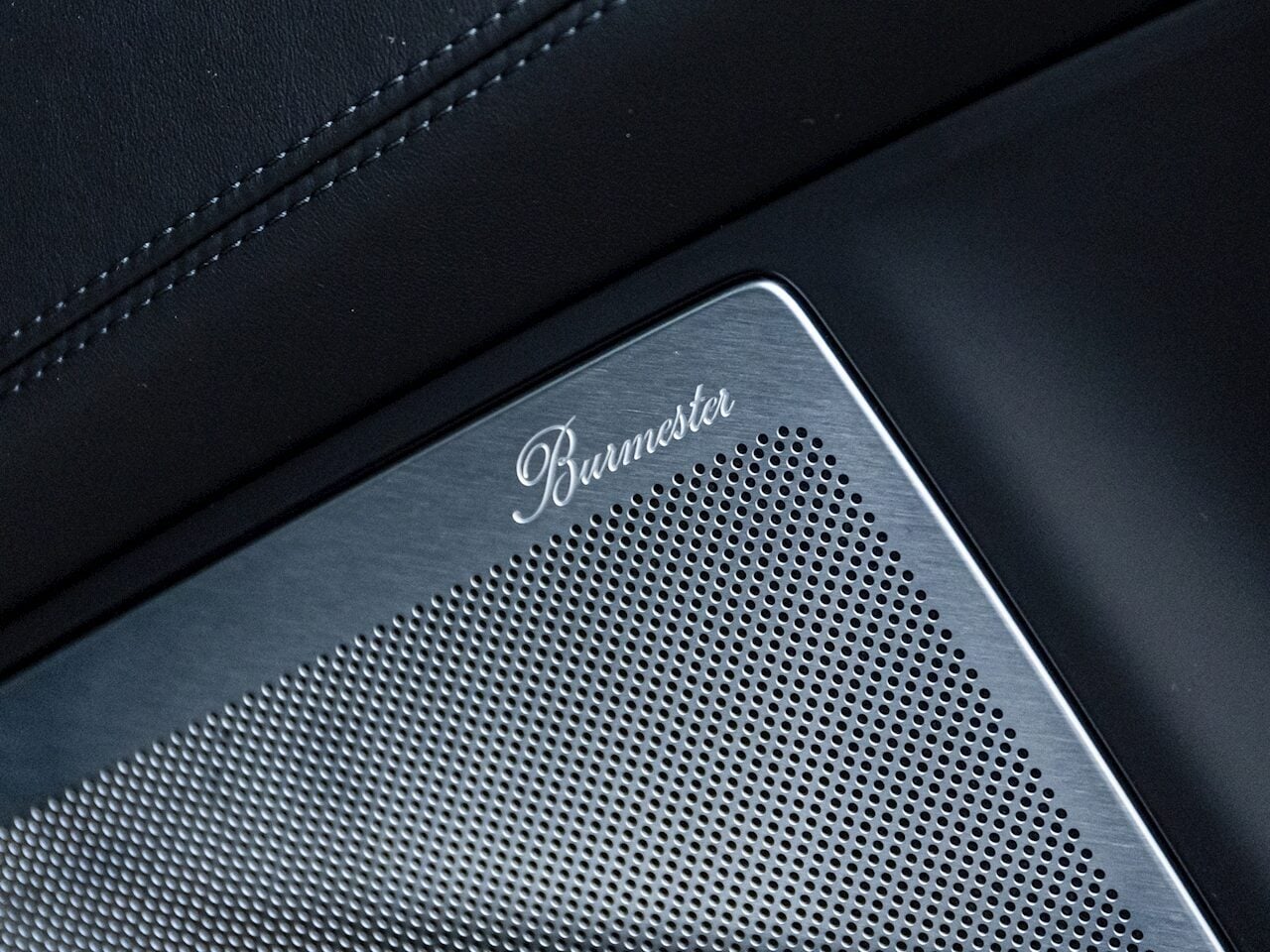
Burmester High-End Surround Sound (£2,250)
The upgrade that's actually worth making. Thirteen speakers plus subwoofer, noticeably superior clarity and depth. At just over two grand (versus £3k-£4k on other 911s), it represents genuine value. If you appreciate quality audio, you'll notice the difference every journey. If you're indifferent, the standard Bose won't disappoint.
Parking & Vision Systems
Rear-View Camera (Standard)
Comes as standard equipment, displays on the central screen when reversing. Perfectly adequate on its own, though Surround View transforms it into something genuinely brilliant.
Surround View (£1,430)
Top-down camera plus side cameras for 360-degree coverage. Essential for protecting expensive alloys from kerb rash, particularly given those massive 21-inch rear wheels. The system works brilliantly, with crisp visuals and intuitive graphics. This is one of the few options we'd strongly recommend.
ParkAssist Front and Rear (£840)
Adds front and rear parking sensors to the standard rear-only system. Combined with Surround View, it creates a comprehensive parking package. Useful in tight spaces, though the cameras do most of the heavy lifting.
Remote Park Assist (£670)
Control the car via smartphone whilst standing outside. Sounds impressive in the brochure, probably more hassle than traditional parking in reality. The novelty wears off quickly. Skip it.
Adaptive Cruise Control (£1,400)
The one driver aid we genuinely recommend without reservation. Centrally-mounted radar maintains proper following distance, reduces motorway fatigue dramatically. Works seamlessly with PDK for stop-and-go traffic. For a car frequently used for longer journeys, worth every penny.
Lane Change Assist (£668)
Monitors blind spots with warnings in door mirrors. Genuinely useful on motorways, particularly given how quickly the Turbo S closes on slower traffic. Nice to have rather than essential.
Lane Keep Assist (£446) / Traffic Sign Recognition (£380)
Both are mildly useful but not essential. Lane Keep feels slightly intrusive for keen drivers and resets each journey. Sign Recognition helps in unfamiliar areas, but your eyes work fine too.
Night Vision Assist (£2,081)
Thermal imaging displays pedestrians and animals on the instrument cluster. Genuinely clever technology for unlit country roads, but overkill for most buyers unless you undertake extensive night driving.
Connectivity
Porsche Communication Management (Standard)
10.9-inch touchscreen with PCM 6.0 – crisp, responsive, integrated navigation. Apple CarPlay and Android Auto both come standard and work wirelessly. No complaints.
Connect Plus (£400+)
Adds online traffic information, voice control, and connected services. Real-time traffic data proves useful for longer journeys if you rely on navigation regularly.
Suspension & Dynamics
PASM Sport Suspension (£1,250)
Drops ride height 10mm and adds stiffness versus the already excellent standard PASM. Fractionally sharper responses but firmer ride quality.
But it’s probably only worth it if you're chasing track times or want the most aggressive setup possible. For daily use, standard PASM strikes a better balance. The difference is subtle enough to be borderline irrelevant for road driving. Not a deal-breaker either way.
Front Axle Lift System (£1,700+)
The Turbo S isn't particularly low, and the rubber-protected front splitter handles most situations. That said, steep drives and British speed bumps can be brutal. Press a button, the nose lifts 40mm, and you clear the obstacle. The system remembers GPS locations and lifts automatically.
More importantly, it's a desirable options list tick for resale, particularly in the UK. Nice to have, not essential, but adds value.
Power Steering Plus (£210)
Extra assistance at parking speeds, maintains feel at speed. Makes manoeuvring a wide car in tight spaces noticeably easier. But there’s no reason not to spec it at this price.
Comfort Features Worth Having
Heated Steering Wheel (£200+)
Brilliant on cold mornings, warms quickly, and improves every winter journey. Absolutely worth it.
Comfort Access (£400+)
Keyless entry and start. Walk up with the key in your pocket, and the car unlocks. Walk away, it locks. Convenient enough to justify the cost.
Coupé vs Cabriolet
This decision extends beyond simple "roof down or not" considerations. Performance-wise, they are virtually identical in real-world driving. The Coupé possesses a fractionally stiffer structure, but you'd need a racetrack and a stopwatch to measure the difference.
For driving experience, Coupé purists argue it's the only choice – cleaner lines, classic 911 silhouette, zero compromises. They're not wrong. But driving a Cabriolet with the roof down on a summer evening? That's what motoring was invented for. The roof mechanism is also impressively well-insulated when raised.
The Market Reality
Here's where it gets interesting. Cabriolets cost £10k-£15k more from new. Today, used prices are virtually identical. Coupés are also significantly easier to source – roughly double the quantity on UK forecourts.
The bottom line is that Coupés hold value better. If you specifically crave open-air motoring, brilliant – get the Cabriolet. But if you're ambivalent, the Coupé represents better value and easier resale.
For those cross-shopping other supercars in this price bracket, our Aston Martin Vantage vs Porsche 911 Turbo comparison explores two different approaches to everyday performance.
Turbo S vs Regular Turbo: Do You Really Need the S?
The debate that splits Turbo owners down the middle: Is the S badge actually necessary?
What the S Badge Delivers
Power: 641bhp vs 572bhp – that's 70 extra horses you'll absolutely feel, especially launching from standstill. 0-62mph arrives in a barely believable 2.7 seconds.
Standard Equipment Spec: You genuinely receive your money's worth with the S specification.
- PCCB carbon ceramic brakes
- Upgraded LED Matrix headlights
- PDCC (Porsche Dynamic Chassis Control)
- Power-folding mirrors
- Carbon interior trim
- 18-way adaptive sports seats (extra-cost on regular Turbo)
The Case for the Regular Turbo
The counter-argument for the regular Turbo is that they look virtually identical, drive remarkably similarly, and it remains absurdly fast. Some buyers actually prefer the restraint, with the idea that they didn't need the full-fat version because where are you deploying 640bhp on British B-roads anyway?
There's a certain understated confidence in choosing the Turbo over the S. These owners take genuine pleasure in explaining exactly why they didn't need those extra 70 horses or ceramic brakes. It's inverse badge snobbery, and it possesses its own appeal.
But most people buy the S. That badge matters at car meets, and knowing you've secured the top-specification version feels right. If you can afford it, buy the S.
For those considering the even more extreme end of the 911 spectrum, we've covered the GT3 RS vs GT2 RS battle where things get properly serious.
Running Costs
Let's examine what actually owning one of these costs, because several factors might surprise you.
Servicing
Services are required every two years, which sounds reasonable. But the costs might prove eye-opening:
- Year 2 & 4: Around £1,200 – manageable
- Year 6: Approximately £3,000 – ouch
- Year 8: Roughly £4,000 – double ouch
The days of 911s being cheap to service are firmly in the rear-view mirror. At least it's only biannually.
Warranty & Protection
Porsche’s annual warranty costs around £2,200 plus a few hundred for the mandatory 111-point check. Early cars are exiting manufacturer warranty now, though many receive extended coverage. Don't completely dismiss independent warranties – some are excellent – but manufacturer backing provides undeniable peace of mind.
Paint Protection Film is strongly recommended, especially on higher-mileage examples. The front end and rear arches are particularly susceptible to stone chips. If the car lacks PPF when you buy it, budget for adding it.
Also, consider getting the radar detector. In a car this fast, you often don't realise you're doing 90mph. A radar detector showing speed camera locations could save your licence. Worth considering.
Current Market Pricing
As of 2024-2025, used 992.1 Turbo S values in the UK market:
- £155,000-£165,000: Higher mileage (10,000+ miles)
- £165,000-£180,000: Good mileage, well-spec’d
- £180,000-£195,000+: Low mileage, exceptional specification
The incoming 992.2 with hybrid technology and £200k+ pricing should provide solid support for 992.1 values.
The Verdict
The 992 Turbo S represents one of the finest daily-driver supercars ever built – genuine hypercar performance wrapped in everyday usability. But specification matters enormously, both for ownership enjoyment and resale value.
What Really Matters
These are the options that genuinely improve daily ownership and hold value.
Non-Negotiables:
- Sports Exhaust (£2,180): Absolutely essential. Cars without it struggle to sell.
- Sport Design Package (£4,016): Transforms the aesthetic from subtle to spectacular. Commands significant premiums.
- Glass Sunroof (£1,592): Floods the cabin with light and eliminates the cave-like feeling
Core Technology Package (£5,291):
- Burmester Sound (£2,256)
- Surround View (£1,430)
- Adaptive Cruise Control (£1,400)
- Power Steering Plus (£210)
These options genuinely improve daily ownership and hold value.
Interior & Personalisation
Keep it simple. 18-way Adaptive Sports Seats Plus are perfect for most buyers – the carbon buckets look spectacular but fundamentally alter the car's character. Deviated stitching (£2,000+) adds genuine personality to black interiors. Heritage Design packages (£6,000-£7,000) provide distinction but were discontinued June 2022, making them rare.
Coupé vs Cabriolet
Coupés hold value better and are twice as common on the used market. Cabriolets cost £10k-£15k more new but trade for similar money used. If you're ambivalent about open-air motoring, the Coupé is the smarter choice.
Turbo vs Turbo S
The S badge delivers 70 extra horses, £10,000+ of standard equipment (PCCB, PDCC, upgraded interior), and stronger desirability. Most people buy the S because knowing you have the top specification feels right. If you can afford it, buy the S.
Current Market & Running Costs
Used Values (2024-2025):
- £155,000-£165,000: Higher mileage (10,000+ miles)
- £165,000-£180,000: Good mileage, well-specified
- £180,000-£195,000+: Low mileage, exceptional spec
Ownership Reality:
- Services every 2 years: £1,200 (Year 2/4), £3,000 (Year 6), £4,000 (Year 8)
- Annual warranty: £2,200 plus inspection
- The 992.2 hybrid at £200k+ should support 992.1 values
The Bottom Line
Chase specification over age. A properly spec'd 2021 car will always trump a basic 2024 example. The options detailed in this guide have far more influence on desirability and value than production date.
The 992.1 Turbo S represents the pinnacle of the analogue turbocharged 911 – no hybrid assistance, no electrification compromises. With the right specification, it's the ultimate everyday supercar: absurdly fast, astonishingly capable, yet comfortable enough for the daily commute and practical enough for the weekly shop.
Get the spec right, and you'll own one of the most complete performance cars ever built. Armed with this knowledge, you're ready to get a properly-spec’d example that'll deliver maximum enjoyment whilst holding its value.