/137/1/16203046156093e2e7ba3a1_romans-international-logo-black-23.05.png)
/137/1/162513748360dda14b60068_romans-international-logo-whiteout.png)
Porsche 911 GT3 vs GT3 RS: What’s the Difference?
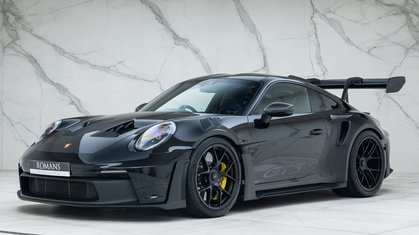
The Porsche 911 GT3 is a lot of fun.
It’s basically a race car that’s equally at home on the Nurburgring as it is at your local M&S. A road-legal, track car that you can thrash on the track and then drive home with little fuss.
It’s almost the ultimate expression of what Porsche is about. Top-end performance, built on years of precision engineering without having to sacrifice usability.
But the GT3 RS is something else.
These 911s have a lot in common. They have naturally aspirated engines, their rear-axle steering and track pedigree, so it’s easy to see why they’re often compared.
But they’re completely different animals.
In this guide, we’re going to walk you through the key differences between the Porsche 911 GT Vs GT3 RS. Covering everything from the exterior to the performance and engine.
So if you’re wondering which GT3 to buy, by the end of this post, you should know which one is right for you.
Pros and Cons
| Category | Porsche 911 GT3 | Porsche 911 GT3 RS |
| Pros | Road and track capable | Track-only focus |
| Manual gearbox option | Aerodynamic performance upgrades | |
| More comfortable for daily use | More aggressive suspension and aero | |
| Less expensive to buy and insure | Faster lap times | |
| Cons | Less extreme on the track | Not for everyday use |
| Fewer aerodynamic tweaks | More expensive to buy and maintain | |
| Lower resale factor | Limited availability, often requires track insurance | |
| May lack "wow" factor for collectors (vs. RS) | Often overkill for casual driving |
Looking For A Porsche? Check out our range of Porches in our showroom.
Exterior
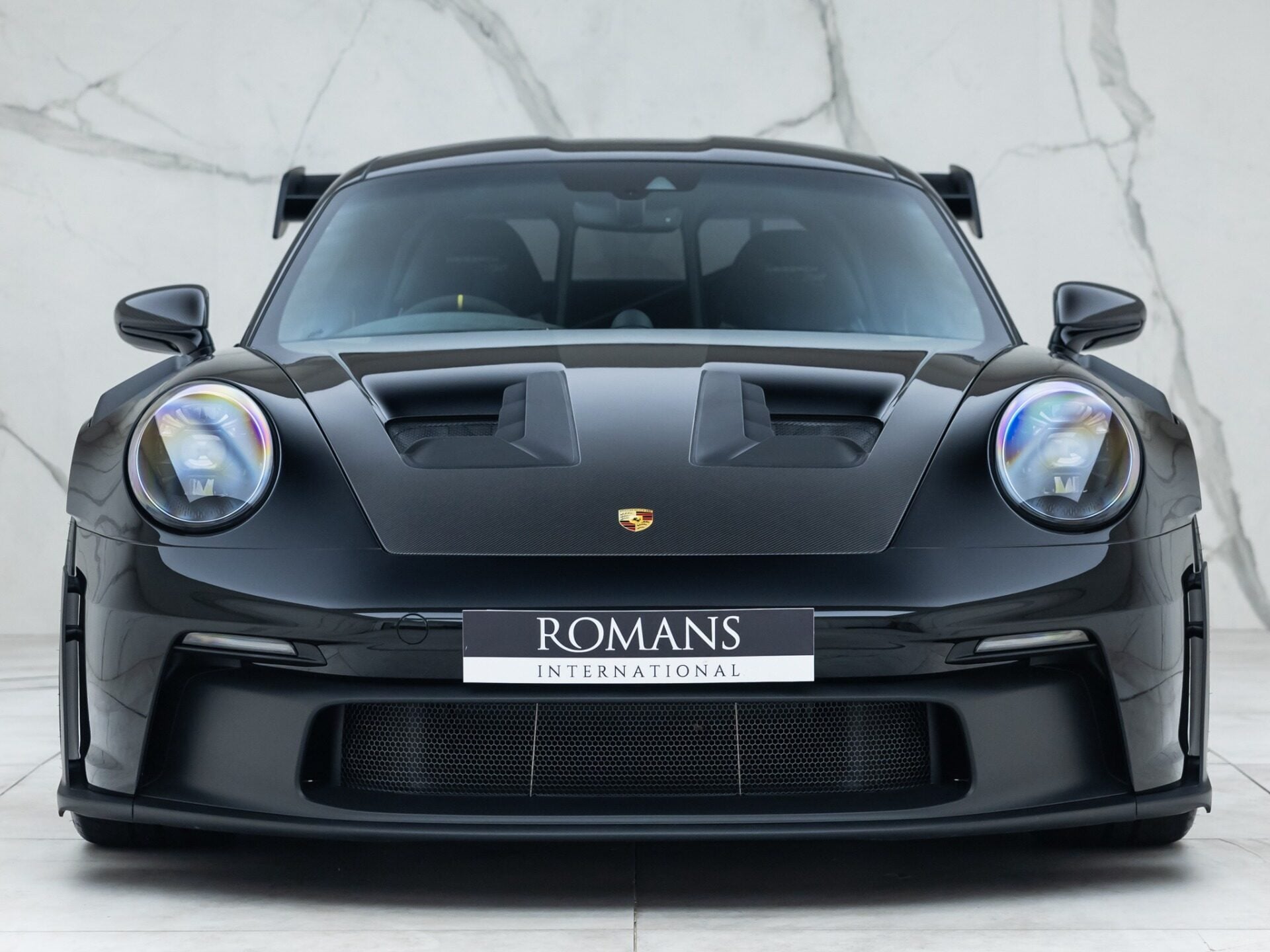
They both share the same iconic 911 Silhouette, but the RS is a track animal and leans into aerodynamics heavily.
One of the defining features of the 911 GT3 is that it ditched the rear wing, giving it that sleek, subtle, lower-key look without compromising too much on the performance.
The RS is anything but low-key.
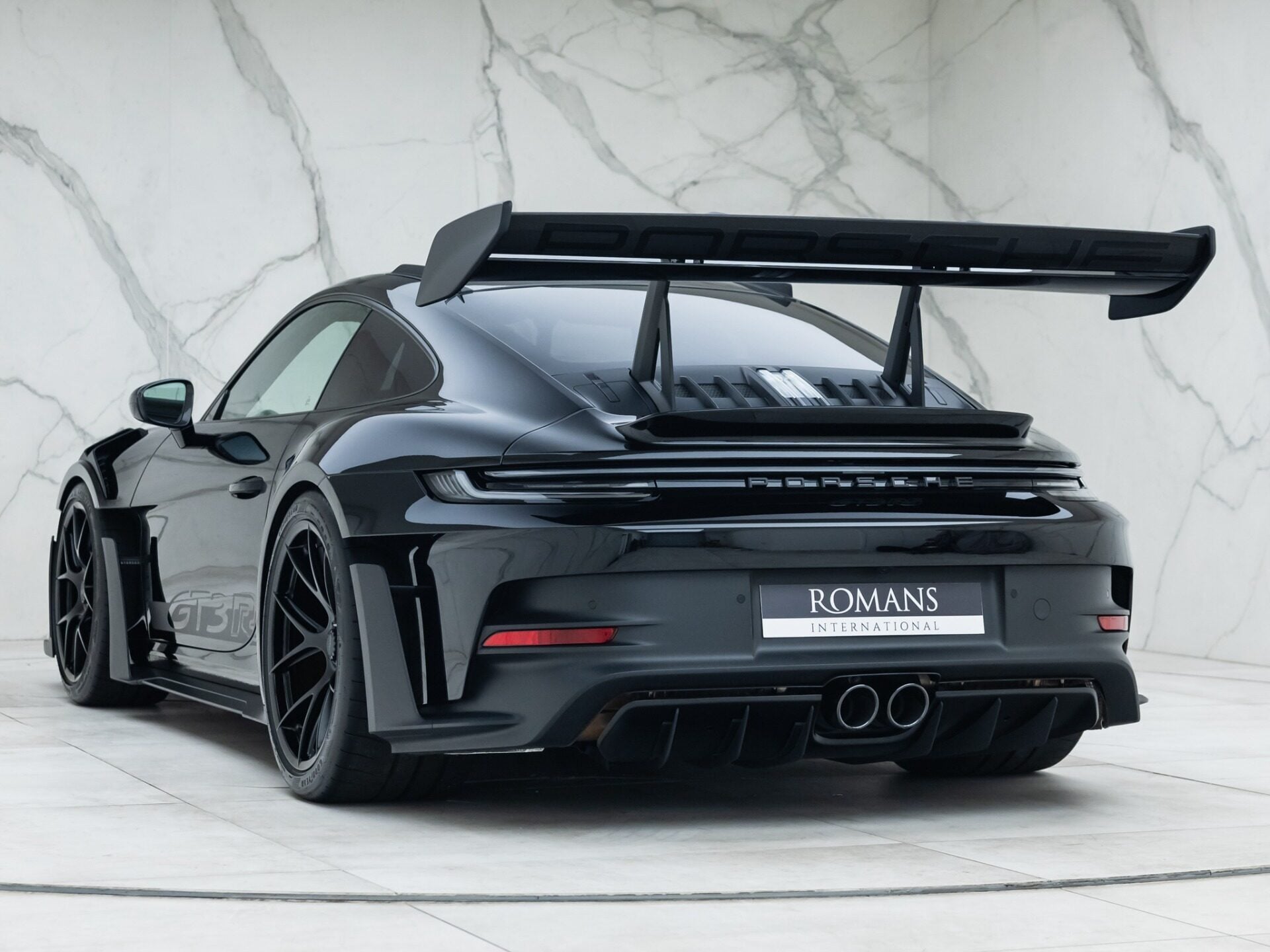
With carbon-fibre reinforced plastic (CFRP) front wings and a rear wing, this is a car that is standing in front of you demanding to be driven on the track.
The RS also has more pronounced splitters and air outlets in the front fenders to help give it more downforce.
It’s also covered in carbon-fibre, with not only the front and rear wings carbon-fibre but also the hood, roof and doors made from the lightweight material.
That’s essentially the core difference between the two. Every part of the GT3 RS has been engineered for performance. To shave weight. To increase downforce. To improve cooling. It’s been designed and engineered with the track in mind.
Whereas the GT3 has made compromises. Making it a little less “WOW” but a little more practical for everyday use.
Wheels and Brakes
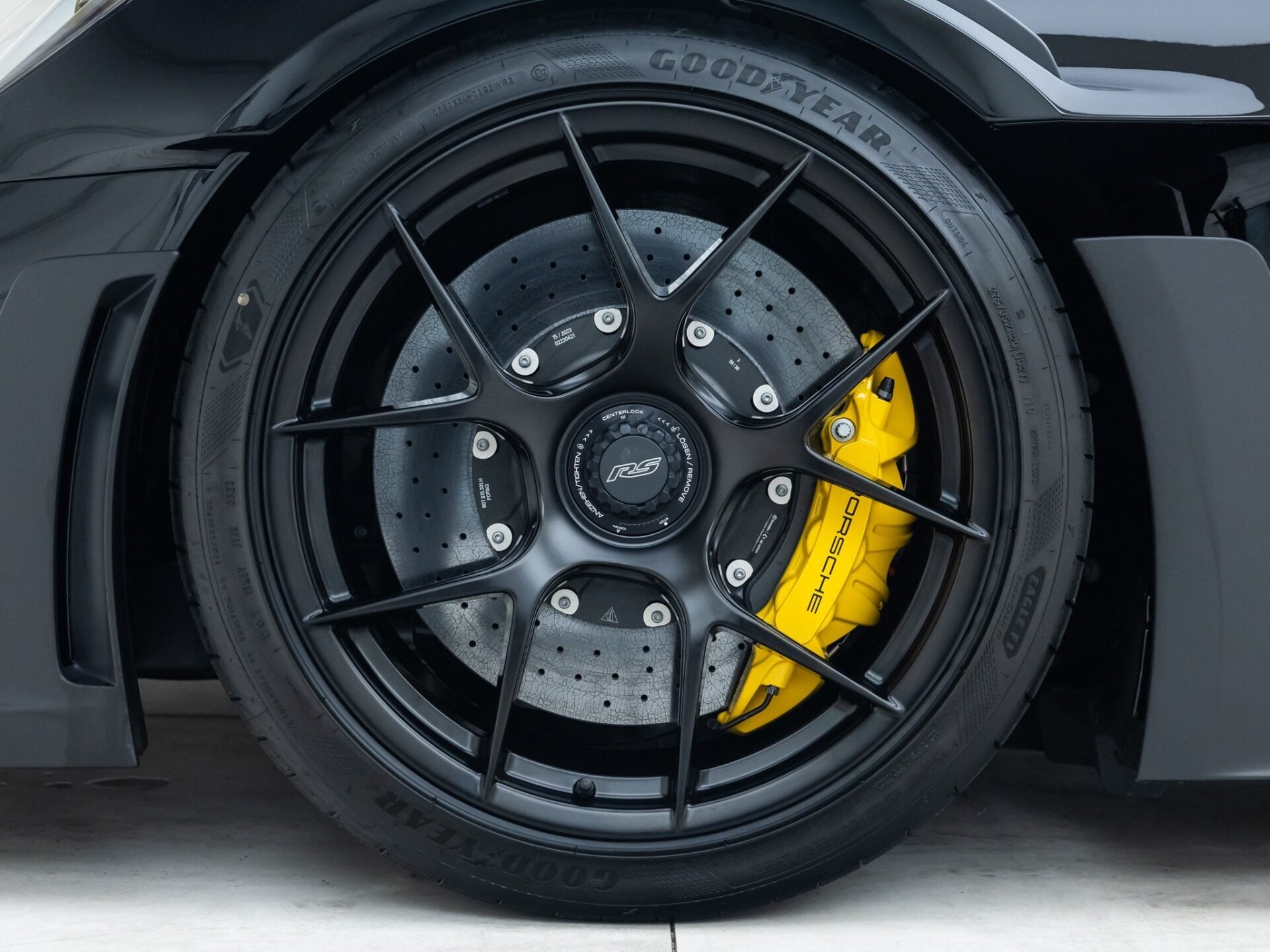
We see a similar theme with the wheels and brakes of the two cars.
One built so that it has the perfect blend between performance without compromising on its everyday use.
The other, willing to make compromises for sheer performance.
GT3
The GT3 has 20-inch forged alloy wheels with larger 21-inch wheels at the back with a classic five-spoke look.
For the brakes, it’s equipped with 408mm front and 380 mm rear steel discs, clamped by the six-piston front and four-piston rear callipers.
Porsche's legendary PCCB (Porsche Ceramic Composite Brake) is an optional offering. Here, larger 410mm front and 390mm rear ceramic discs deliver the ultimate in fade-free performance.
GT3 RS
For the GT3 RS, the 20-inch front wheels (275/35 tyres) and 21-inch rear wheels (335/30 tyres) allow for even wider, stickier rubber. There’s also the option of magnesium wheels, which can dramatically improve handling on the track.
The PCCB ceramic brakes are standard. Measurements are 410mm at the front (6-piston callipers) and 390mm at the rear (four-piston callipers).
As much as we love the GT3’s precise pedal and confident high-speed stopping power, the RS's phenomenal fade-free braking and control are even more impressive.
Performance
| GT3 (2021 -2024) | GT3 RS PDK (2021 - 2024) | |
| Power | 502 bhp | 517 bhp |
| Top Speed | 199 mph | 184 mph |
| 0 - 60 MPH | 3.8 secs | 3.1 secs |
| Torque | 470Nm, 347 ft-lb | 465 Nm, 343 ft-lb |
| Co2 Emissions | 293 g/km | 299 g/km |
| Miles Per Tank | 308 miles | 296 miles |
Both models share the same naturally aspirated flat-six engine. But the RS manages to tease a little more performance out of it. It has a higher BHP and a much quicker 0 - 60 mph.
Despite having the same engine, there is one slight difference:
The tuning.
The RS has slightly higher compressions and a revised mapping, which contributes to some of the differences in performance.
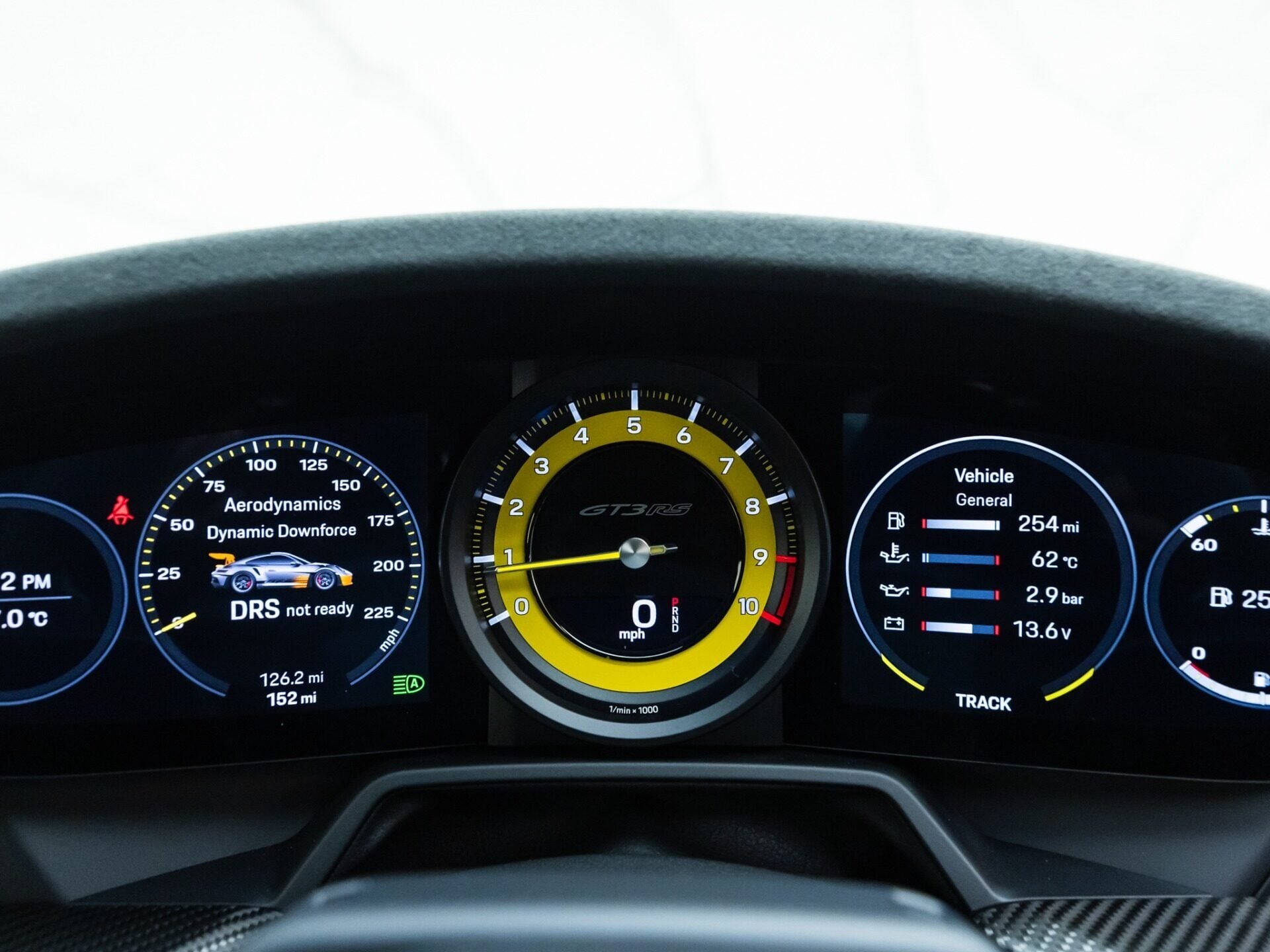
That being said, most of the performance gains from the RS come from the aero improvements made to the body, with it able to drive a colossal 409 kg of downforce. The end result? Lower top speed but a much quicker 0-60 mph as it generates a lot more traction.
The honest truth about these cars' engines is... If you’re just looking for something that gives a spine-tingling roar that makes you feel like you're behind the wheel of a beast, then both of these cars are perfect for you.
The Interior
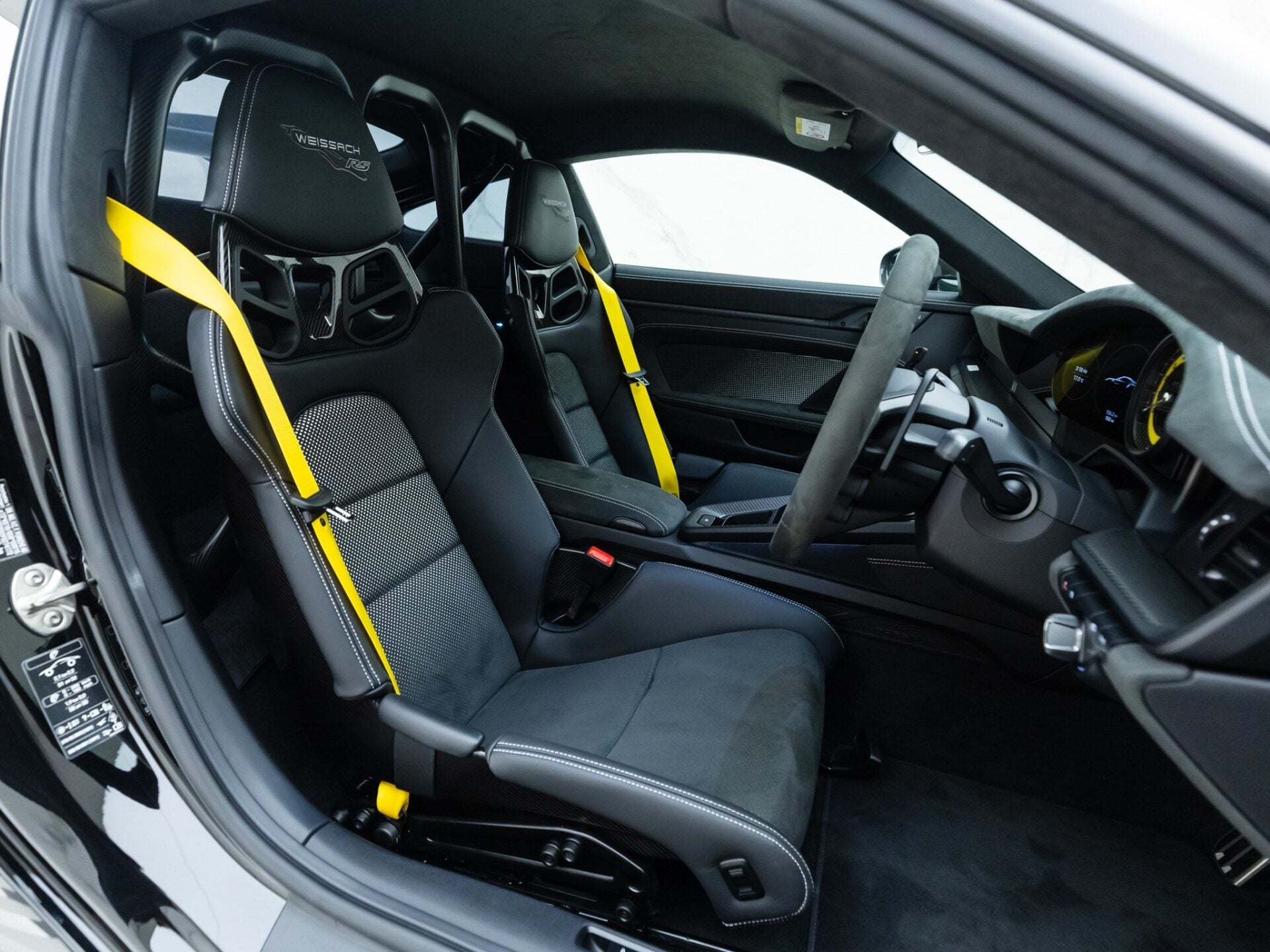
These two cars couldn’t be more different on the inside.
The GT3 is more of a tourer. Yeah, it’s built for performance, but it also understands the importance of comfort and flexibility.
Whereas, the RS. Not so much.
The interior is stripped down, with pure performance in mind.
GT3 Interior
The GT3 interior feels a bit more polished. It’s the type of place that you’re willing to spend a bit of time in.
In the front, there are classy sports seats that come as standard, and in the back, they’ve retained the rear seats, although the space is limited, making it a little less comfortable.
The rear seats can be split and folded down if you need the extra luggage room.
You have the option of a 6-speed manual gearbox, if you’re more of a purist and want that classic feel. Or, you have the option of the 7-speed PDK dual-clutch transmission, if you want a slightly quicker 0 - 60 mph with more seamless shifting.
The interior has a sporty feel throughout with Alcantara, which Porsche calls “Race Text”, and a thin-rimmed GT Sports steering wheel.
Up front, there’s also the 10.9-inch Porsche Communication Management touchscreen, where you can control your audio navigation and ‘Car’ sections.
GT3 RS Interior
The RS's interior is built with the track in mind.
As you sit in it, you wouldn’t describe it as “comfy”, but it’s got everything you need as you look to rip up the race track.
The first difference you’ll notice is that it comes with full bucket seats that are designed to support during high-g cornering, as well as a fitted titanium roll cage.
The PDK transmission also comes as standard, and they’ve also removed the back seats to reduce the weight and increase the speed.
As we’ve said before, the RS isn’t making the same compromises that the GT3 is, which means when it comes to the interior, it’s a lot less practical outside of the track.
Driving
Both of these cars are very, very lively.
The connection between driver and car is there from the first turn of the steering wheel.
The growl of the engine. The constant feedback. The balanced handling at high speeds.
But where they differ is on poorer roads and longer journeys.
The GT3 is as comfortable on the track as it is road. It handles all the lumps and bumps that come with driving in the UK and touring trips.
Whereas the GT3 RS is a little different. The combination of power and grip makes it a weapon for the track. And boy is it fun to drive on the track, using all that extra downforce to flick between corners with ease.
But it isn’t going to be something that you could take on a driving tour. It’s really just a car that’s built for the circuit.
Price and Value
Both of these cars are still in very high demand. And as such, they’ve been a little more resilient to depreciation than some of the other car models out there. Although that can always change.
The GT3, because of its usability, still holds its value remarkably well. And the RS, because of the scarcity of demand, can go up in price, as it’s not the type of thing you can just walk in off the street and buy.
So both are as good an investment as they are fun to drive.
To give an idea of price, we’ve included some typical list prices and resale values we’ve seen at the time of writing (July 2025):
GT3
List price (2025): Around £131,000 excluding VAT.
Including extras: £150,000+ with options like PCCB, bucket seats, and custom paintwork.
Used market: Typically between £140,000 and £160,000, depending on specification, mileage, and condition.
GT3 RS (992)
List Price (2025): Around £187,000 excl.
Used market: £200,000-£250,000+
The Verdict: Porsche 911 GT3 vs GT3 RS
Since both cars are brilliant, the choice between the GT3 usually comes down to driving goals.
If you love nothing more than belting the living hell out of a car around the track, then you go for the GT3 RS.
If you want something pokey, that you can take on grand tours and have a bit of fun with occasionally on track, then the GT3 is the right choice for you.
Either way, you’re getting a hell of a car.
If you’re looking for other buying guides for Porsche’s then check out our posts on Porsche 911 GT3 vs Audi R8, Aston Martin DB11 vs Porsche 911 or the Lamborghini Huracan vs Porsche 911 RS.