/137/1/16203046156093e2e7ba3a1_romans-international-logo-black-23.05.png)
/137/1/162513748360dda14b60068_romans-international-logo-whiteout.png)
Aston Martin Vantage vs Porsche 911 Turbo: Which Is Better?
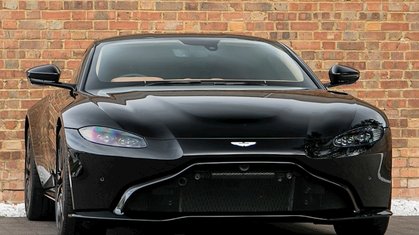
The Aston Martin Vantage and Porsche 911 Turbo are two extraordinary sports cars. But which one deserves a spot in your garage?
Slide behind the wheel of either and you’re met with two very different love letters to speed.
The Vantage has been Aston's sleek GT flagship since 2005, blending British sophistication with sporting passion and distinctive design. The newly sharpened 2025 model drips with British swagger: a wider grille, aero-sculpted bodywork, and a 656 PS* twin-turbo V8 that growls like a Savile Row suit torn open at the seams.
The 911 Turbo, dating back to 1975, combines daily driving pleasure and supercar performance, backed by precision German engineering. Fifty years of evolution have honed it into the everyday supercar: 3.8-litre flat-six, 0–60 mph in as little as 2.6 seconds, and a cabin that slips from commute to continent-crossing without breaking a sweat.
For 2025, both brands have introduced significant updates, promising plush ride quality, luggage space for a weekend away, and launch-control fireworks that’ll have you giggling like a kid at Silverstone.
Yet their personalities couldn’t be further apart: the Vantage is a grand-touring charmer with a rebellious streak, while the 911 Turbo is Teutonic precision on Michelin rubber.
So, how do you pick?
In this blog, we pit coupe against coupé, covering exterior design, cabins and tech, performance stats, running costs, even resale prospects, so by the end you’ll know exactly which keys you want in your pocket.
Looking for real-world examples? Browse our latest Aston Martin and Porsche listings.
Pros and Cons
If you crave theatre, rarity and that V8 bellow on every tunnel run, the Vantage ticks the emotive boxes. If you want brutal, repeatable pace in rain, shine or February sleet (and the ability to ferry passengers and luggage) the 911 Turbo makes a watertight case. Keep these highlights in mind as we unpack design, interiors, tech and ownership costs in the sections ahead.
| Aston Martin Vantage (2025) | Porsche 911 Turbo / Turbo S (992-gen, 2025) | |
| Pros | • Hand-crafted British design heritage - rarer sight than a Turbo at your local Caffeine & Machine. • 656 hp twin-turbo V8 (800 Nm) delivers muscle-car shove and a thunderous soundtrack. • GT-grade ride and newly re-profiled seats make it a genuine continent-crusher. • Big-car charisma in a compact footprint—front-engine balance gives playful, drift-friendly handling. • Low production volumes aid exclusivity and long-term collectability. | • 640 hp (Turbo S) flat-six, active AWD and launch control = 0-60 mph in a mind-bending 2.6 s and 205 mph top speed. • All-weather, all-surface composure—rear-axle steering and PASM iron out UK B-roads. • Everyday practicality: 2+2 seating, useful frunk, ISOFIX if you must. • Huge Porsche Exclusive Manufaktur catalogue for bespoke colours, leathers and stitching. • Proven track pedigree (7:17 Nordschleife lap on standard tyres) |
| Cons | • Historically patchy reliability record and fewer service centres than Porsche. • No AWD option—650+ hp + British drizzle can equal traction-control light disco. • Infotainment a generation behind Stuttgart’s slick PCM. • Smaller boot and no rear seats limit grand-touring luggage flexibility. • Running-cost sting: shorter service intervals and eye-watering carbon-ceramic brake prices. | Sheer numbers on the road mean it won’t turn as many heads as the Aston. • Some find the experience a touch clinical—electric steering filters out a dash of theatre. • Turbo whoosh lacks the Vantage’s operatic V8 thunder. • No naturally-aspirated or manual option in the Turbo line-up. • Strong residuals but slower appreciation than low-volume Astons. |
Exterior
Aston Martin Vantage
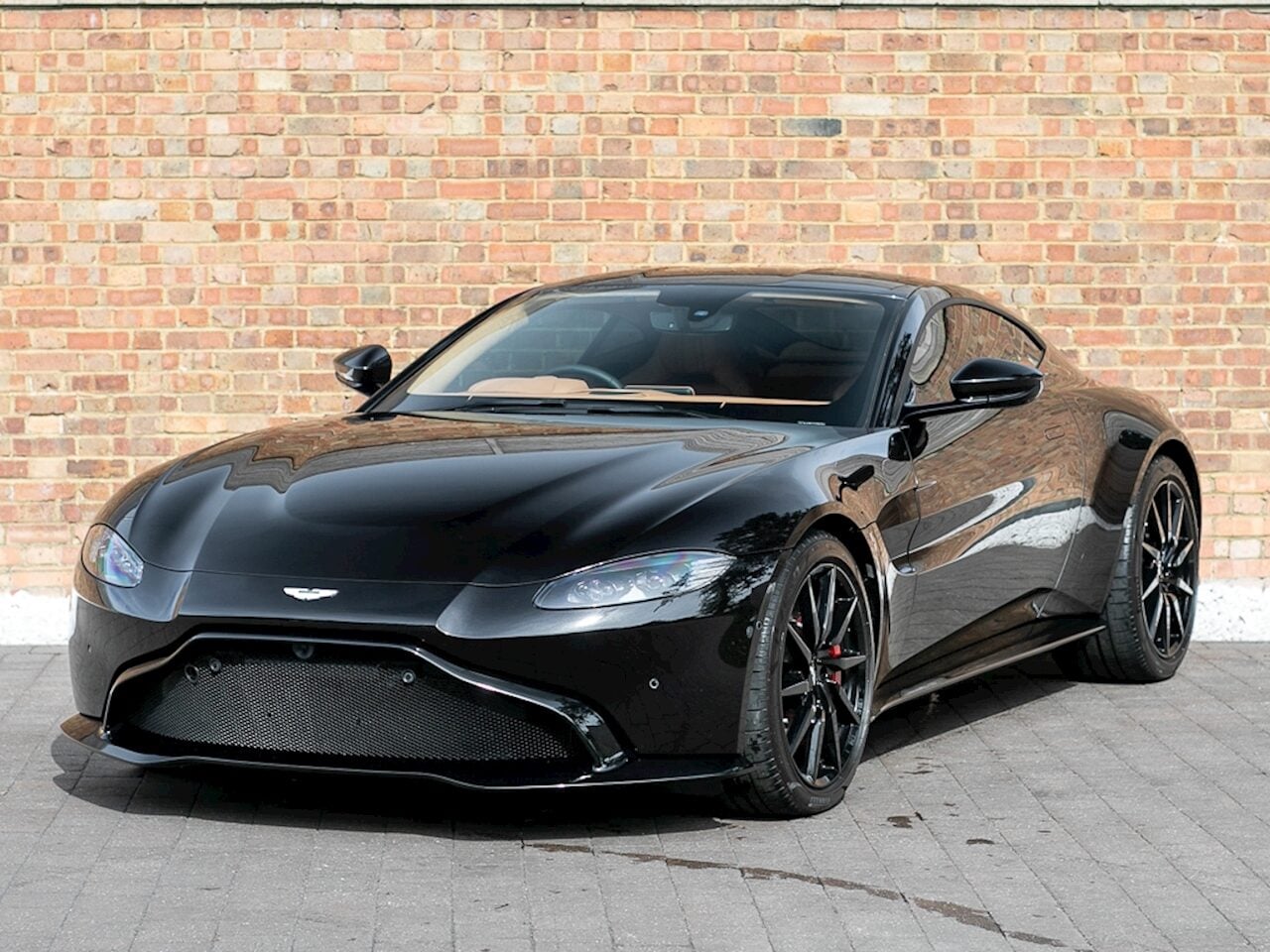
Strikingly beautiful with curves and muscular rear haunches, the latest Aston Martin Vantage represents a bold step forward in aggressive styling.
The classic front-engine profile maintains its long bonnet and short rear deck, but performance has been amplified beyond previous generations (including the Vantage Formula 1 Edition). The 2025 version features more dynamic aero with larger air intakes delivering genuine performance gains at speed.
Signature Aston Martin touches include the traditional grille, side strakes, and powerful spoiler.
These supercars come in a wide range of custom colours, including Q by Aston bespoke, paired with carbon fibre accents, hand-finished bodywork, and the craftsmanship you'd expect.
911 Turbo
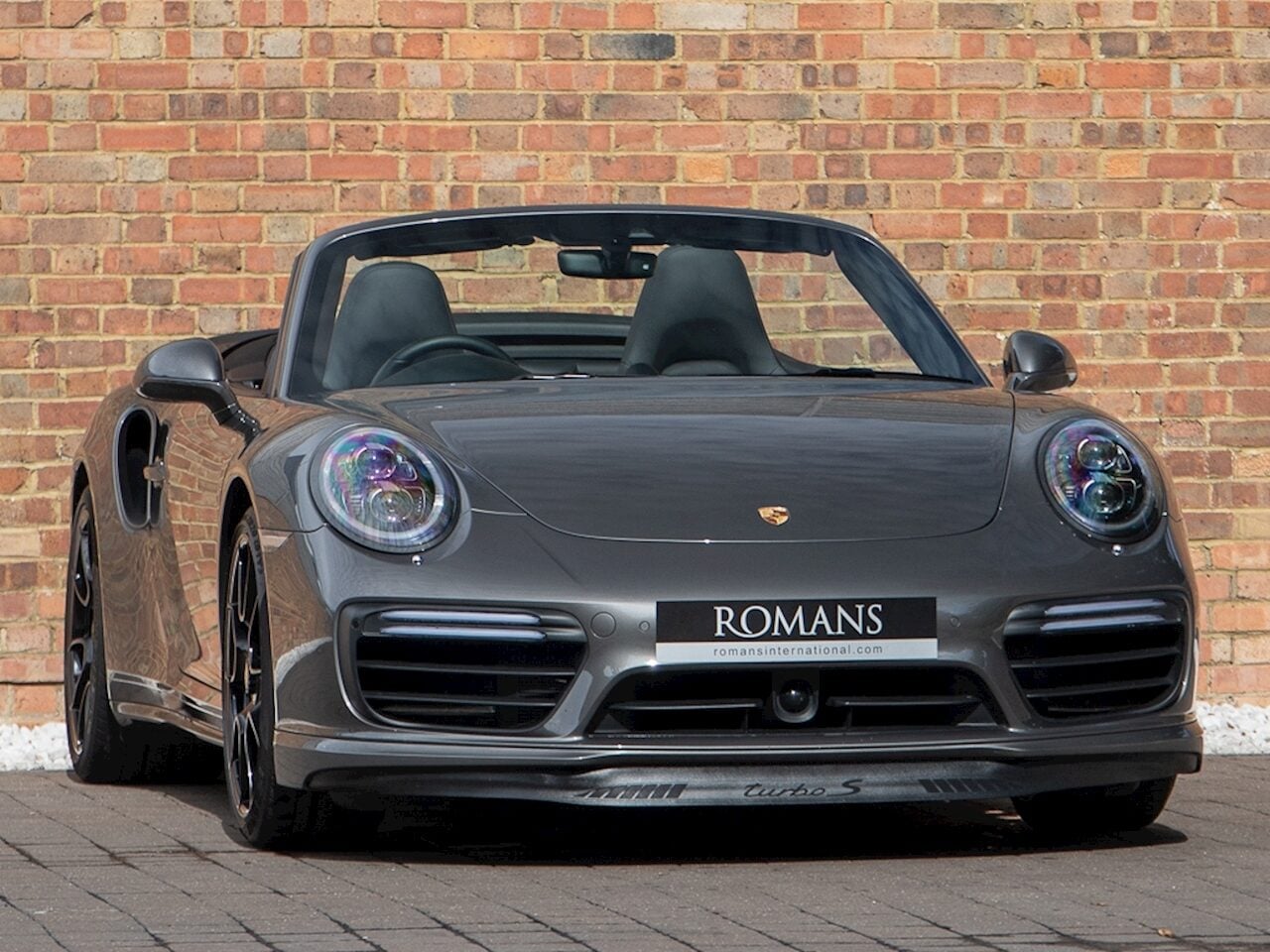
With its wide body for greater stability and distinctive rear wing, the 911 Turbo's heritage is unmistakable.
Signature elements include the classic silhouette, round headlights, unique Turbo-specific side intakes, and exciting quad exhausts.
Sophisticated aerodynamics incorporate an active front spoiler and deployable rear wing that automatically adjusts to provide downforce and cooling at speed. While this aerodynamic package prioritises function, it gives the car an appearance of refined, understated aggression.
The Turbo offers extensive colour choices, including exclusive Turbo-specific shades.
Wheels and Brakes
Vantage
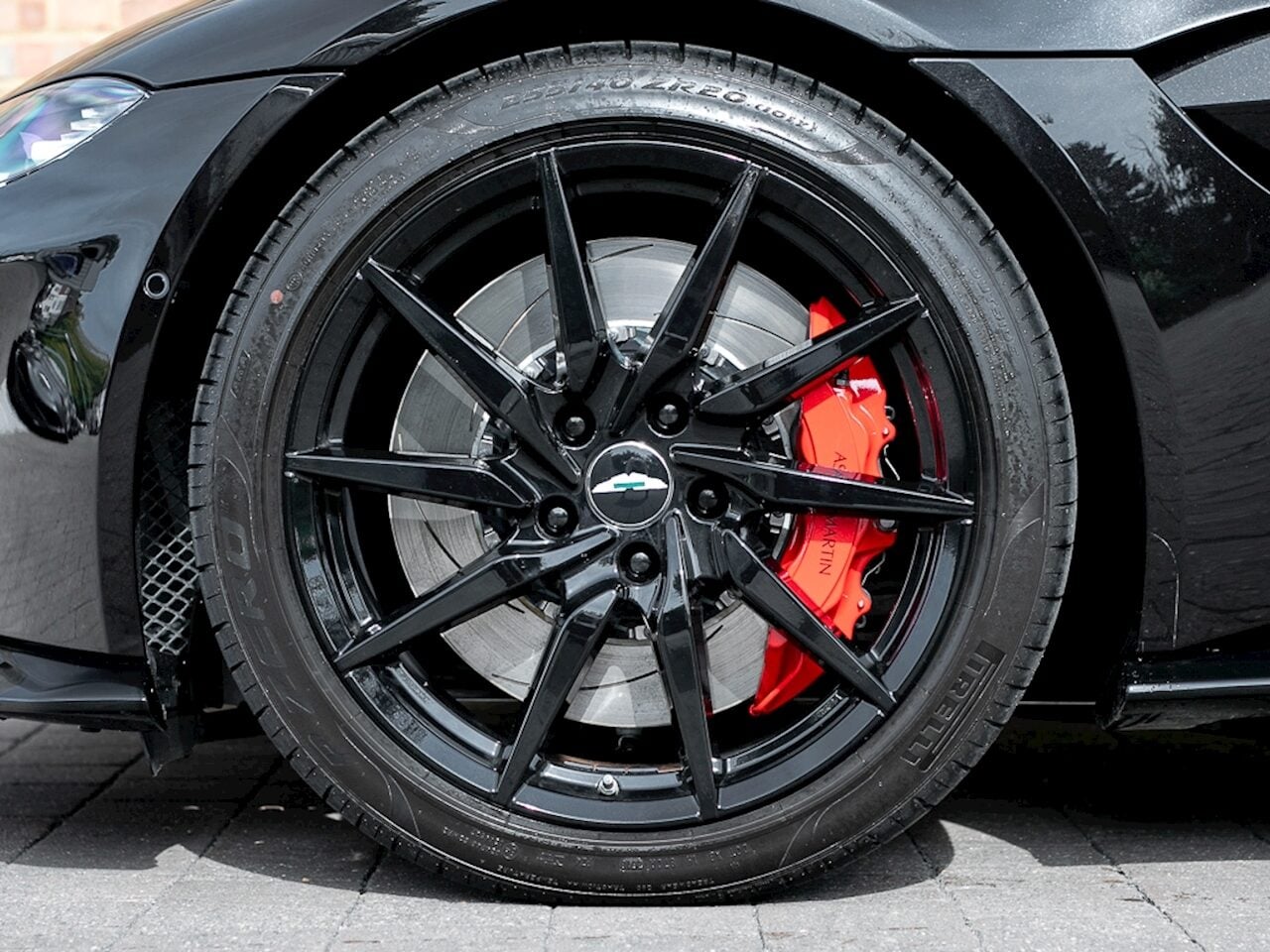
The Vantage rides on staggered 20-inch front and 21-inch rear forged alloys that look sharp and shave unsprung mass for improved handling response. Michelin Pilot Sport 4S tyres provide excellent grip across various conditions, with racing rubber available for track days.
Standard braking comes from Brembo steel discs, measuring 400mm front and 360mm rear. The brakes deliver consistent, powerful stopping power with positive pedal feel, although there is a hint of deadplay at the very top end.
For serious track outings and fade-free heat management, upgrading to carbon ceramic discs is the go-to move.
Yellow, red, or black callipers offer fun wheel customisation options.
911 Turbo
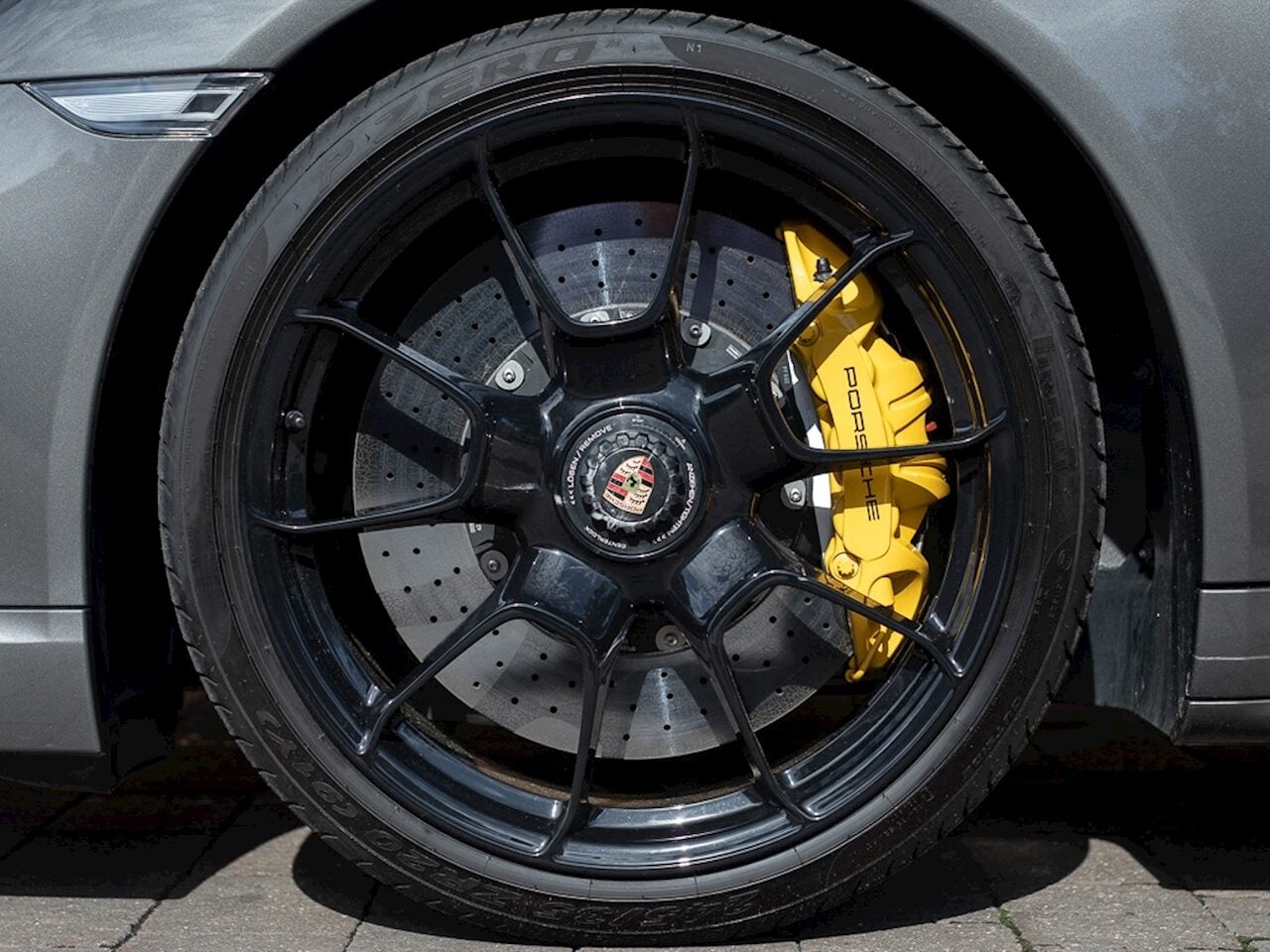
The Porsche also sports staggered wheels: 20-inch at the front and 21-inch at the rear with a centre-lock design.
While the standard Turbo features high-performance steel brakes with 408mm front and 380mm rear discs, the Turbo S comes equipped with Porsche Carbon Ceramic Brakes (PCCB) measuring 410mm/390mm. These track-focused brakes, designed for intense, high-temperature use, provide exceptional fade resistance.
Intelligent ducting and air channels for effective brake cooling represent an impressive engineering feature.
Callipers typically sport vibrant yellow finishes, though alternative colours are available for personalisation.
Interior
Vantage
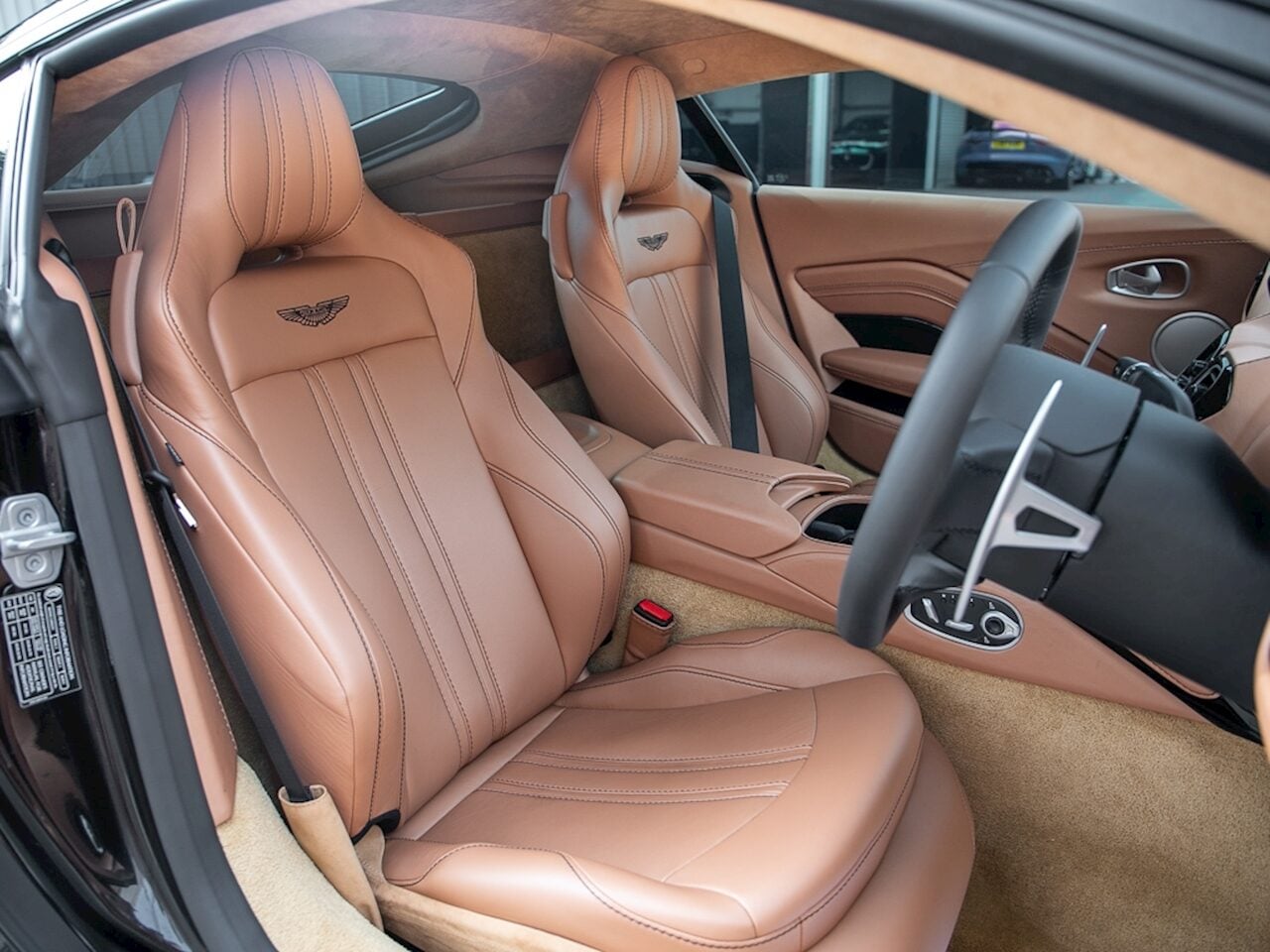
British craftsmanship meets modern tech in this luxurious interior.
Hand-stitched leather, Alcantara, and metal elements dominate the cabin. Rich customisation options include contrast stitching, bespoke colour palettes, and embroidered headrests. Sport seats expertly balance comfort and support, making both long journeys and short sprints equally enjoyable.
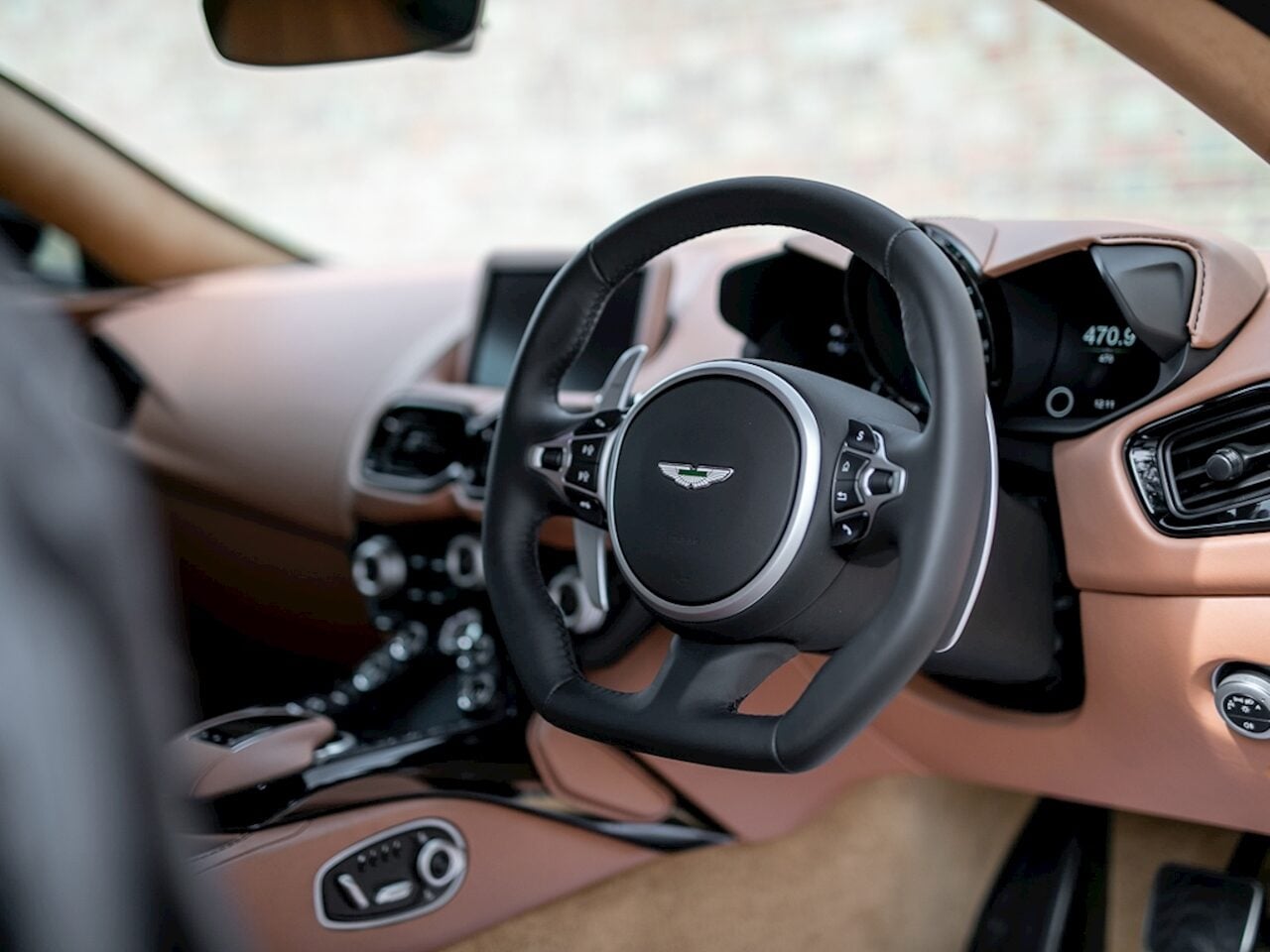
Gripping the chunky flat-bottomed steering wheel, with metal paddle shifters, reminds you that the carmaker takes thrilling performance as seriously as premium textures. We also like the physical buttons for major controls (e.g., drive modes) that keep things intuitive.
Decent headroom, several compartments, and almost 350 litres of boot space make weekend getaways in this two-seater a joy.
The traditional Aston dashboard features a modern 10.25-inch infotainment system. While the tech isn’t as advanced as Porsche's, the dual-zone climate control and driver assistance systems work well, and the audio system sounds excellent.
911 Turbo
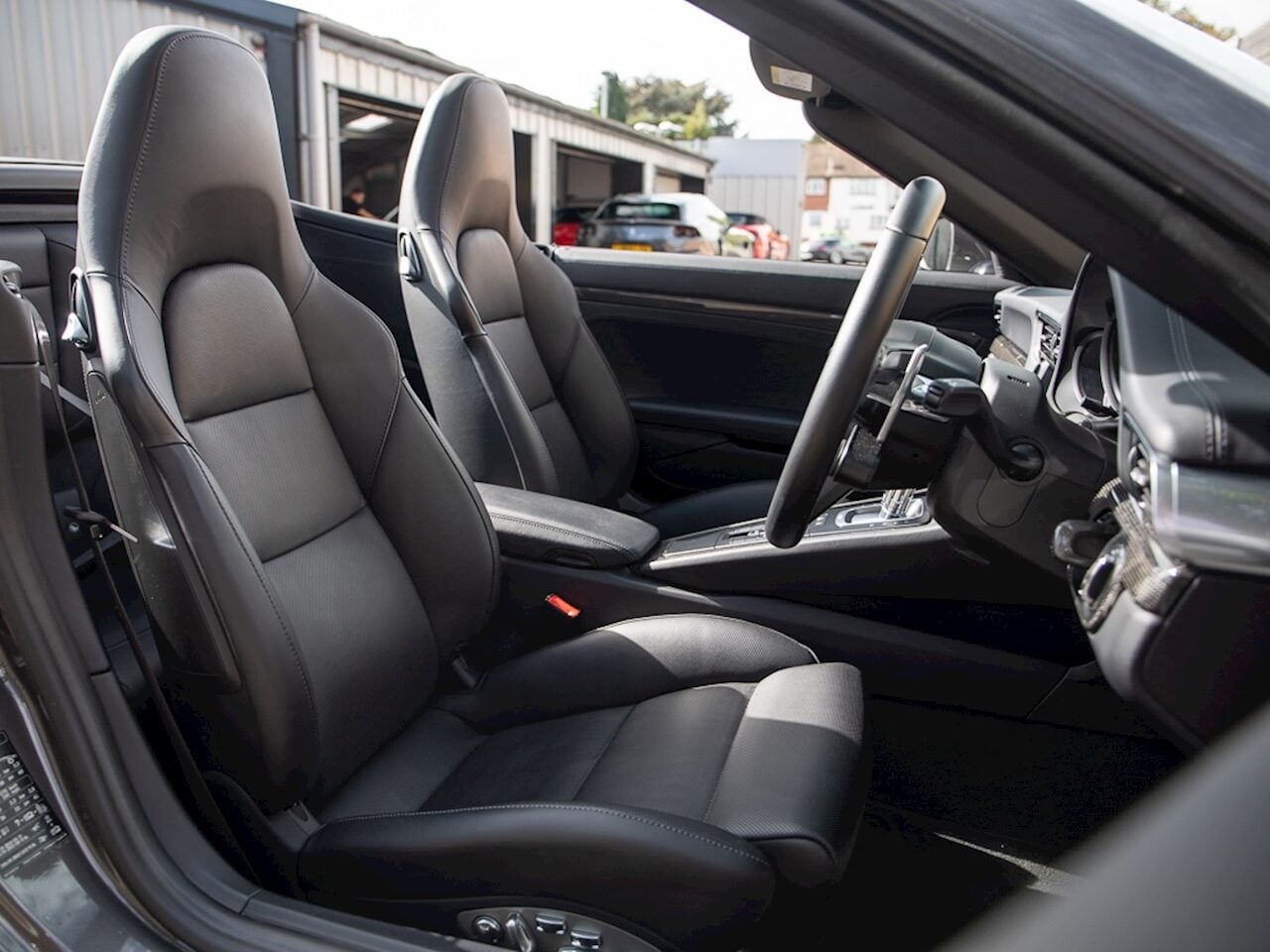
The Porsche's cabin, featuring premium leather finishes and fine custom trims, is all about top-tier luxury combined with fierce driver focus.
Exceptional seating includes 14-way power seats with memory functions, with the option to upgrade to 18-way adaptive sport seats, complete with ventilation and massage functions.
Behind the classic three-spoke steering wheel, a horizontal dashboard houses Porsche's analogue central rev counter flanked by digital displays.
A key advantage of the Turbo is its 2+2 seating configuration. Here, it must be said that the rear seats are only practical for children and bags. Boot capacity of 132 litres is also available for bags and hampers.
The PCM 6.0 infotainment system features a 10.9-inch touchscreen, wireless Apple CarPlay/Android Auto, and optional Burmester or Bose sound. The high-quality audio brings impressive clarity and depth, making every drive more enjoyable.
Additional features such as four-zone climate control and the Sport Chrono package bring further convenience and versatility, rounding out a cabin that balances comfort, advanced technology, and a sense of luxury that both drivers and passengers enjoy.
Performance Specifications
Picture a damp Silverstone dawn. The Vantage fires with a braap of bass-heavy thunder that rattles pit-lane coffee cups. Twenty seconds later, a 911 Turbo S slingshots past, chuffing its turbos and leaving nothing but tyre smoke and German efficiency in the air. On paper, the Porsche’s stopwatch superiority is obvious; in your ears and gut, the Aston fights back with drama. Choose your poison.
| Spec (2025 MY) | Aston Martin Vantage | Porsche 911 Turbo |
| Engine | 4.0-litre twin-turbo V8 | 3.8-litre twin-turbo flat-6 |
| Power | 665 bhp (656 hp EU) | 572 bhp |
| Torque | 590 lb-ft | 553 lb-ft |
| 0-62 mph | 3.2–3.5 s | 2.8 s |
| Quarter-mile | 11.2 s @ 130 mph | 10.7 s @ 129 mph |
| Top speed | 202 mph | 198 mph |
| Transmission | 8-spd ZF auto (single-clutch feel, massive paddles) | 8-spd PDK |
| Drive | Rear-wheel drive | Active AWD w/ front diff clutch |
| Kerb weight | 1,630 kg (coupe) | 1,640 kg |
Although the Vantage produces more power than the Turbo (665 bhp vs 572 bhp), the Porsche dominates in straight-line acceleration.
The Turbo S goes from 0-62mph in 2.6 seconds. Both the Vantage and the Formula 1 Edition (top speed 195mph) are almost a second slower at 3.5 9 (Aston’s official is 3.5 s; independent tests have dipped to 3.2–3.4 s with a warm surface.) Their rear wheel drive setup can't match the Porsche's all-wheel traction when accelerating from a standstill.
Numbers in context
Launch drama vs. launch control
The Porsche’s party trick is that neck-snapping 2.6 s sprint—thank the AWD system, sticky 315-section rears and a launch algorithm that Frankenstein-welds you to the seatback. The Vantage’s rear-drive layout simply can’t match that catapult effect on a cold UK morning. What it does offer is a more organic, tail-happy scramble off the line—ideal if you enjoy steering on the throttle.
Mid-range muscle
Both engines are twin-turbo, but they’re tuned with different personalities. The AMG-sourced V8 in the Aston hammers you with a wall of torque from 2,000 rpm; the Turbo S piles on boost progressively, then eruptively flings you toward the horizon. Above 100 mph the gap narrows: Aston’s longer gearing lets it reel the Porsche back in on an autobahn stretch.
Quarter-mile bragging rights
11.2 s at 130 mph is super-quick… until the Turbo S storms through in sub-10s territory. Bring this up over dinner and watch the table divide into “physics nerds” and “noise matters” camps.
Chassis philosophy
Porsche’s PDCC active anti-roll, rear-axle steering and adaptive aero flatten corners like a Nürburgring cheat code. The Vantage counters with a wider track for 2025, trick Bilstein dampers and a stability-control ‘Track’ mode that still lets you paint elegant black lines exiting Luffield.
Real-world fuel bills
Nobody buys these for economy, but for the record: Turbo S can eke out 24 mpg on a cruise; the Aston hovers around 20 mpg, dropping to single digits when you uncork that V8 in a tunnel.
Driving Experience
Let’s climb into the driver’s seat to see how these cars feel on the road.
Vantage
The Vantage's front-engine, rear-wheel-drive setup creates a balanced feel that shines on winding roads. Adaptive dampers absorb bumps, making even rough surfaces feel manageable.
With 665 bhp, the V8 engine unleashes ferocious power that’s both exhilarating and a touch wild when you push it. The steering is wonderfully weighted with great feedback (though slightly less precise than the Porsche's).
The 8-speed automatic gearbox shifts smoothly, and a touch of torque keeps the car steady during quick gear changes in tight turns.
If you’re someone who likes the local circuit as much as they love touring, then the Vantage really is a great option for you.
911 Turbo
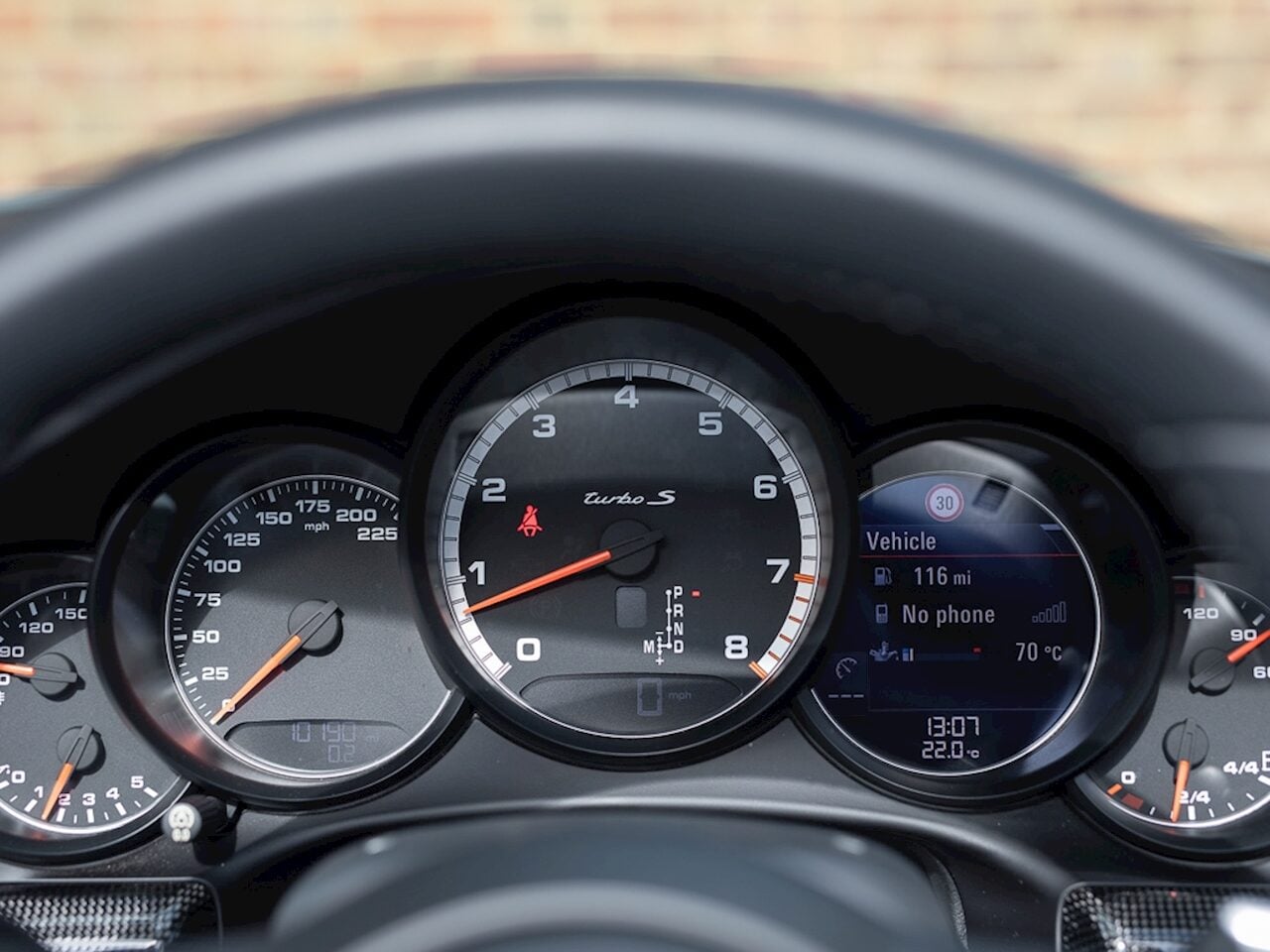
The Turbo combines easy, explosive acceleration with excellent performance in all weather conditions. Its all-wheel-drive system plants the car firmly to the road, creating a composed and grippy ride.
The steering is razor-sharp, with exceptional feedback that makes every turn feel intuitive. And the 8-speed PDK gearbox shifts with lightning speed, making it feel like you’re driving at an unrelenting pace.
At lower speeds, it's a really comfortable daily driver, which you can pootle around town in with no bother at all. But don’t let that fool you. Get it out on the track or on a long, windy stretch of road, and this thing really comes to life with its razor-sharp handling. Making it a seriously fun car to drive.
Main Takeaway: The Aston feels looser, more play-friendly; the Porsche razor-sharp and confidence-inspiring when the drizzle starts.
- Want seat-of-the-pants feedback, a playful rear end and a soundtrack that makes grown adults abandon café patios? Take the Vantage keys.
- Prefer superhuman traction, repeat-after-me lap times and the ability to detour through the Alps mid-blizzard? 911 Turbo every time.
Truth is, neither choice is wrong; they just scratch different itches. One thrills with showmanship, the other with surgical precision. Decide what puts the bigger grin on your face when you reach for the starter button in the morning.
Price and Value
Aston Martin Vantage
The Vantage has a higher-priced entry ticket and steeper year-one drop, but wins the “rarer sight” lottery and could reward patient collectors in the long game with its last-of-its-kind V8 soundtrack.
New list price (July 2025): £165,000 on-the-road for the coupé in standard colours
Typical options spend: Carbon-ceramic brakes (£9-10k), lightweight carbon seats (£5k), bespoke ‘Q’ paint (£7k+). A “press-car spec” Vantage routinely nudges £180-200k
Used values: 2023–24 cars with <10k miles trade in the £115-120k corridor; early 2021 cars have dipped to ~£90k
Insurance group: 50E — expect £2.5-3k/yr for a 35-year-old in London with clean licence.
Servicing & running: Annual service or 10k miles, £1,000 basic / £2,000+ if plugs & brake fluid. Tyres: £1,800 for a set of Pilot Sport S5s; carbon-ceramic pad change £3k.
Depreciation outlook: Historically steeper than Porsche: forecast 55-60 % retained after 3 yrs/30k mi. Exclusivity helps, but low-volume cars still feel market swings.
Value play: The Vantage costs more to run and drops value faster, but its rarity (<3,000 units a year worldwide) gives long-term collectability a fighting chance - especially if you tick the carbon, paint-to-sample, manual boxes and keep mileage modest.
Porsche 911 Turbo
The 911 Turbo has a lower cost of ownership, bulletproof dealer network, and rock-solid resale. If you’re finance-conscious or rack up motorway miles, Stuttgart makes the accountant smile.
New list price (July 2025): £155,000 for Turbo; £180,000 for Turbo S before extras
Typical options spend: Paint-to-Sample (£7.6k), PCCB on Turbo (£6.5k), Burmester (£3.5k), Exclusive Manufaktur leather packs (from £1.8k). It’s easy to spec a £200-220k Turbo S.
Used values: 2022–24 Turbo S coupes with <10k miles retail £138-170k; base Turbos rarely slip below £130k.
Insurance group: 50E — similar premium to the Aston, though tracker & Porsche Car Connect cut costs.
Servicing & running: Two-year/20k-mile intervals, ~£800–1,500; PDK oil & plugs every 60k. Tyres: £1,600 (Pilot Sport 4S); PCCB pad set £2.5k but rotors last ~90k road miles.
Depreciation outlook: Turbo bloodline is residual royalty: expect 70 %+ retained after 3 yrs/30k mi, even higher on limited “50 Years” editions.
The Verdict
There’s an old cliché that the Aston Martin Vantage tugs at the heart while the Porsche 911 Turbo satisfies the head. Truth is, each car can stir both emotions, they just press different buttons.
Why you’d sign the Vantage order form
- Pure theatre every time you fire it up. The 4.0-litre V8 detonates with a crack, settles into a bass burble, and reminds you that drama still matters in a turbocharged age.
- Rarity you can feel. Spot another Vantage on the M25 and you’ll flash the lights in recognition; production numbers are that low.
- Long-bonnet, cab-back silhouette. If you grew up with posters of DB5s and Le Mans prototypes, the Vantage’s proportions scratch that itch in a way the rear-engined 911 never will.
- Playful, rear-drive balance. Turn off the nanny aids, lean on the throttle and it will paint black art on any exit ramp — with enough feedback to keep you the right side of heroic.
Why the 911 Turbo might end up in your garage instead
- All-weather obliteration. Launch control, AWD and Porsche Stability Management turn soggy February mornings into 2.6-second fairground rides.
- Genuinely everyday-usable. ISOFIX rear seats, decent frunk, two-year service intervals and a dealer network that rivals Starbucks for post-codes.
- Residual royalty. Depreciation curves flatter to deceive; three years on, a Turbo’s resale often makes the spreadsheet warrior in you grin.
- Engineering zen. Everything has that “clicked together” feel — from PDK paddle throws to the way the bonnet shuts with a muted whump.
The take-home
Choose the Vantage if you value soul, scarcity and a soundtrack that turns every tunnel into a private symphony hall. It’s the car you park, walk away from, then spin on your heel for that one last look.
Choose the 911 Turbo if you crave unfailing competence, missile-grade pace in any weather and the peace of mind that comes with 50 years of iterative perfection.
Either path leads to 200-mph thrills and a serious case of “Did that just happen?” grin-ache. The only wrong decision is not driving both before you decide.
Ready for a test-drive?
Browse our latest stock of Porsches and Aston Martins.