/137/1/16203046156093e2e7ba3a1_romans-international-logo-black-23.05.png)
/137/1/162513748360dda14b60068_romans-international-logo-whiteout.png)
Porsche 911 Turbo S vs Lamborghini Huracán: Which Is Better?
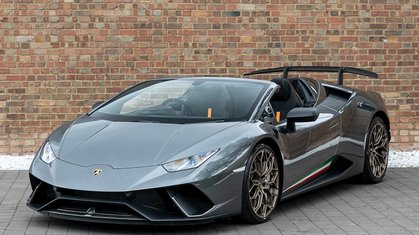
Do I choose the Lamborghini Huracán or the Porsche 911 Turbo S?
Having the choice between the two of them isn’t a bad position to be in. They’re two iconic cars that have a lot to like.
The Huracán was launched in 2014, Lamborghini’s mid-engine masterpiece with a naturally aspirated V10 engine that made it feel like you were sitting in the cockpit of a fighter jet, rather than driving a supercar. They followed it up with the likes of the Evo, Tecnica and Performante, which doubled down on this and solidified its reputation as a lot of fun to drive.
Then you have the Porsche 911 Turbo S, part of their 992 range. A rear-engine masterpiece that embodies everything that they are about, delivering a lot of performance whilst still being perfect for everyday use. Making it a bit of a benchmark for an all-around supercar.
But which one is right for you?
In this post, we’re going to compare the Porsche 911 Turbo S with the Lamborghini Huracán and look at everything from performance to drive and interior, in an effort to determine which one is better.
It’s a bit of a clash of the titans, so buckle up and find out which one comes out on top.
Pros and Cons
You almost couldn’t have two more different cars. Think of them as like the Borg and McEnroe of supercars.
The Lamborghini is loud, brash and flashy. The Porsche is a little quieter, subtle. Both pack a lot of punch and are great fun to watch.
But their differences are stark, which sort of makes their pros and cons the inverse of each other. A clash of styles, if you will, just like Borg and McEnroe.
Pros & Cons Comparison Table
| Category | Lamborghini Huracán | Porsche 911 Turbo S |
| Pros | Immediate supercar impact | Doesn’t skimp on performance (640 BHP, 800 Nm torque) |
| Brutal straight-line pace | All-weather, everyday usability with AWD traction | |
| Epic V10 naturally aspirated engine | Comfortable ride with smooth noise suppression and rear axle steering | |
| Cons | Loud, less subtle and not for everyone | Lacks the drama and impact of a typical supercar |
| Driving position can be uncomfortable for longer journeys | The engine doesn’t have that visceral roar of a naturally aspirated engine | |
| Not as practical as other supercars | Not as fun as its GT-focused cousins |
The Exterior
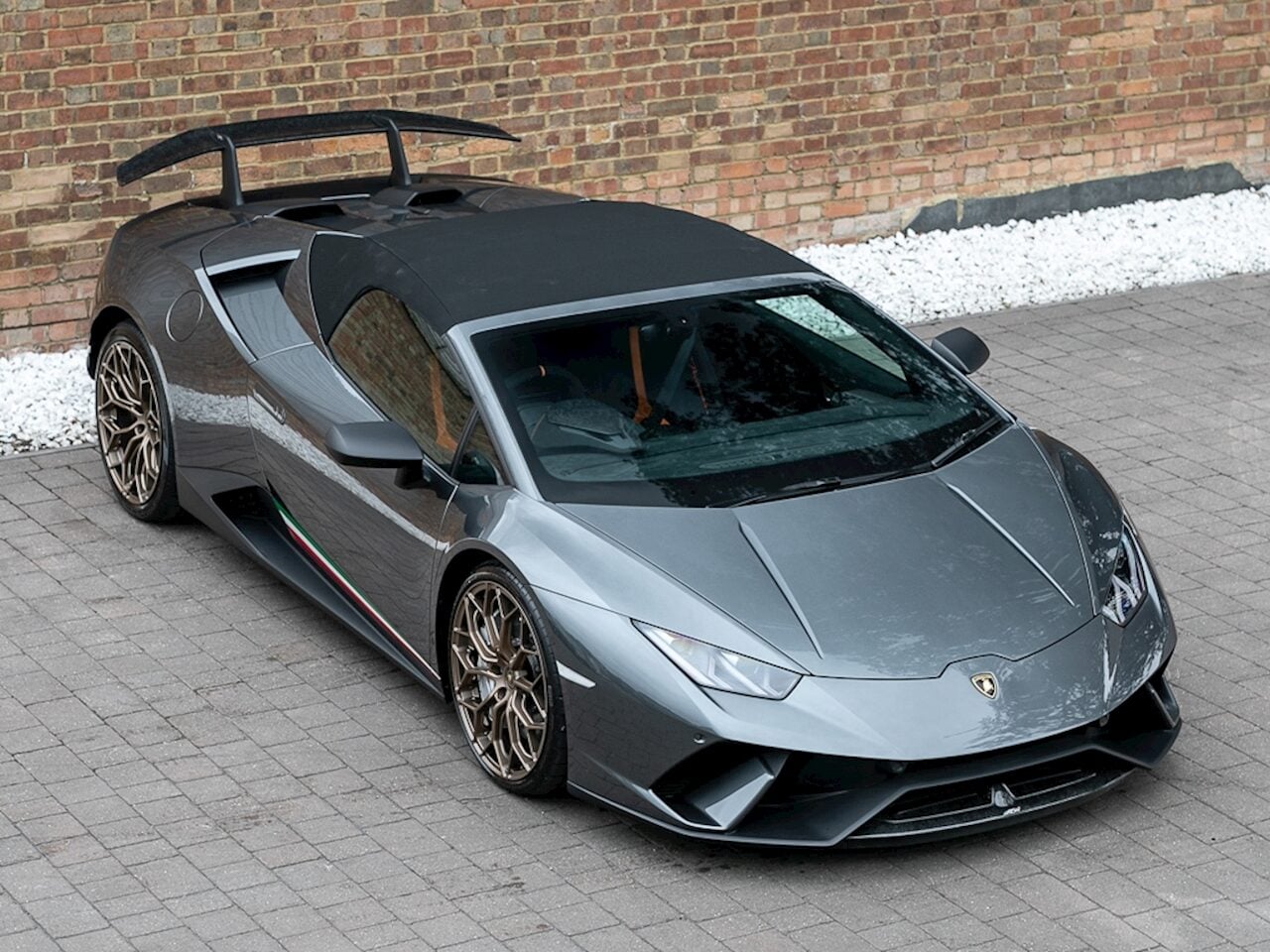
Porsche and Lamborghini’s couldn’t have a more different design philosophy. Porsche typically aims for understated elegance with quietly integrated aerodynamic features. Whereas Lambos have extreme, angular lines and an in-your-face presence, that is less a quiet whisper but more a scream that “hey, we’re a supercar”.
Never has that been truer than when comparing the Huracán and the 911 Turbo S.
Lamborghini Huracán
The Huracán is low, wide, and aggressively styled with sharp creases flowing from the pointed nose, where angular headlights and a prominent front splitter create a dramatic feel.
From the side, the Lamborghini sits close to the ground. The sweeping roofline creates that classic mid-engine supercar profile that will grab people’s attention as you drive by.
The rear has a substantial diffuser and centre-mounted exhaust outlets that dominate it. Lamborghini's signature hexagonal styling theme runs throughout.
The one thing that maybe lets the Huracán down vs other Lamborghinis is the doors. On traditional Lambos, you get the scissor-style doors that fold up rather than swing out, but like the Gallardo before it, the Huracan’s doors fold out, which makes it a little less fun than it could have been.
Porsche 911 Turbo S
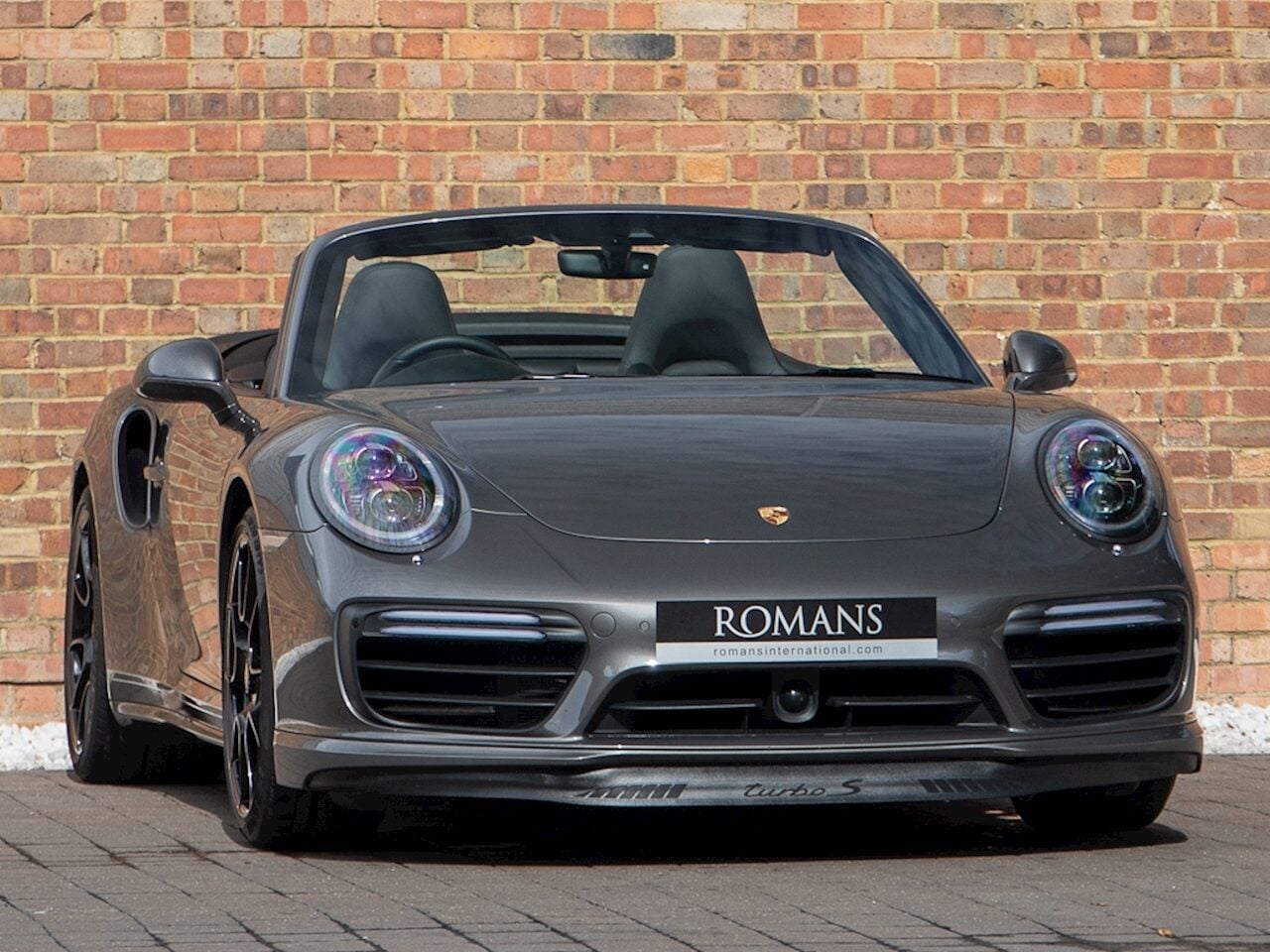
The 911 Turbo S is completely different. It’s a sleek, subtle, sculpted silhouette that’s hiding a lot of horsepower.
Up front, the Porsche sports classic round headlamps and deep air intakes. The rear features a clean design with quad exhausts, a full-width light bar, and an active spoiler that rises when your speed demands it.
The side profile showcases those iconic wide rear haunches and a gently sloping roofline that have defined the 911 for generations.
The only problem with the 911 Turbo S is with all that subtlety, it just doesn’t look and feel like a supercar. At least not in the way the Lamborghini does. And that isn’t necessarily a criticism, but let's face it: for some people, if they’re buying a superca,r they want it to feel and look like one.
Wheels and Brakes
Lamborghini Huracán
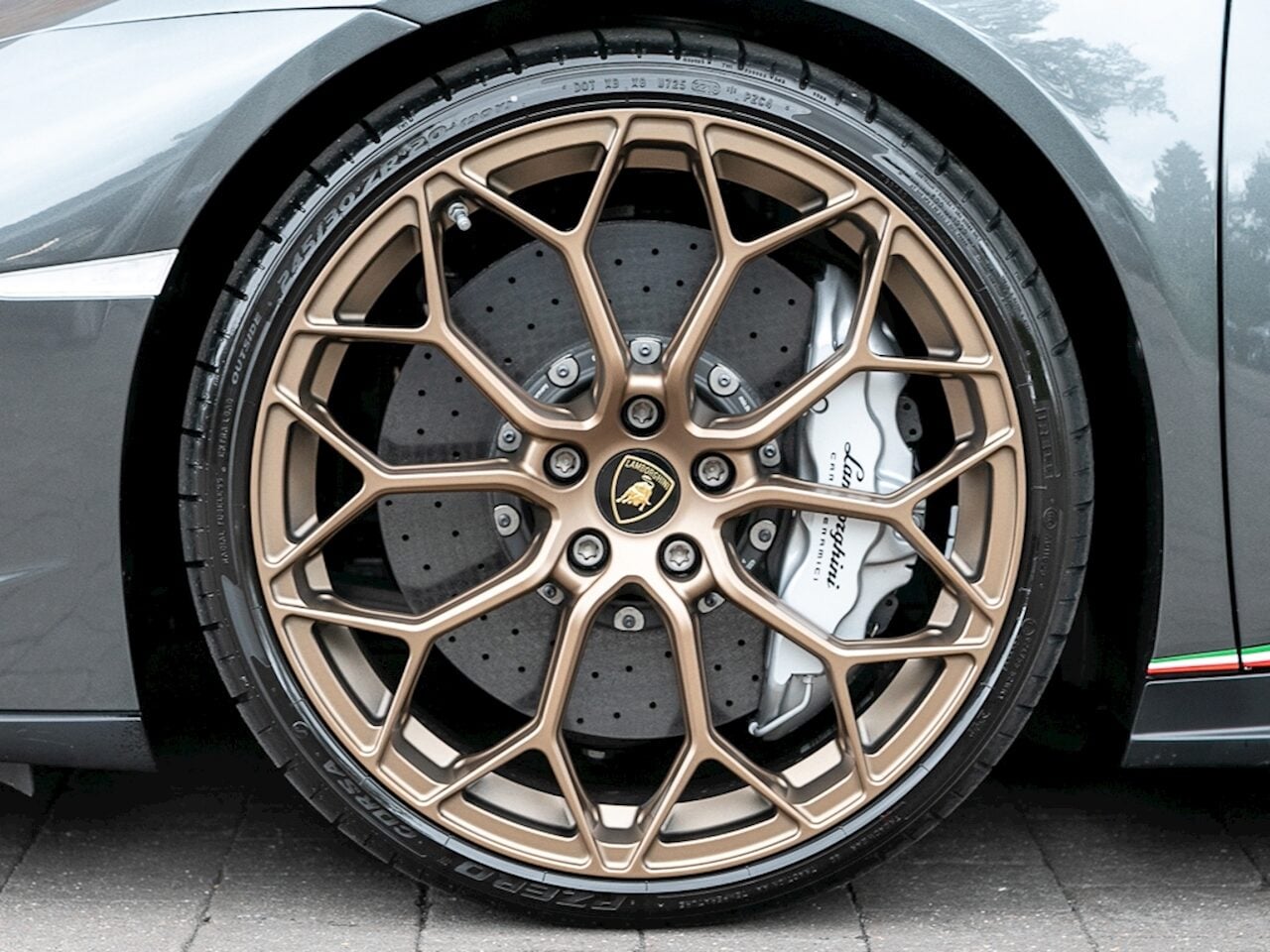
The Huracán rides on 20-inch alloy wheels in a range of designs, like Damiso or Aesir.
High-performance models like the EVO, Tecnica, and Performante have carbon ceramic brakes that give it the stopping power that the V10 naturally aspirated engine demands. They also come with the options to personalise the callipers in different colours as well as the wheel finishes, allowing you to make it as bright and loud as you want it to be.
Porsche 911 Turbo S
The Turbo S comes with staggered wheels. A 20-inch one at the front and a 21-inch at the rear.
Porsche Carbon Ceramic Brakes (PCCB) deliver fade-free stopping performance that is a perfect counterbalance to the car's raw power and acceleration capabilities.
The thing that is most impressive about the Turbo S is the amount of engineering that has gone into making sure that it’s a stable ride.
They increased the wheelbase by 100mm over the regular 911 for stability, and they’ve got electronically controlled arms that alter the angle of the rear wheels based on the speed you are driving by as much as 2.8 degrees. Below 31 mph it turns the wheels in the opposite direction to the front to make cornering quicker, and above 50 it swivels it parallel to the front, which makes it more stable.
The Interior
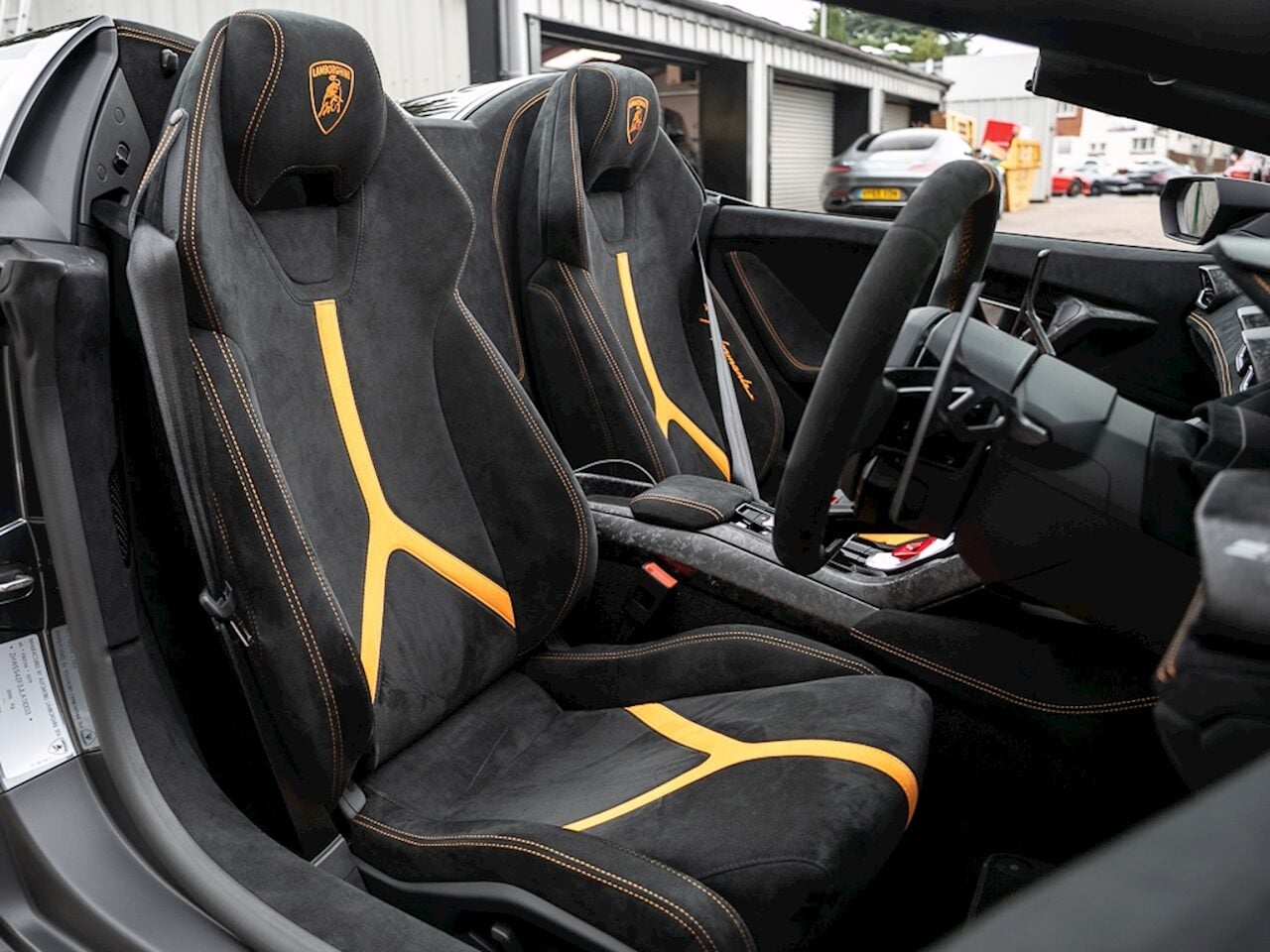
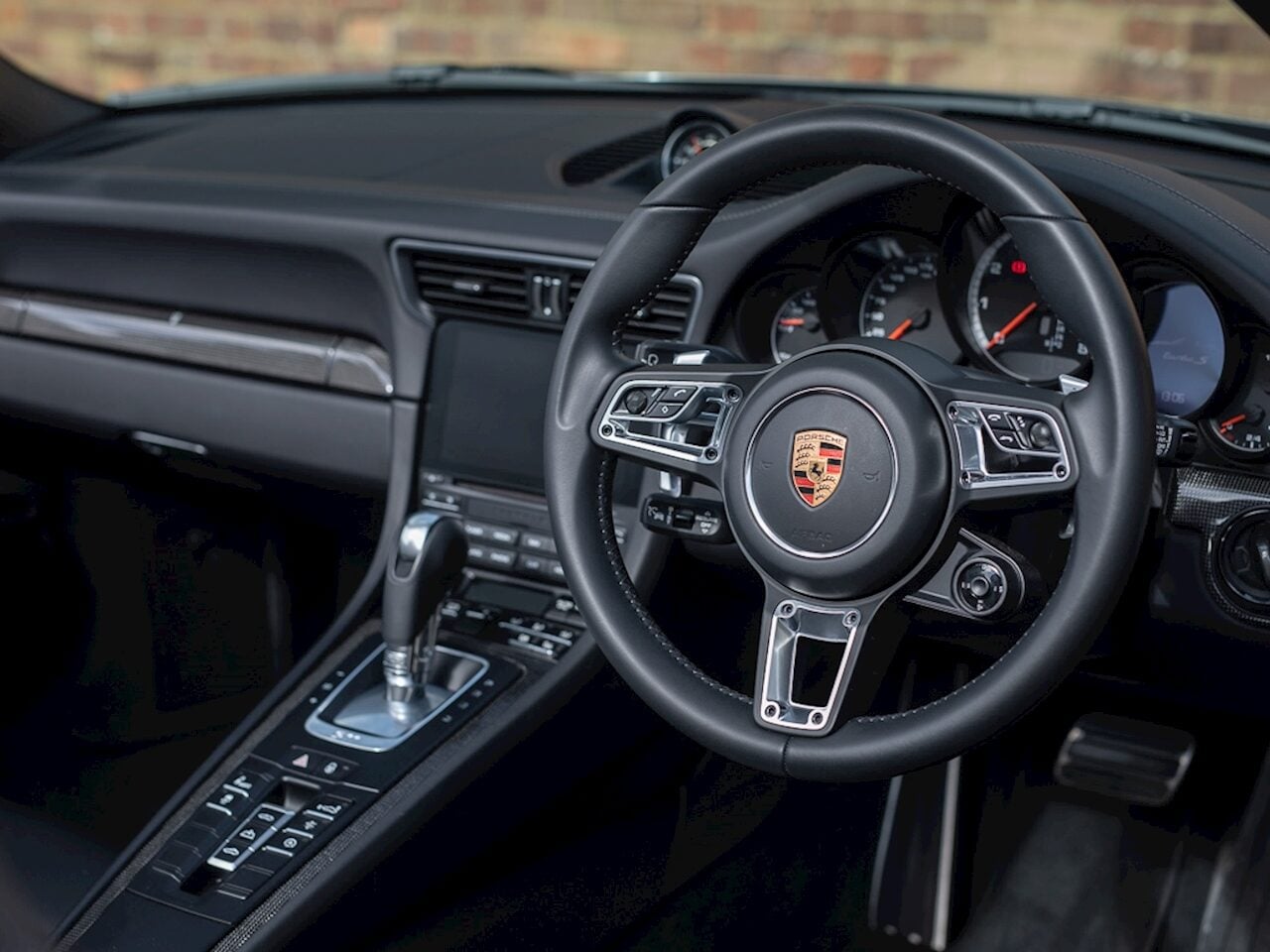
There is a big difference between the 911 and the Huracan when it comes to the interior.
Inside the 911, it feels like every detail in there has been thoughtfully designed so that it’s a place that you’re happy to spend hours in.
Whereas the Lamborghini feels like a jet’s cockpit. You’re going in there for a quick mission, but you’re not going to want to stay in there for more than a couple of hours.
It’s got a hexagonal air vent, stop-start buttons hidden under a red flip-up cover and a digital dash screen that shows the revs, gear and speed.
It’s tight, racy, and all practicality takes a backseat to its main mission: Pure driving thrill.
The Turbo S, on the other hand, is about balance.
Its interior is refined. There’s decent boot space. It offers seat options with heating, ventilation and massage functions. A multifunction steering wheel with drive mode controls and a curved digital display. And it’s kitted out with tech, with their infotainment, BOSE/Burmester sound systems, and advanced driver aids.
To put it simply. If you’re looking for a supercar that you can use every day, the 911 Turbo S wins hands down for practicality.
Performance
| Lamborghini Huracán (Evo AWD) | Porsche 911 Turbo S (992) | |
| Engine Type | 5.2L V10 Naturally Aspirated | 3.8L Twin-Turbo Flat-6 |
| Fuel Type | Petrol | Petrol |
| BHP | 631 bhp | 641 bhp |
| 0–62 mph | 2.9 sec | 2.6 sec |
| Top Speed | 202 mph | 205 mph |
| Engine Capacity | 5,204 cc | 3,745 cc |
| Transmission | 7-speed dual-clutch automatic (LDF) | 8-speed dual-clutch automatic (PDK) in the 992 |
Both the Huracán and the Turbo S are blisteringly fast and pack a hell of a lot of performance under the hood.
The Huracán delivers a visceral power with its naturally aspirated 5.2L V10 providing instant throttle response. There's no turbo lag, just immediate power.
Boasting 631 bhp, models like the Evo and Tecnica achieve 0-62 mph in just 2.9 to 3.2 seconds. The top speed bursts through the 200 mph barrier.
Dramatic revs provide a howling soundtrack to get the adrenaline charging.
The Turbo S isn’t some sort of shrinking violet either. Its 3.8-litre twin-turbo flat-six engine delivers 641 bhp and has a seriously quick 0 - 62 mph at 2.6 seconds.
Its top speed is also higher than the Lamborghini at 205 mph, and it is the better drive in all conditions.
The only downside is… it just doesn’t sound as good as the Lamborghini. It doesn’t have that visceral roar that you want from a supercar.
Price and Value
Both cars are prestige brands and require serious financial commitments. But the Turbo S is a little cheaper than the Huracan with its used prices running between £55,745 - £150,875 compared to the 911’s £31,420 - £84,515.
One of the main reasons that the Lamborghini has retained its value is the engine. The V10 naturally aspirated engine is becoming increasingly rare and, as a result, has developed a bit of a collectors market over time.
The Turbo S is also just a bit more of a common car, which you see a lot more of, and it’s valued as such accordingly.
The Verdict: Lamborghini Huracan vs Porsche 911 Turbo S
The Huracán vs 911 Turbo S choice usually comes down to the kind of high-performance experience you’re chasing.
For dramatic design, bold sound, and a raw, passionate drive, you need hardly look further than the Huracán.
If you prioritise sophistication, comfort, and exceptional performance in all conditions, the Turbo S excels. Remember, this Porsche can match the Lambo for outright speed while offering superior daily usability.
Whichever you choose, the one thing you’re guaranteed is some serious speed and a lot of fun driving it.
If you’re interested in buying a Lamborghini or a Porsche, then check out our collection in our showroom.
Or if you’re still unsure on what Porsche to choose then check out some of our other buying guides including the Porsche 911 GT3 Vs RS, Audi R8 Vs the 911 GTs and the Aston Martin Vantage Vs Porsche 911 Turbo.