/137/1/16203046156093e2e7ba3a1_romans-international-logo-black-23.05.png)
/137/1/162513748360dda14b60068_romans-international-logo-whiteout.png)
Ferrari 812 Superfast & GTS Buyer's Guide: Everything You Need to Know
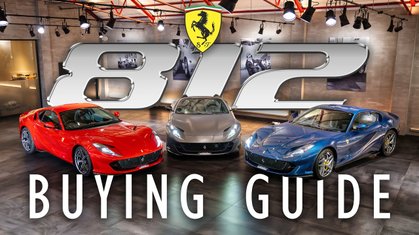
A 789 bhp naturally aspirated V12, a gearbox that shifts faster than you can blink, and looks that stop traffic. The Ferrari 812 is the real deal, but choosing between the Superfast and the GTS takes a bit of homework. Here's everything you need to know.
The Ferrari 812 is one of the greatest front-engined GT cars ever made. Not one of the greatest Ferrari GT cars. One of the greatest, full stop. That 6.5-litre V12 revs to 8,900 rpm, produces a biblical 789 bhp, and makes a noise that'll have you finding excuses to go for a drive at 6am on a Sunday morning.
Here at Romans International, the 812 is one of our best-selling models – and we've learned a thing or two about what separates a good example from a great one. So whether you're eyeing up a Superfast coupe or stretching to the GTS drop-top, this guide is going to arm you with everything you need to find the right car and avoid the wrong one.
The History Bit: Model Years & The GPF Question
Right, a quick bit of context before we dive into the details – because understanding when your prospective 812 was built actually matters quite a lot.
First UK deliveries of the Superfast landed in 2018. Cars from 2018 and 2019 are essentially identical – same spec, same engine, same everything. So far, so simple.
But then 2020 happened. And no, we're not talking about that – we're talking about EU emissions regulations.
To keep the tree-huggers in Brussels happy, Ferrari was forced to introduce a gasoline particulate filter (GPF) to the exhaust system. Every 812 GTS (which launched in 2020) has one fitted from the factory. Every Superfast built from 2020 onwards got one too.
So what does this actually mean for you?
Two things. First, the GPF slightly muffles that glorious V12 soundtrack. Early Superfast owners who picked up their GTS definitely noticed the difference – it's not quiet by any means, but there's a subtle loss of that high-pitched, clean shriek that makes the hairs stand up on your arms.
Second, the GPF creates a tiny restriction in power output. Ferrari compensated by giving post-GPF cars a bit more grunt from the engine to maintain identical performance figures. Clever. But purists will tell you the pre-GPF cars just feel a little more raw.
How do you tell the difference?
Pop the bonnet and have a look. On a pre-GPF car, the engine bay is relatively clean around the edges. On a GPF car, you'll spot thick pipes running down both sides towards the exhaust. Once you know what you're looking for, it's obvious.
One word of caution: just because a car is registered in 2020 doesn't automatically mean it's got a GPF. Plenty of 2020-plated Superfasts were built before the changeover. Always check.
Wheels
Every 812 rolls on 20-inch wheels, but which design you get makes a bigger difference than you might think.
The standard alloys exist. We rarely see them. They're a bit... forgettable. And honestly? On a car this special, "forgettable" isn't good enough. You want the upgrades.
Superfast Forged Wheels
These are the popular choice – a sporty, directional design that suits the car's aggressive stance. Available in diamond-cut polished or painted matte grey finishes, they were around £3,000–£4,000 from new. Nothing wrong with these at all.
GTS Forged Wheels
Ferrari gave the GTS its own design; slightly cleaner, slightly simpler, but no less classy. Same finish options apply.
Racing Alloys
Now we're talking. Derived from Ferrari's track programme, these are lighter, stronger, and just look the business. They were £5,000–£6,000 from new, plus another grand for the titanium wheel bolts (which you need with this option).
If we're looking at two identical cars and one's got racing alloys, that's the one we're buying. Every time.
The bottom line: Forged alloys are perfectly acceptable, no complaints here. Standard alloys? We'd probably walk away. Life's too short for basic wheels on a V12 Ferrari.
Seats
This is one of the most important decisions on any 812, and it's going to affect both how the car drives and how much it's worth.
You've got two main choices: fully electric seats or carbon fibre racing buckets. Both have their place, but they deliver very different experiences.
Fully Electric Seats
Most 812s left the factory with the fully electric seats (about £3,500 upgrade over the standard 8-way electrics). You get more adjustability, a memory function with three presets, heated backsides for those brisk British mornings, and an easy entry/exit function that raises the steering column as you get in and out.
They're comfortable. They'll fit pretty much anyone. And if you're planning long continental road trips – which, let's be honest, is exactly what this car was built for – you'll appreciate them.
The downsides? They sit a bit higher than ideal (not great if you're tall), they're not brilliant on track (too much sliding about), and they don't look quite as hardcore as the alternative.
Contrast stitching makes a massive difference to black leather interiors. Stitching on the bolsters, through the centre, and – crucially – on the headrest with the embroidered prancing horse. A car without any contrast stitching can look painfully bland. We tend to mark those down.
You'll also see Daytona seats (safe choice), diamond quilting (can look a bit dated), or the newer squared quilting that Ferrari introduced for the 812. The squared pattern was a grower – wasn't sure at first, but it looks properly modern now.
Carbon Fibre Racing Seats
These are the ones that make you feel like you're about to tackle the Stelvio Pass at ten-tenths.
The seats sit much lower than the electric option, so you get more headroom, more knee room, and – most importantly – a much more connected driving position. The bolsters actually hold you in place. You feel part of the car rather than just sitting in it.
They're manually adjustable (fore/aft, backrest angle, and optional height adjustment for about £500), and they come in small, medium, or large. Most people go large – it's the safest bet unless you're genuinely slim.
The Daytona racing seat design was actually new for the 812, which is one reason we like it. Looks more current than the older patterns. The "style" racing seats with perforated Alcantara through the centre are also rather lovely.
They're not for everyone. If you don't fit them properly, or if you're planning a 500-mile day, you might find yourself with a sore back. And some passengers actively hate them.
So Which Should You Choose?
Depends entirely on what you want from the car.
If you're treating the 812 as a proper grand tourer – long journeys, weekends away, comfortable motorway miles – the electric seats make sense.
If you want that visceral, connected driving experience and you're planning to use the car hard, the racing seats are the ones.
Does it affect value? Absolutely. Have a look at the cheapest Superfasts on the market. Almost all of them have electric seats. Racing buckets command a premium. It's less pronounced on the GTS, but still noticeable.
You can spec an 812 with racing harnesses instead of seatbelts. Please don't. Save that for the Competizione. On a usable GT car like this, harnesses are just annoying.
Carbon Fibre
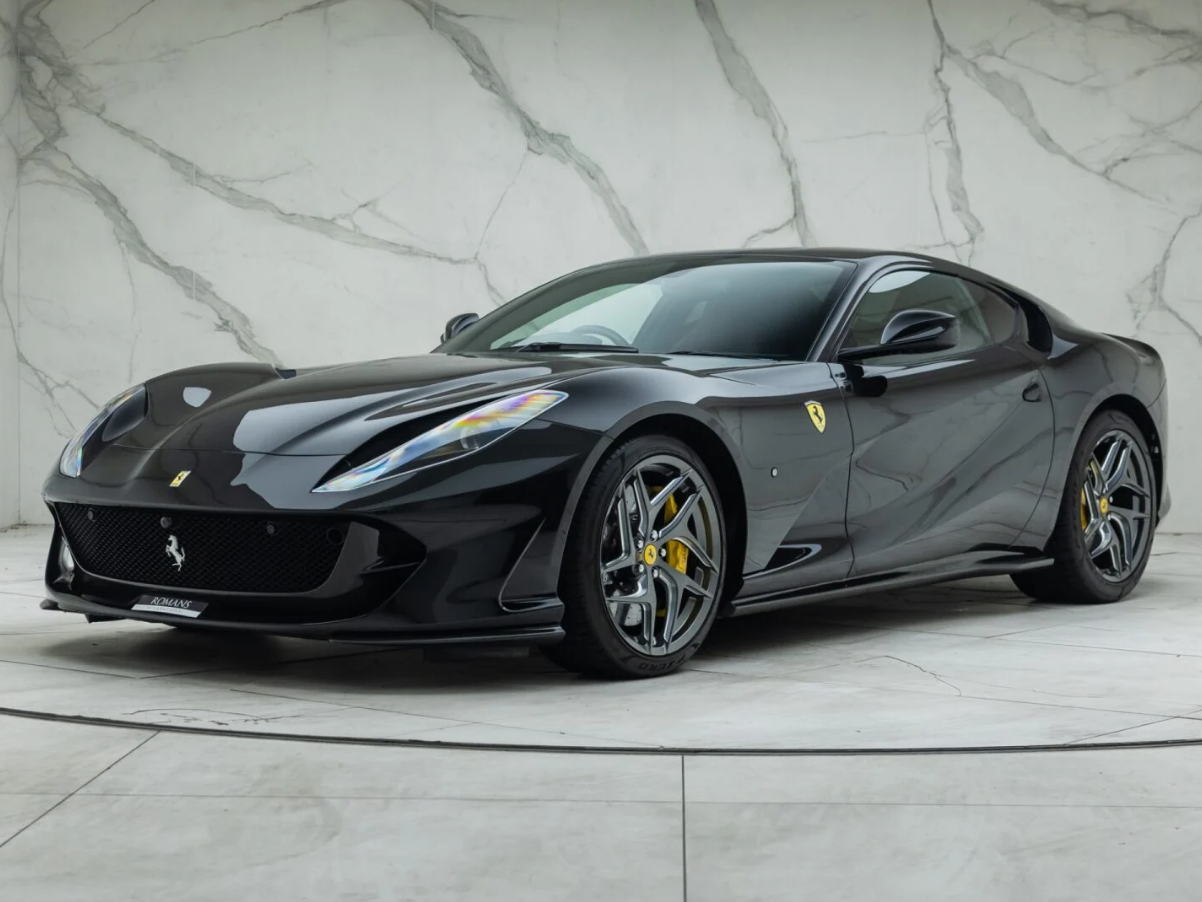
If there's one thing that genuinely moves the needle on 812 values, it's carbon fibre. Interior and exterior. And there's a lot of it available.
Here's a good rule of thumb: look for a car with either loads of carbon or none at all. Both are fine. It's the cars with random bits here and there that feel a bit half-hearted.
Exterior Carbon
- Underdoor covers – About £6,000 new. Looks fantastic.
- Rear bumper surrounds – This is our pick for the single most important exterior carbon piece. It's the section surrounding the exhaust, and it's chunky. Without it, you've just got painted plastic.
- Carbon mirrors – Not everyone's cup of tea on a Ferrari, but some like them.
- Front bumper insert – The grille surround with little fins. About £3,000. Adds aggression to the front end.
- Rear diffuser – Some owners paint this body colour instead, which gives a cleaner look.
- Carbon centre caps – About £400. Not essential.
- Rear boot trim – About £500. Nice to have.
The GTS has the same options, though the rear detailing differs slightly because of the folding roof mechanism.
Interior Carbon
The carbon fibre steering wheel is non-negotiable.
Seriously. If we find an 812 without the carbon steering wheel, we don't want to buy it. The only exception might be a Tailor Made car that's gone for a completely different theme. Otherwise? Hard pass.
Beyond that, here's what we look for:
- Carbon driver zone – Includes the shift paddles and the ring around the tachometer. Proper.
- Central bridge – The section between the seats. Some cars have this in aluminium, which is fine, but carbon looks better.
- Dashboard insert – More expensive, but it surrounds your entire field of view. Worth having.
- Upper tunnel trim – Nice, not essential.
- Inner door handles – A small detail, but noticeable.
- Door sill kick plates – The first thing you see every time you open the door. We like this one.
One to skip: Full carbon door panels. Unless you're absolutely carbon-obsessed, it can look like overkill.
Superfast exclusive: You can spec the rear bench trim in carbon. Obviously, the GTS doesn't have a rear bench, so that option doesn't exist.
Unicorn spec: Carbon engine covers and filter box covers. About £10,000 combined, and hardly anyone ticked them. But if you find one? Absolutely stunning.
What Does Carbon Actually Add to the Value?
This is where it gets tricky. Our rule of thumb? A car with all the carbon options is probably worth £10,000–£20,000 more than an equivalent car without. Nowhere near what it cost to tick all those boxes new, but it does make the car more desirable and easier to sell.
No exterior carbon? Doesn't bother us – we just factor it into the price. Interior carbon matters more, especially that steering wheel and driver zone. But ultimately, more carbon equals more money. Simple as that.
Tech & Convenience
Suspension Lifter
Let's start with the big one. If you've got a steep driveway, speed bumps, or just don't fancy grinding your front splitter into oblivion, you need suspension lifter. A lot of buyers won't even consider a car without it.
Is it essential for everyone? No. But it adds resale value, and we always like to see it on the options list.
Passenger Display
Easy to write off as a gimmick – but actually, it's genuinely useful.
The 812 doesn't have a central touchscreen, so your passenger can't just lean over and fiddle with the sat-nav or Spotify. The passenger display solves that problem. Media controls, navigation input, performance data – it's all there.
If you don't spec it, the model logo sits in that space instead, which also looks rather nice. But for usability? The screen wins.
The Rest
- Apple CarPlay – Useful, though the screens are so small it's not as transformative as in other cars.
- JBL Hi-Fi upgrade – A bit better than standard. But honestly, you've got a V12 up front. That's the only soundtrack you need.
- Active Matrix headlights – Worth having if you do a lot of night driving.
- Cameras – Reverse camera, surround view, all available. Again, limited by the small screens.
- Full ADAS pack – Front and rear radar for safety. One small gripe: you'll notice a rectangular plastic sensor housing on the front bumper. Some people find it annoying. If you're a bit OCD about aesthetics, you might never unsee it.
Scuderia Shields
Right, this is a good one.
You can have the traditional Scuderia badges on the front wings – perfectly nice – or you can upgrade to airbrush shields. These are hand-painted directly onto the bodywork, completely seamless, and absolutely beautiful. Proper old-school craftsmanship.
At about £8,500 from new, they're rare. Very rare on the Superfast, slightly less so on the GTS. But if you find a car with them? Snap it up.
Paint Colour
This is obviously subjective – but having bought and sold a lot of these cars, we've got some opinions.
Reds
It's a Ferrari. Of course red works. But here's the thing: Rosso Corsa on the 812 isn't our favourite. We've actually found it a little harder to shift. The car has a grand touring character, so the subtler, darker reds suit it better.
Our picks: Rosso Fiorano, Rosso Maranello, or the special triple-layer metallics. Rosso F1 2007 looks absolutely phenomenal – much more depth than Rosso Corsa.
Blues
Blue really suits this car. Blu Tour de France, Blu Pozzi, Blu Scozia, Blu Nart – all work brilliantly. And blue goes with pretty much any interior: tan, chocolate, Cuoio, black. Very versatile, very classy.
Greys and Black
The safe choices, and the most popular. Grigio Silverstone, Grigio Ferro, black... these always sell. Biggest market by far.
Special mention: Factory matte Grigio Silverstone. It was a £22,000 option and it looks absolutely sensational. Definitely adds value.
GTS vs Superfast Specs
Interestingly, GTS buyers tend to be braver with their colour choices. More variety, brighter shades, more tan interiors. Superfast buyers generally play it safer.
What We'd Avoid
White and yellow. They're not bad – especially the pearlescent or triple-layer versions – but they don't quite suit the 812's character in our view. We'd probably mark them down slightly.
The Dream Find
A dark green or purple 812. Incredibly rare, but absolutely stunning when you find one. If you spot one, move fast.
Warranty & Servicing
Good news: the 812 has a brilliant ownership proposition here.
Manufacturer's Warranty
Standard is 3 years worldwide (4 years in the UK). If it hasn't lapsed, you can extend it with Ferrari's official extended warranty – same level of cover – up to 7 years from first registration. That costs around £5,000–£6,000.
Power15 Warranty
If the manufacturer's warranty has lapsed, Ferrari offers the Power15 warranty. It covers major components (not quite as comprehensive) and is available up to 15 years old. So a 2019 car can theoretically be covered until 2034. Cost is around £3,000–£4,000.
Dealer Warranties
Don't dismiss cars without Ferrari warranty. Our Romans International Platinum warranty is every bit as good as the Power15 – and in our experience, it actually pays out more readily. Worth checking what your dealer offers.
Transferability
Unlike Porsche or McLaren – who make you jump through hoops – Ferrari warranties stay with the car and transfer automatically to the new owner. As it should be.
Free Servicing
Here's the kicker: 7 years of free servicing from Ferrari. Those early 2018 cars are only just coming out of the programme now. That's a massive selling point.
The Market: Superfast vs GTS – Which Should You Buy?
The Superfast launched in 2018 and, like most Ferraris, the initial depreciation was fairly steep. Values dropped to around £200,000 within a couple of years. Then COVID happened, demand went through the roof, and suddenly they were back up to £220,000–£230,000.
The GTS went even crazier. We were selling them for well over £400,000 – significantly above list price. This was, after all, Ferrari's first front-engined V12 convertible in decades. People lost their minds.
Where are we now?
Both models have finished production – the Superfast in 2021, the GTS earlier this year. The 12 Cilindri that replaces them has had a... let's say "mixed" reception. Quite a few people aren't sold on the styling. That should help 812 values hold firm.
Current pricing:
- Entry-level Superfast: from around £190,000 (high-mileage examples for less)
- Later, lower-mileage Superfasts: £230,000–£240,000
- GTS: just under £300,000 (down from £400,000+ peaks)
Our take? Now's not a bad time to buy at all. The Superfast in particular is remarkable value – a naturally aspirated V12 Ferrari, universally praised, for under £200k. That's properly special.
Which One?
The GTS with the roof up drives almost identically to the Superfast. So really, it comes down to budget and whether you want the option to go topless.
If you can stretch to the GTS and you like the idea of that V12 howl with the wind in your hair, go for it.
If you want the best value for money, the Superfast is an absolute no-brainer right now.
Atelier & Tailor Made
If you want something truly unique, keep an eye out for Atelier or Tailor Made examples.
Atelier means the original owner went to Maranello to spec their car in person. Nice experience, bragging rights, and sometimes a few exclusive details – but it doesn't add huge value, if we're honest.
Tailor Made is different. This is full-on bespoke: unique materials, wild liveries, colours from Ferrari's heritage catalogue, the works. These cars can add serious money – but they're also very personal. What the original owner loved, the next buyer might not.
If you find a Tailor Made spec that you love? Jump on it. But don't expect to get all of the original cost back when you sell.
Final Thoughts
The Ferrari 812 – both Superfast and GTS – is one of the truly great modern supercars. That naturally aspirated V12 is an endangered species now, and driving one flat-out is an experience that simply doesn't get old.
Buy wisely, spec matters, and if you've got any questions about the cars we've currently got in stock, get in touch with our team. We're always happy to help.