/137/1/16203046156093e2e7ba3a1_romans-international-logo-black-23.05.png)
/137/1/162513748360dda14b60068_romans-international-logo-whiteout.png)
Audi R8 vs Porsche 911 GT3: Which Is Better?
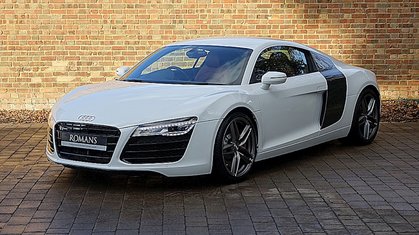
Both the Audi R8 and the Porsche 911 GT3 are among the rarest of machines.
A car that is at home tearing its way around the Nurburgring as it is making the weekend trip to the shops.
It’s because both of these cars deliver ferocious speed and excellent driver engagement, whilst still managing to be a daily driver, that they are often compared so much.
But that’s not fair.
Because they are completely different beasts.
The Audi R8 is a supercar that gives out a goosebump-inducing noise from the naturally aspirated V10 engine.
And the 911 GT3 is a rear-wheel driving, precision handling, thrill machine.
In this post, we’re going to pit the Audi R8 Vs the Porsche 911 GT3 and walk through some of the key differences. So by the time that you are done reading this post, you’ll be able to decide which of these supercars is the better option for you.
Pros and Cons
| Audi R8 | Porsche 911 GT3 | |
| Pros | Naturally aspirated V10 engine creates a hell of a growl and delivers instant throttle response | Naturally aspirated 4.0-litre flat-six engine revs to 9,000 rpm |
| As good as being a daily driver as it is a supercar | Track-focused handling with motorsport-derived suspension | |
| An accessible supercar for first-time buyers | Feels like a race car on the road | |
| Cons | Doesn’t have razor-edged steering like sharper rivals | It’s stiff, loud, and uncompromising |
| Can be too refined for drivers who want drama | Steering can feel twitchy and overly responsive for newcomers | |
| Limited storage space due to mid-engine layout | Not as practical as some other supercars |
The Exterior
A Lamborghini these cars are not.
And what we mean by that is in the world of supercars, they both sit towards the more subtle and refined end of the spectrum. Rather than the loud and brash end.
Both have opted for sleek, bold lines with plenty of aerodynamic flair and the odd touch of drama.
Audi R8
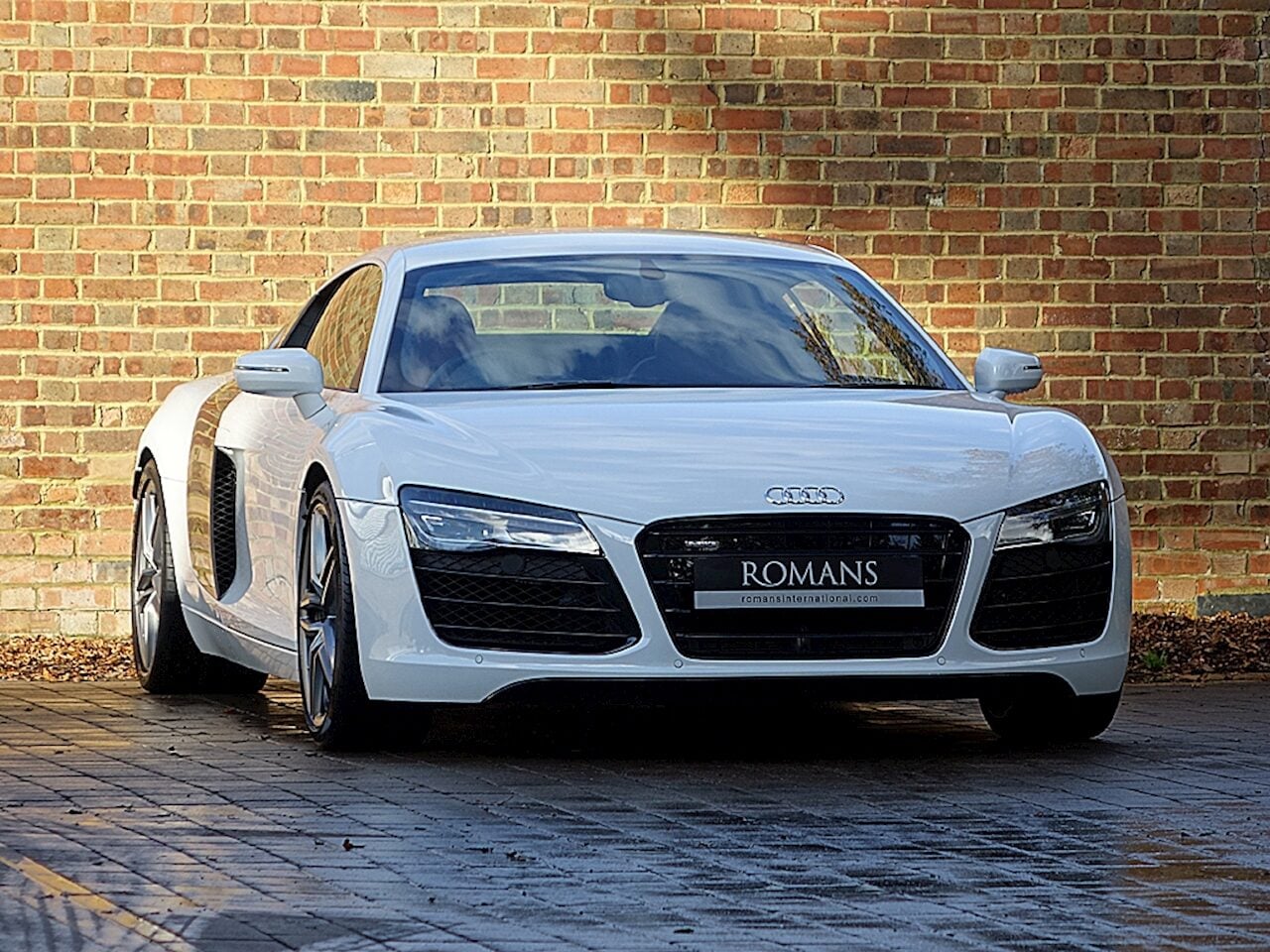
The first thing that you’ll notice when you look at the R8 is how low-slung it is. It’s so close to the ground that it can present a little bit of an issue when it comes to urban driving, as well as visibility.
Its front end is dominated by Audi’s signature hexagonal single-frame grille which is flanked by some sharp LED headlights and distinctive side air intakes. These only help to accentuate the angular look and feel of the R8.
From the bonnet to the rear, there are some sharp creases creating a dynamic look and feel to it.
The rear of the R8 widens, adding a touch of drama as it accommodates twin-exhaust outlets, a rear diffuser, and pronounced LED headlights.
911 GT3
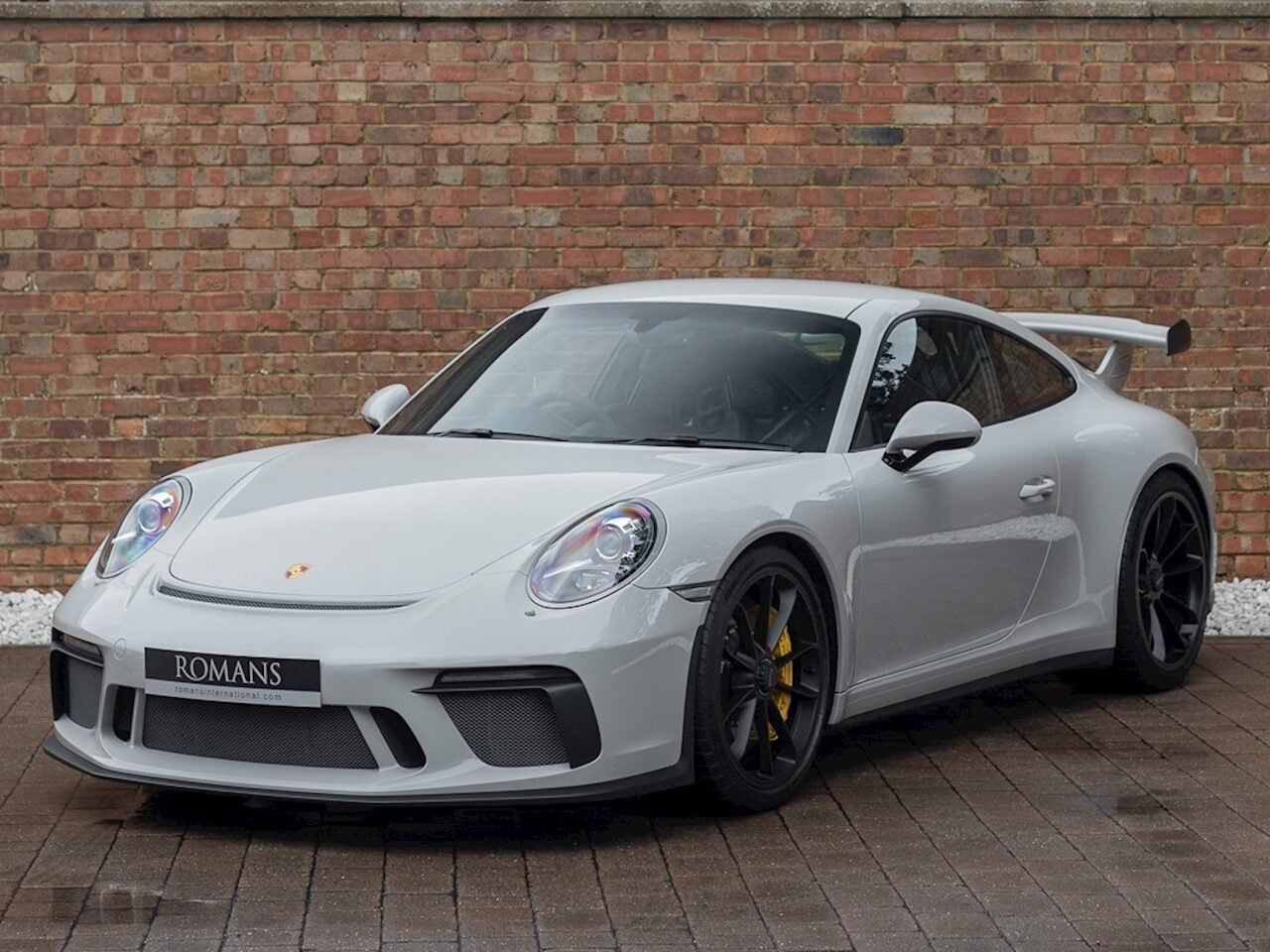
As you stand in front of the GT3 for the first time, you’ll notice a couple of things.
Yes, it embodies the typical 911 elegance. But it’s also really wide.
The GT3 has a widened body, with broader rear wheel arches that are designed to accommodate wider tyres for increased grip, as well as creating a little bit of track presence on the road.
The front bumper has an integrated splitter with a couple of air intakes to help improve the cooling of the engine and the brakes. This is on the older versions; from the 992.2 version, they’ve completely redesigned the front end with a different diffuse, reshaped spoiler lip and refined air intakes.
Depending on whether you’ve gone for the touring pack or not, you’ll be treated to the GT3’s most striking feature. The rear wing. Which gives it that real race car feel. If you get the touring pack, then you lose the wing and have a vehicle that feels a little more stealthy.
Looking for a Porsche? Check out our collection in our showroom.
Wheels and Brakes
Audi R8
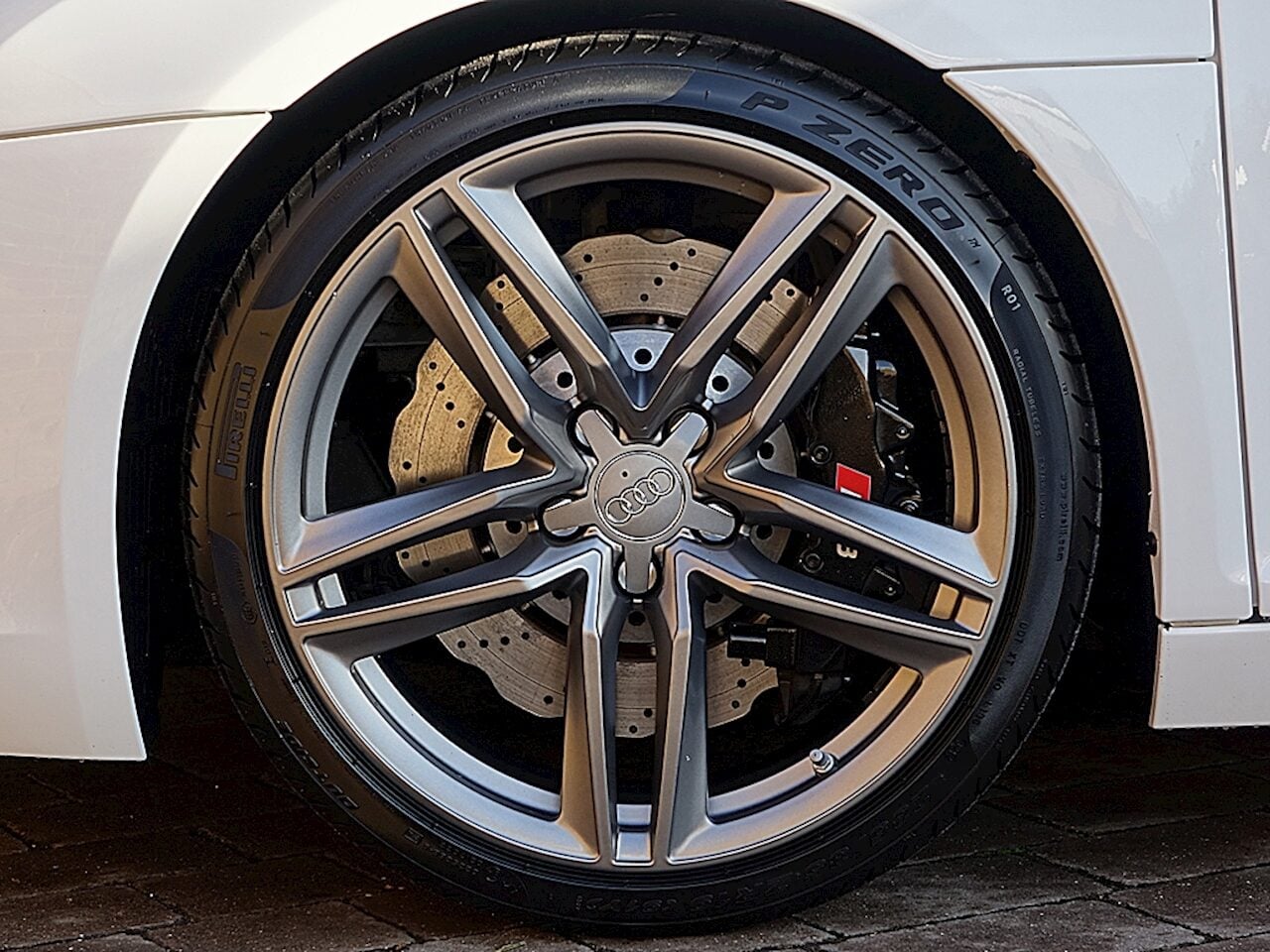
The R8’s standard wheel setup is 19-inch wheels at the front and 20-inch wheels at the rear.
Owners often upgrade to lightweight forged wheels to reduce unsprung weight and sharpen handling. Michelin Pilot Sport 4S tyres are standard, with more aggressive track-ready options available.
The braking system features steel discs measuring typically 380mm front and 356mm rear on performance models, which offer decent stopping power. That being said, we often see track enthusiasts upgrade to ceramic brakes, which virtually eliminate any fade during circuit sessions.
Porsche 911 GT3
The GT3's wheels are also staggered: 20-inch in the front and 21-inch in the rear, with a centre-lock design which is pretty typical for 911s.
If you’re looking at the RS, then the PCCB (Porsche Ceramic Composite Brakes) come as standard, but for most of the older GT3, they are an optional extra. But one well worth the investment, as they give you 410mm front and 390mm rear ceramic disc brakes that deliver fade-resistant, consistent stopping power in all conditions.
The wheels/braking system is 100% track-focused. This means lightweight construction and handling that’s consistently sharp and confident. The technology is optimised for extreme braking, with cooling and modulation tuned to hard laps of the Nürburgring or any other circuit.
Interior
Audi R8
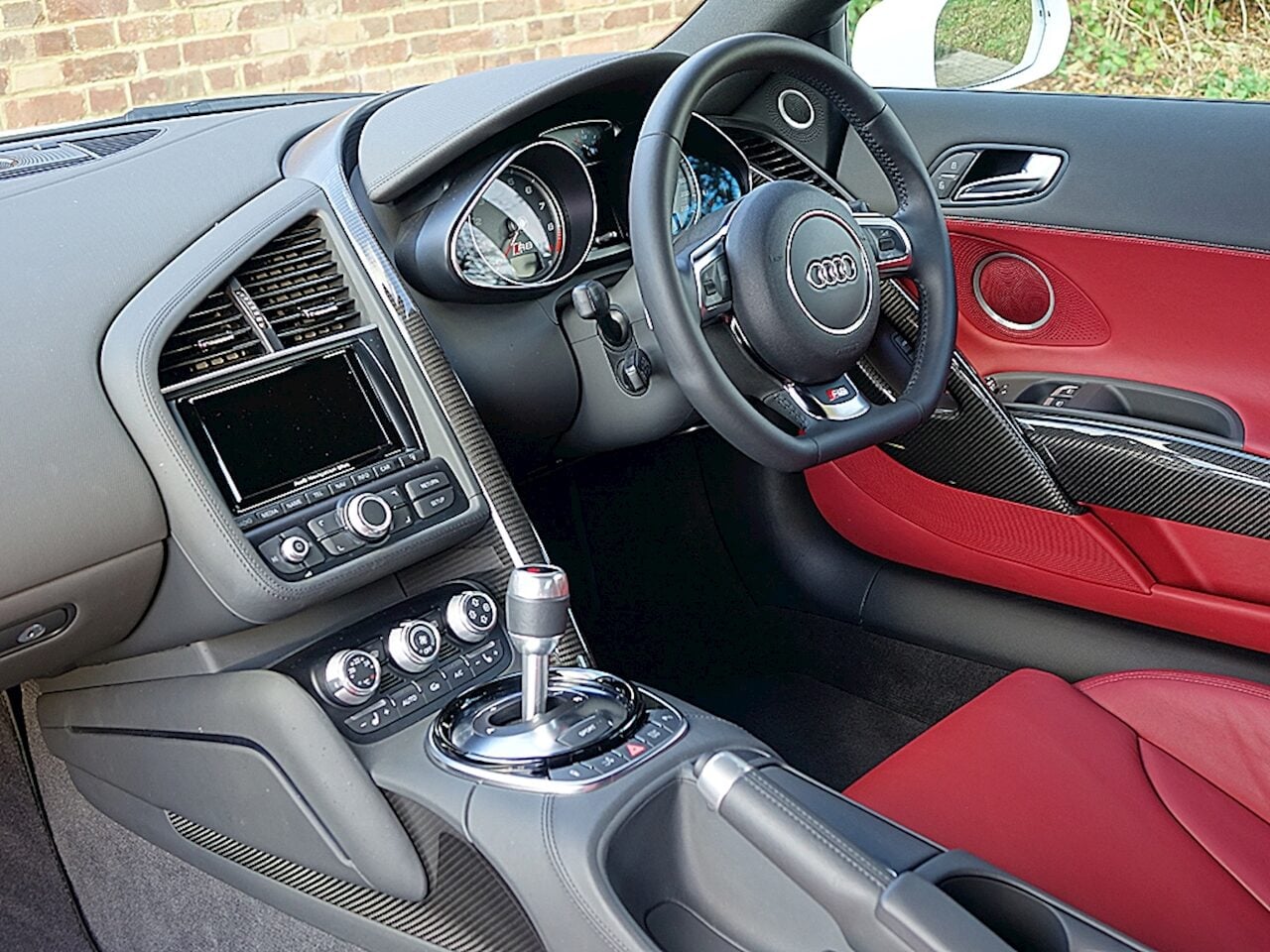
The R8’s cabin is famously driver-focused. Instead of the traditional infotainment screen, they’ve got Audi’s 12.3-inch Virtual Cockpit digital instrument cluster. When it comes to the R8, this is really the star of the show. It’s essentially a really intuitive piece of kit that is fully customisable, so you can have everything from the speeds to your map directly in front of you as you drive.
The rest of the cabin is comfortable and clean. You have a nice big central console with a big Multimedia Interface (MMI) control panel in front of it and a shifter.
Like the outside, the seats feel low-slung. But that doesn’t mean it’s uncomfortable. It’s the opposite as there is a wide range of adjustments you can play around with and it actually feels quite roomy.
Everything is laid out with the driver in mind. No unnecessary clutter, premium materials, clear controls and plenty of attention to detail.
Porsche 911 GT3
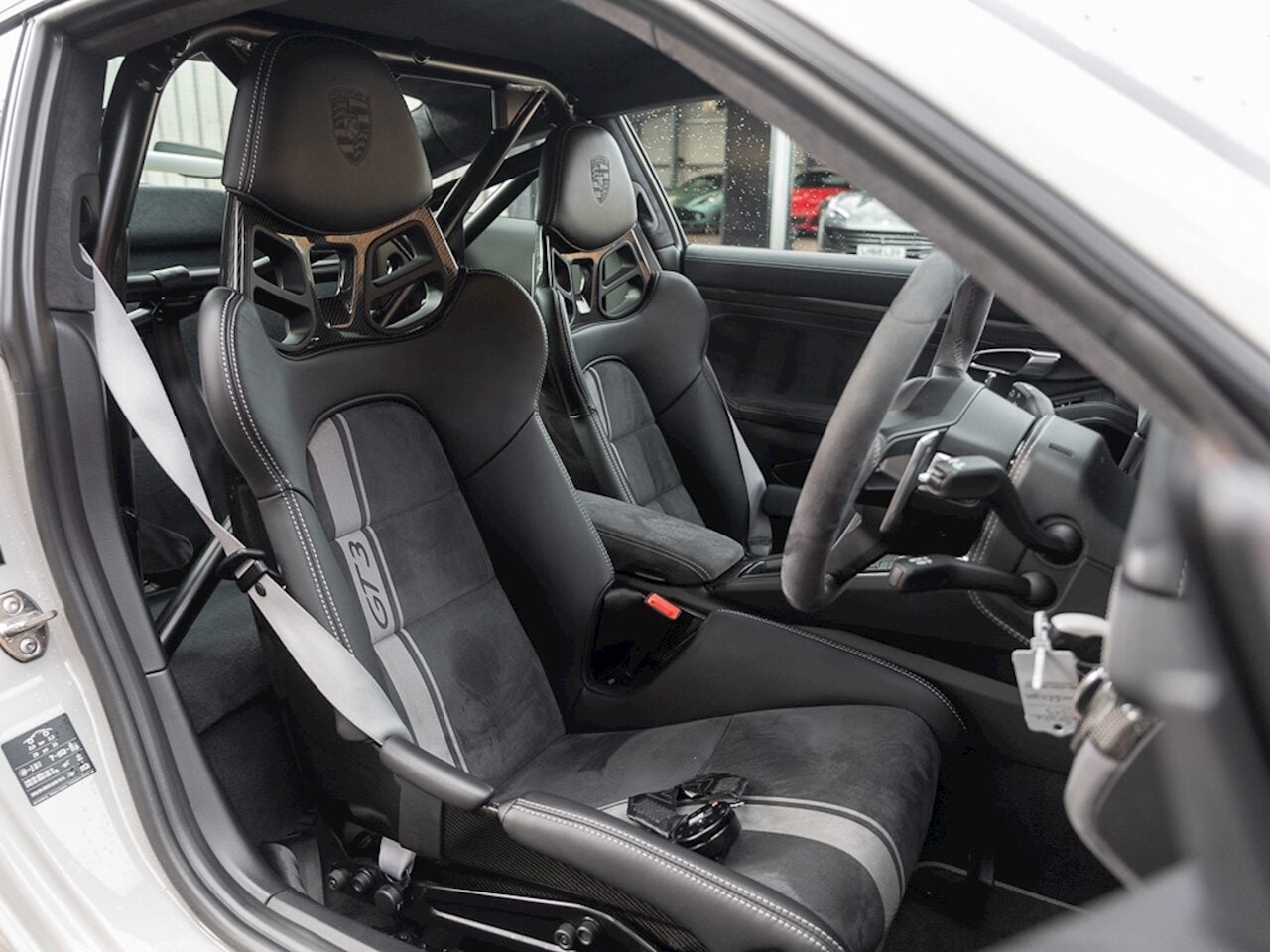
The GT3’s interior is very similar to the 911 Carrera with it having a simple dashboard and upright windshield for excellent forward visibility.
There are a few GT3-specific touches that have been added, though. The instrument panel in the centre has high-resolution digital displays that show all the essential driver information. In “Track Mode” they’ll display things like tyre pressures & fluid temps, so you can get the most out of it.’
As standard the seating in the GT3 includes the Sports Seats Plus that are designed to hold the driver in place while cornering. They have these grippy suede-like central inserts that Porsche is calling “Race-Tex”.
The rest of the interior very much has a motorsport feel. The steering wheel rim is covered in Race-Tex for grip. Shifter also. And the door pulls. The point is that everything has been designed to make you feel like you are behind the wheel of a race car.
Performance
Here are the key vehicle specifications and capabilities.
| Specification | Audi R8 V10 Rear Wheel Drive version | Audi R8 V10 Performance | Porsche 911 GT3 | Porsche 911 GT3 Touring |
| Engine Type | 5.2L V10 Naturally Aspirated | 5.2L V10 Naturally Aspirated | 4.0L Flat-6 Naturally Aspirated | 4.0L Flat-6 Naturally Aspirated |
| Power (BHP) | 562 BHP | 620 BHP (AWD), 602 BHP | 502 BHP | 502 BHP |
| Torque | 406 lb-ft | 428 lb-ft | 347 lb-ft | 347 lb-ft |
| 0-62 MPH | 3.7s | 3.1s (AWD) | 3.4s | 3.9s |
| Top Speed | 201 MPH | 205 MPH | 193 MPH | 194 MPH |
| Rev Limit | 8,700 RPM | 8,700 RPM | 9,000 RPM | 9,000 RPM |
| Transmission | 7-speed S tronic | 7-speed S tronic | 7-speed PDK | 6-speed Manual |
| Drive | RWD | AWD (quattro) | RWD | RWD |
| Weight | 1,590kg | 1,695kg | 1,420kg | 1,420kg |
The R8’s naturally aspirated V10 is one of the finest engines ever produced. The throttle response is almost and the acceleration will have you feeling like your stomach is about to jump out of your mouth.
It also boasts a very impressive 0-62 mph at 3.1 second for the AWD versions, which is slightly faster than the GT3.
But where the R8 has a better straight line speed, the GT3 more than makes up for it when cornering. Because the GT3 was designed to be flung around corners at high speed with all of that downforce that it exerts on itself.
These are both seriously impressive performers and hard to compare. One with an engine that can turn even the most mundane trip into something exciting. And the other which has one of the best driver-car connections there’s ever been.
Price and Value
Scarcity means that both of these cars still maintain their value reasonably well. The R8s were discontinued in 2024 and are one of the last models to have a V10 naturally aspirated engine, which makes them something of a collectable.
The GT3 isn’t exactly the type of car you can just walk off the street and buy. And there isn’t a whole load of them on the market - especially the RSs, which are rare.
That being said, the GT3 have a slightly higher resale value currently and makes a better investment.
Audi R8
Used market: Values range from £80,000 to £130,000, depending on miles and specs.
R8 GT: This limited edition model commands £198,000+. There are only 333 units globally and around 15 in the UK.
Insurance: Group 45-50 coverage (expensive compared to a normal car).
Maintenance: £1,500+ annually.
Porsche 911 GT3
Used GT3 992.1: £145,000+ for low-mileage versions.
Insurance: Group 45-50.
Maintenance: £2,500+ annually.
The Verdict
The 911 vs R8 comparison is not a straightforward shootout because their design and performance philosophies are so different.
Supercar lovers who want a car that sounds like a bit of a beast but can be comfortably used for everyday life, you should probably choose the Audi R8 and its naturally aspirated V10 engine.
If you want a car that’s a lot of fun and you’re a bit of a track animal, then the GT3 is probably the car for you.
At their core, the R8 offers bold drama and comfort, and the GT3 delivers raw intensity and emotion.
If you’re looking for more buying guides check out our post on the 911 GT3 Vs GT3 RS, the 911 vs Lamborghini Huracan and the Aston Martin DB11 vs the 911